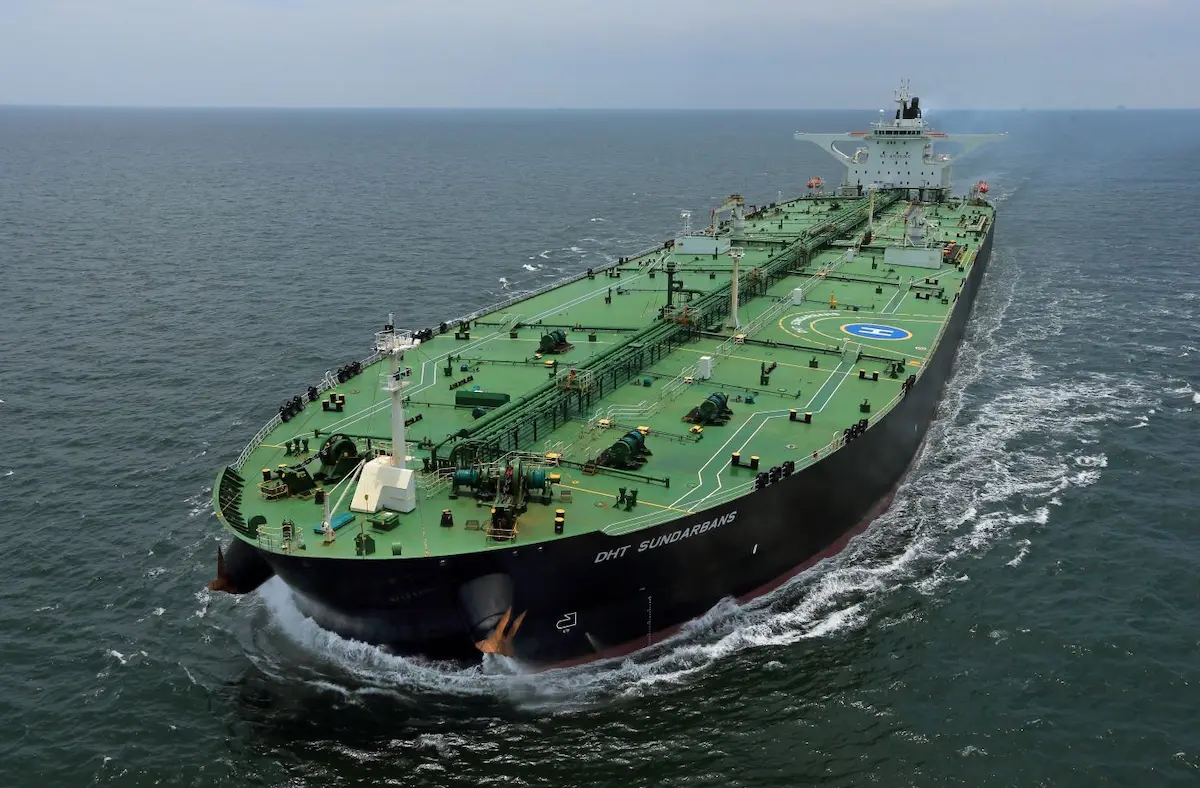
Cargo ships carry between 800 and 16,000 metric tons (MT) of fuel, depending on their size and engine power. A small bulk carrier holds a few hundred tons, while an ultra-large container ship like the Triple E class carries close to 16,000 MT. This article breaks capacity down by ship class, fuel type, storage location, and real sailing range.
How Much Fuel Do Cargo Ships Carry by Size?
Fuel capacity scales with ship size and engine power. It ranges from about 800 MT on small bulk carriers to nearly 16,000 MT on the largest container ships. Tankers typically carry less fuel than container ships of similar deadweight.
| Ship Class | Typical Size | Fuel Capacity (Full Tanks) |
|---|---|---|
| Handysize bulk/general cargo | 15,000–40,000 DWT | 800–1,500 MT |
| Panamax (pre-2016 locks) | 60,000–80,000 DWT | 5,700–8,000 MT |
| Post-Panamax | 80,000–120,000 DWT | 9,500–13,000 MT |
| Neopanamax (New Panamax) | 120,000–170,000 DWT | 12,000–15,000 MT |
| Ultra-Large Container Vessel (18,000+ TEU, e.g. Triple E) | 190,000+ DWT | 15,000–16,000 MT |
| VLCC crude tanker | ~300,000 DWT | 4,000–6,000 MT |
These figures are full nameplate tank capacity, not what a ship typically sails with. Container ship size classes explain why capacity jumps sharply between Panamax and post-Panamax hulls. Larger hulls fit bigger, more powerful engines, and bigger engines need proportionally larger fuel tanks.
Fuel quantities in this article are given in metric tons (MT), the industry-standard unit for bunker fuel, rather than liters or gallons. One metric ton of marine fuel is roughly 1,000 to 1,100 liters, depending on the fuel’s density. Reporting in mass rather than volume avoids errors caused by fuel expanding or contracting with temperature.
VLCC tankers hold less fuel than their deadweight might suggest, because their engines run at lower continuous output than a fast container ship’s. A slow-speed diesel moving 300,000 DWT of crude does not need the same daily burn as one racing a box-ship schedule. Fuel capacity tracks installed power, not cargo-carrying capacity alone.
Container Ship Fuel Capacity
Container ships carry the most fuel of any cargo vessel type, because schedule reliability depends on sustained high speed. The Triple E class runs two 29.7 MW engines and can burn over 170 MT a day at top speed. Its roughly 16,000 MT of bunker capacity reflects that power, not just its size.
Bulk Carrier Fuel Capacity
Bulk carriers hold less fuel relative to their deadweight than container ships of similar size. A Capesize bulker moving 180,000 DWT of iron ore or coal typically sails at 12–14 knots, well below a container ship’s service speed. Lower speed needs less power, so bulk carriers get by with smaller bunker tanks.
Tanker Fuel Capacity
Tankers carry fuel separately from cargo, in tanks isolated from the crude or product spaces by cofferdams and segregated ballast tanks. That separation is a MARPOL Annex I requirement, not a design choice. It leaves less hull volume for bunkers than a container ship of comparable deadweight has available.
How Does Cargo Ship Fuel Capacity Compare to Cruise Ships?
The largest cruise ships carry roughly 2 million gallons of fuel, about 6,500 MT. Cruise ships carry less fuel than an ultra-large container ship or VLCC, since passenger hotel load — not cargo tonnage — drives their design.
That is comparable to a Neopanamax container ship’s tank capacity, even though a cruise ship carries thousands of passengers rather than cargo. Large cruise ships typically operate around 12 days at sea before refueling. That is well short of a cargo ship’s theoretical range on a full bunker.
What Types of Fuel Do Cargo Ships Carry?
Cargo ships mainly carry VLSFO as their main fuel, with MGO kept on board as a cleaner backup for emission-controlled waters. A smaller number of scrubber-fitted ships still carry cheaper HFO instead.
Fuel type affects tank arrangement only slightly — capacity is driven mainly by engine size, not which fuel fills the tank. What fuel cargo ships use covers the full breakdown of VLSFO, HFO, MGO/MDO, LNG, methanol, and the regulations that decide which one a ship burns.
Where Is Fuel Stored on a Cargo Ship?
Cargo ships store fuel in double bottom tanks, wing tanks, and deep tanks built into the hull. Smaller settling and service tanks feed the engine on a daily cycle.
MARPOL Annex I Regulation 12A requires protected, inboard placement for oil fuel tanks on ships with 600 m³ or more of capacity. The rule keeps fuel tanks away from the outer shell plating. This limits spill risk if the hull is breached in a collision or grounding.
- Double bottom tanks — beneath the cargo holds, the most common storage location
- Wing tanks / deep tanks — along the hull sides, used mainly on larger vessels
- Settling tank — lets water and sediment separate out before purification
- Service (day) tank — holds purified fuel ready for the engine
How Far Can a Cargo Ship Sail on Its Fuel Capacity?
A cargo ship’s range equals fuel capacity divided by daily consumption, and both numbers move with speed. A VLCC carrying about 5,000 MT and burning 70–90 MT a day can sail roughly 55 to 70 days without refueling.
An ultra-large container ship carrying 16,000 MT of fuel and cruising at economical speed can theoretically sail for months without bunkering. In practice, no voyage runs that long — ships call at ports for cargo long before the tanks run low. Daily fuel consumption by ship type covers the full range of burn rates by speed and sea state.
Speed matters more than capacity for real-world range. Cargo ship speed at sea can cut daily consumption by a third or more when a ship slow-steams instead of running at top speed. Owners weigh that fuel saving against a longer voyage and a later charter payoff.
Do Cargo Ships Always Carry a Full Fuel Load?
No — cargo ships rarely bunker to full tank capacity. Carrying extra fuel eats into deadweight that could otherwise carry paying cargo. Owners bunker for the passage plus a safety reserve, not for a full tank.
The fuel actually on board is called remaining on board (ROB), and it is tracked daily against the voyage plan. ROB typically sits well under full capacity, since a cargo ship’s deadweight tonnage is shared between fuel, fresh water, stores, and cargo. Charterers and owners also bunker where fuel is cheapest, a practice known as fuel arbitrage.
Tankers face the same trade-off in reverse proportion. Large tanker operators plan bunkers around freight rates and port fuel prices, not just distance. A VLCC on a long-haul crude route still keeps a reserve margin above the calculated passage requirement.
How Often Do Cargo Ships Refuel?
Cargo ships typically bunker once per voyage, after discharge and before the next laden passage. Voyage speed, distance, and expected consumption are calculated before departure so the ship carries enough fuel plus reserve to reach the next bunkering port.
Crews and the office track fuel reserves against a contingency margin in case of delays, rerouting, or bad weather. Singapore is the world’s largest bunkering hub, supplying more than 50 million tonnes of marine fuel a year. Other major hubs include Fujairah, Zhoushan, and the Rotterdam-Amsterdam-Antwerp range.
Ships can also bunker at almost any major commercial port on short notice if an emergency requires it.
What Is a Bunker Delivery Note?
A Bunker Delivery Note (BDN) records every fuel delivery a ship receives, as required by MARPOL Annex VI Regulation 18. It lists the supplier, quantity, density, and sulphur content of the fuel delivered. Ships must retain BDNs on board for three years for port state control inspection.
A representative sample from each delivery is sealed and kept on board for twelve months. Surveyors and port state control officers cross-check this sample against the BDN if fuel quality is disputed.
Bunker quantity is verified either by a certified mass flow meter on the delivery line or by tank soundings taken before and after the transfer. A marine surveyor can be engaged to conduct an independent bunker survey when a quantity dispute is likely. That survey compares the barge’s figures against the ship’s own tank measurements.
How much fuel does a cargo ship carry?
Cargo ships carry between roughly 800 MT and 16,000 MT of fuel, depending on size. A small bulk carrier holds a few hundred tons, while an ultra-large container ship carries close to 16,000 MT.
How much fuel can a cargo ship hold?
Maximum tank capacity ranges from about 800 MT on small vessels to 16,000 MT on the largest container ships. That figure is the full-tank limit, not what a ship actually carries on a given voyage.
What is the fuel tank capacity of a container ship?
It depends on size class. Panamax container ships hold roughly 5,700–8,000 MT, post-Panamax ships hold 9,500–13,000 MT, and ultra-large vessels like the Triple E class hold up to 16,000 MT.
How much fuel does a tanker hold?
A VLCC (very large crude carrier) typically holds around 4,000–6,000 MT of fuel in its bunker tanks. Smaller tankers hold proportionally less, scaled to their engine power and deadweight.
Is fuel capacity the same as fuel consumption?
No. Fuel capacity is the maximum a ship’s tanks can hold, while fuel consumption is the rate the engine burns it per day. A ship rarely sails with a full tank — bunkering is planned around consumption, not capacity.
How much does it cost to fuel a cargo ship?
Bunker cost depends on fuel type, the price at the bunkering port, and how much the ship takes on. A VLCC bunkering several thousand tons of VLSFO can run into the millions of dollars per call, so owners actively shop for the cheapest compliant fuel along the route.
How often does a cargo ship refuel?
Most cargo ships bunker once per voyage, timed around cargo discharge and the next laden passage. Voyage fuel is calculated in advance, with a safety reserve built in for delays or rerouting.
How much fuel does a cruise ship carry?
The largest cruise ships carry around 2 million gallons of fuel, roughly 6,500 MT — comparable to a Neopanamax container ship. That capacity is sized for hotel and propulsion load, not cargo tonnage, since cruise ships carry passengers rather than freight.

- VLCC Meaning: Very Large Crude Carrier Specs, Owners, Rates – September 21, 2026
- What Is SOLAS? Chapter-by-Chapter Overview and Enforcement – September 9, 2026
- What Is MARPOL? Guide to All Six Annexes and Enforcement – September 9, 2026