An aluminum tunnel hull boat uses a raised, air-trapping recess between its twin hulls to run shallow water and shield the motor’s lower unit. This guide is for anglers, waterfowl hunters, and jet-outboard buyers weighing a tunnel hull against flat-bottom and V-hull designs. It covers how the tunnel works, real cost ranges, and specs on four current 18-foot tunnel-hull models.
What Are Aluminum Tunnel Hull Boats?
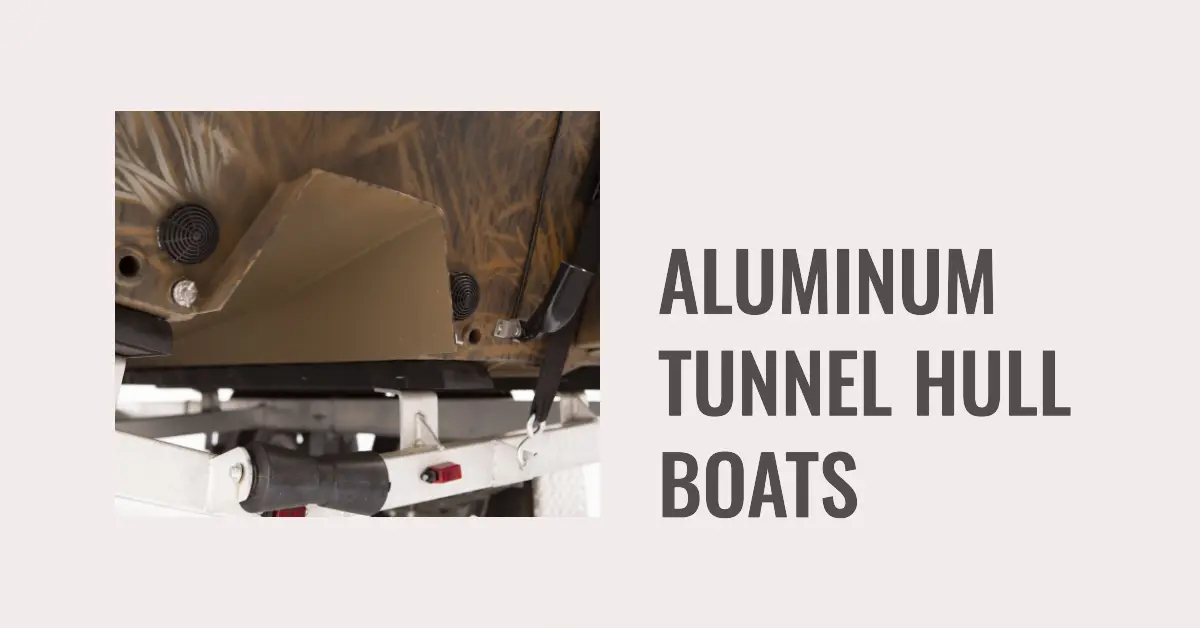
An aluminum tunnel hull boat has two hull sections split by a raised tunnel that traps air beneath the boat. The trapped air adds lift, cuts wetted surface, and reduces drag compared with a solid flat-bottom hull.
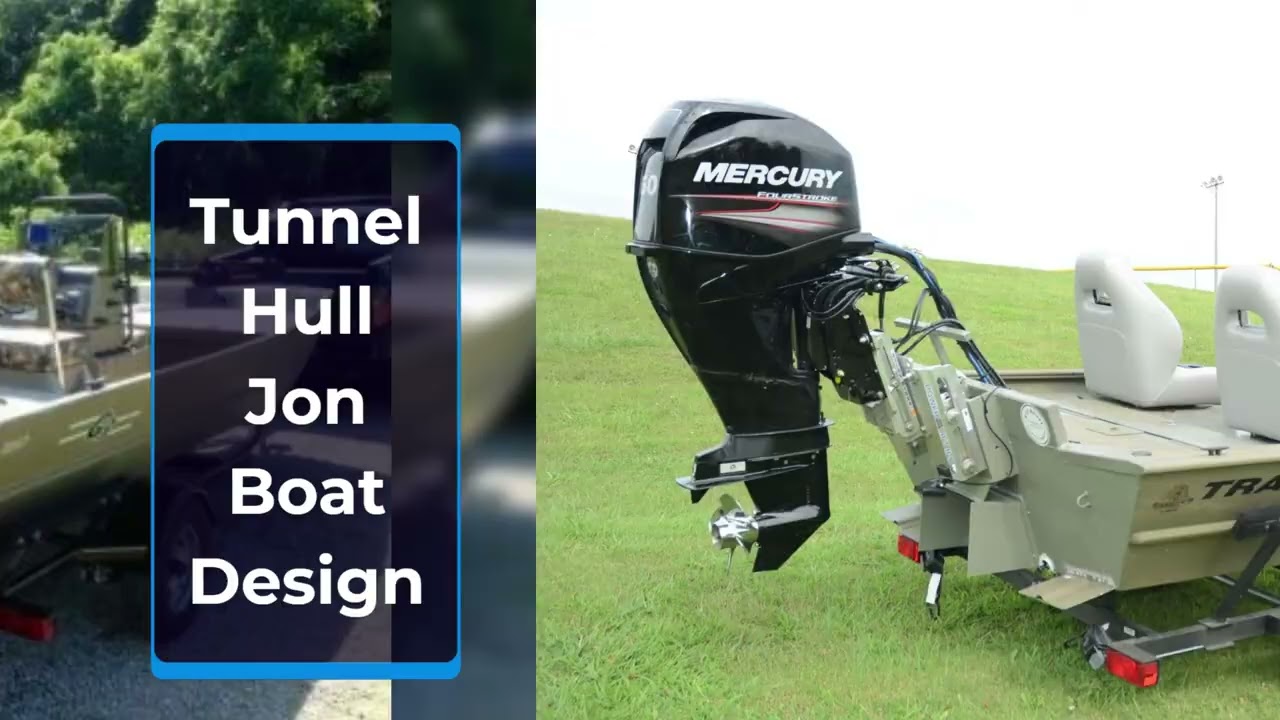
Picture a car with a heavy trunk load — sluggish and hard to turn. Powerful jets lifting the rear end restore that agility by lightening the load. A tunnel hull works the same way, using trapped air and water flow to lift the hull and cut drag. Tunnel hulls share this drag-reducing principle with tri-hull, or cathedral-hull, boats — see our guide to tri-hull boats for how the two designs compare.
Tunnel Hull vs. Flat-Bottom and V-Hull: What’s the Difference?
A flat-bottom hull drafts shallowest but lets air bubbles reach a jet intake, causing cavitation. A tunnel hull raises the motor into a shaped recess that feeds it cleaner water than a flat bottom can.
A basic flat-bottom jon boat drafts shallowest of the three but sacrifices the jet-friendly water flow a tunnel provides. A modest V-hull (6–10 degrees of deadrise) splits bubbles off the keel before they reach the jet. Too much deadrise defeats the purpose: a deep V drafts more and starves the jet of the flat water sheet it needs.
Properly sized tunnels split the difference — enough recess to feed the jet without sacrificing buoyancy. An oversized tunnel wastes hull volume and slows the boat down for no gain in shallow-water performance.
True Tunnel vs. Modified Tunnel: Which Design Should You Look For?
A true tunnel hull is built wide-open-throttle only and can feel unstable at speed, sometimes lifting off in a hard turn. A modified or pocket tunnel blends a V-style hull with tunnels along the outer chines for a steadier ride.
Reputable builders size the tunnel to the jet pump’s exact water requirement — an oversized tunnel wastes hull buoyancy and slows the boat down. SeaArk, for one, markets its 1860 MVT as a modified vee-tunnel design rather than a true tunnel, trading some top speed for everyday stability. Ask any builder whether the tunnel was engineered around your specific jet unit before buying.
Pros and Cons: The Aluminum Tunnel Hull Boat Debate
Aluminum tunnel hull boats trade added cost and a learning curve at low speed for real gains in stability, efficiency, and shallow-water access. The sections below break down both sides.
Advantages
- Enhanced Stability: the dual-hull design gives improved lateral stability, useful for fishing and hunting where a steady platform matters.
- Speed and Efficiency: the tunnel reduces water resistance, which can raise both top speed and fuel efficiency over a flat-bottom hull.
- Durability: aluminum construction resists rust and decay, extending the hull’s working life with less maintenance.
- Adjustable Low Draft: raising the motor on a jack plate tucks the prop or jet pump up inside the tunnel, letting the boat run in a few inches of water.
Disadvantages
Aluminum tunnel hull boats cost more than single-hull alternatives, both to buy and to maintain. Handling takes some adjustment at low speed, where the stern can feel loose and backing up is less precise than on a flat-bottom boat. Budget for that learning curve before committing to a tunnel-hull purchase.
The Dollars and Cents: Cost of Aluminum Tunnel Hull Boats
Aluminum tunnel hull boats start around $20,000 for a no-frills model and climb past $100,000 for a fully rigged, feature-heavy build. Price scales with length, motor choice (prop versus jet), and factory options like trailers, livewells, and electronics.
Motor choice moves the price more than anything else — a factory jet-outboard package costs meaningfully more than a comparable prop outboard. Budget separately for ongoing costs: storage, annual maintenance, and fuel. A dealer quote on the exact rigged package beats any online estimate.
A used tunnel-hull boat can undercut new pricing significantly, but check the tunnel itself before buying. Hard grounding in rocky shallows — exactly what these hulls are built for — can dent or crack the tunnel’s welded seams over time. A pre-purchase survey on the hull and jet or lower unit is worth the cost on any boat more than a few years old.
Common Applications for Aluminum Tunnel Hull Boats
Aluminum tunnel hull boats serve three main roles: shallow-water fishing and hunting, recreational watersports, and light commercial work such as ferrying or harbor tender duty. Low draft and dual-hull stability suit all three about equally well.
- Fishing and Hunting: stability and low draft suit both shallow-water fishing and skinny-water waterfowl hunting.
- Recreation: the speed and efficiency gains make these boats a solid choice for watersports and general cruising.
- Commercial Use: larger tunnel-hull models see service as passenger ferries and light workboats where shallow draft matters.
On the commercial side, tunnel hulls serve as crew tenders and survey skiffs on dredging projects, where shoal water rules out a deep-draft launch. The same low-draft, stable-platform combination that suits a duck blind suits a bar-channel crew transfer. Aluminum’s low maintenance is an added draw for operators running daily service rather than weekend trips.
Aluminum Tunnel Hull Boats at a Glance
The table below summarizes the tunnel hull design, its trade-offs, typical uses, and cost range in one place.
| Feature | Aluminum Tunnel Hull Boat |
|---|---|
| Design | Two hull sections joined by a raised, air-trapping tunnel |
| Advantages | Stability, speed and efficiency, durability, adjustable low draft |
| Disadvantages | Higher cost, handling adjustment at low speed |
| Typical Uses | Fishing, hunting, recreation, light commercial work |
| Cost Range | $20,000 – $100,000+ |
Popular Models of Aluminum Tunnel Hull Boats
The four 18-foot models below are current production tunnel hulls, each rigged differently for prop or jet power. Specs come from each builder’s current listing rather than this article’s original 2023 figures, since trim packages change year to year.
| Model | Length | Beam | Dry Weight | Max HP | Fuel Capacity | Transom Height |
|---|---|---|---|---|---|---|
| Crestliner 1860 Retriever CC Tunnel | 18’0″ | 85″ | 1,348 lbs | 90 HP | 19 gal | 20″ |
| Lowe Roughneck 1860 Tunnel Jet | 18’0″ | 85″ | 970 lbs | Jet package, not fixed* | 19 gal | not published |
| G3 Bay 18T GX Tunnel | 18’10” | 97″ | 1,320 lbs | 115 HP | 26 gal | not published |
| SeaArk 1860 MVT | 18’0″ | 82″ | ~520 lbs | 90 HP | not published (18-gal bow tank optional) | 20″ |
None of the four builders publish a draft figure for these hulls. Draft on a tunnel boat depends on how high the motor sits on its jack plate, not a fixed hull measurement. Transom height and tunnel depth, listed above where published, are the closest available proxies.
Crestliner 1860 Retriever CC Tunnel
The Crestliner 1860 Retriever CC Tunnel pairs an all-welded aluminum hull with a center-console layout built around a 360-degree fishing platform. It measures 18 feet with an 85-inch beam. Crestliner’s current listing rates the boat to 90 HP, up from the 80 HP figure often quoted for earlier model years.
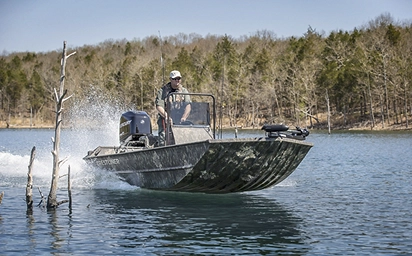
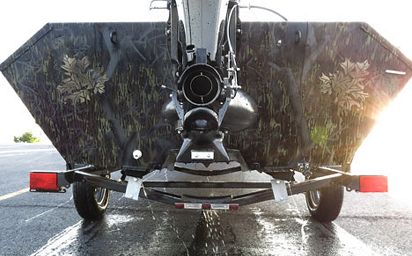
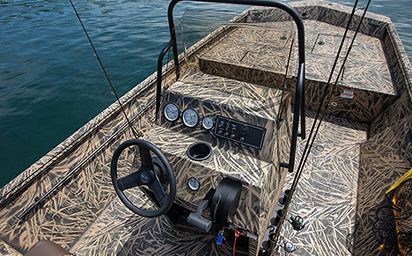
Dry weight runs 1,348 pounds, with 19 gallons of fuel capacity and a 20-inch transom. A 19-gallon aerated livewell, navigation lights, and open deck storage round out the fishing package.
Lowe Roughneck 1860 Tunnel Jet
The Lowe Roughneck 1860 Tunnel Jet ships factory-rigged with a jet outboard rather than a prop, aimed at hunters and anglers running skinny, obstruction-filled water. It’s 18 feet long with an 85-inch beam and a dry weight near 970 pounds, lighter than the prop-rigged models here.
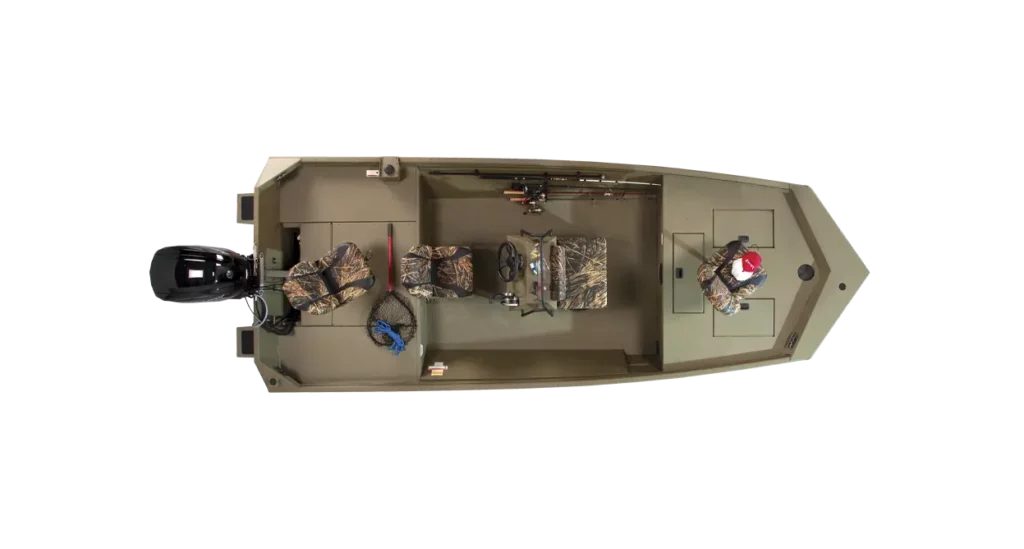
Lowe doesn’t publish a single current horsepower figure for the factory jet package on this hull. The most recent documented spec — a 2017 model-year listing — shows a 65 HP Mercury FourStroke Jet outboard. Treat that as a historical reference, not a confirmed current rating, and verify the exact package with a dealer.
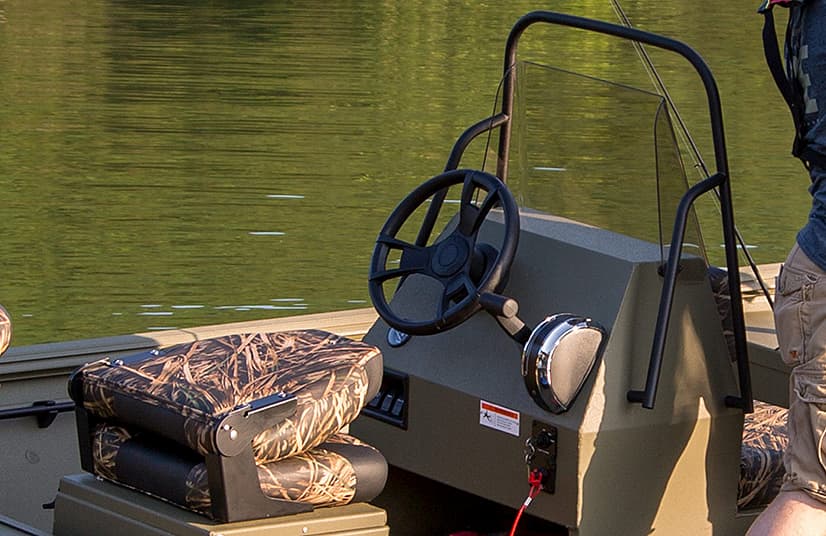
Fuel capacity is 19 gallons. The flat floor and tall transom give a stable platform, with lockable storage and an optional shadow-grass camo finish for hunters.
G3 Bay 18T GX Tunnel
G3 currently markets this hull as the Bay 18T GX Tunnel — not the “DLX” name sometimes used for it. At 18 feet 10 inches with a 97-inch beam, it’s the widest of the four models here, rated to 115 HP.
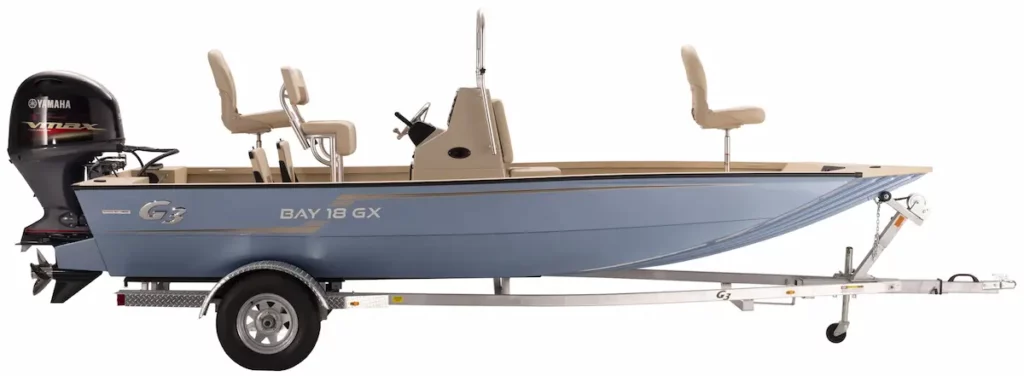
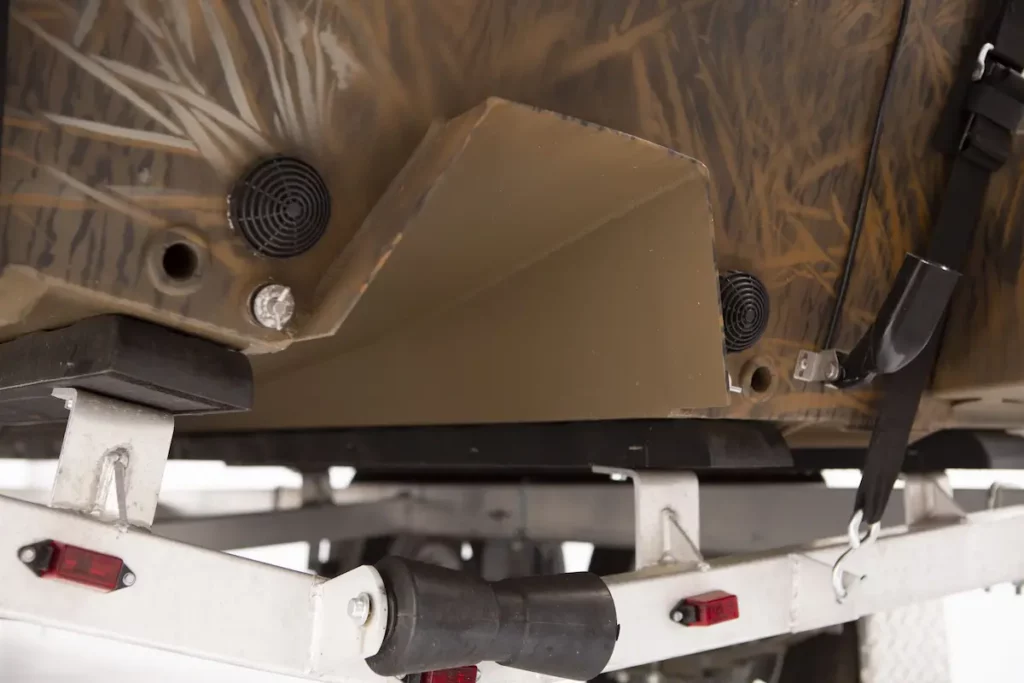
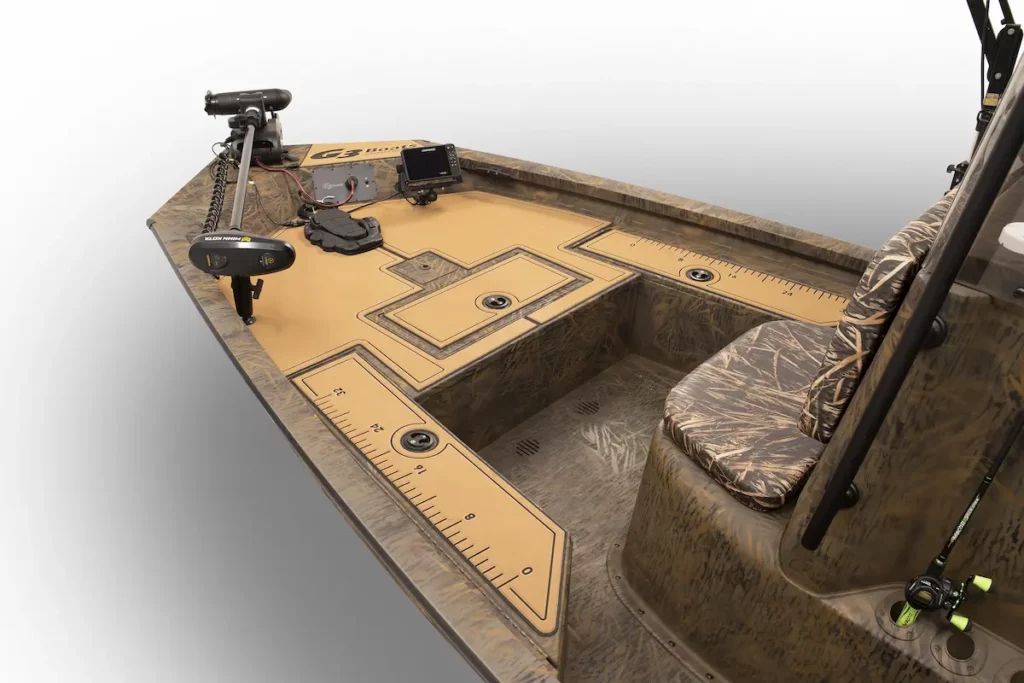
Dry weight is 1,320 pounds, and fuel capacity is 26 gallons — the largest tank of the four. Two aerated livewells, lockable rod storage, and a jack-plate option for adjusting motor height round out the fishing rig.
SeaArk 1860 MVT
The SeaArk 1860 MVT is built within SeaArk’s jon-boat lineup. The company describes the hull as a modified vee-tunnel design, not a true tunnel. It’s 18 feet long with an 82-inch beam, a 24-inch side depth, and a 20-inch transom.
Hull gauge is 0.1-inch 5052 aluminum with a 3/16-inch extruded keel, and SeaArk rates it to a 60/90 HP range depending on package. Weight capacity is 1,350 pounds, and the bare hull weighs about 520 pounds before motor and rigging.
Storage includes a bow box and a built-in fuel tank. An optional camouflage finish is available for hunting use — see our guide to the best paint for aluminum boats before repainting one yourself.
What Is a Tunnel Hull Boat?
A tunnel hull boat has two hull sections joined by a raised tunnel down the centerline. The tunnel traps air and lets water flow beneath it, lifting the hull and feeding the motor cleaner water. The design is common on shallow-water fishing and hunting boats built for jet or prop outboards.
What’s the Difference Between a Tunnel Hull and a Flat-Bottom Boat?
A flat-bottom hull sits directly on the water with no recess, giving the shallowest possible draft but letting air bubbles reach a jet intake and cause cavitation. A tunnel hull raises the motor into a shaped recess, feeding the jet or prop cleaner water while still running shallow. Most dedicated jet boats use a tunnel or pocket-tunnel design rather than a pure flat bottom.
Is a Tunnel Hull Worth It for a Shallow River Jet Rig?
For a jet-powered rig running skinny, rocky rivers, yes — a properly sized tunnel keeps the intake clear of bubbles and lets the pump tuck up out of harm’s way. A pure flat bottom drafts less but chokes the jet with aerated water in chop. The trade-off is a looser feel at the stern and reduced backing control at low speed.
What Tunnel Design Should I Look for in a Jet Drive Boat?
Look for a tunnel sized to match the jet pump’s water requirement, since an oversized tunnel wastes hull buoyancy and slows the boat down. A modified or pocket tunnel paired with a slight V-bottom generally handles better across a range of speeds than a true, wide-open-throttle-only tunnel. Ask the builder whether the tunnel was engineered around your specific jet unit.
How Much Water Does a Tunnel-Jet Boat Need to Get on Plane?
There’s no single published figure — it depends on hull loading, jack-plate height, and how the tunnel is sized to the jet pump. Builders and owners typically describe running in a few inches once on plane with the motor trimmed up, though getting on plane from a stop needs more water than running shallow underway. Confirm minimum operating depth with the specific builder rather than relying on a generic number.
Do Tunnel Hull Boats Work Well for Duck Hunting in Skinny Water?
Yes — the shallow-running, low-draft characteristics that suit fishing apply equally to hunting flooded timber and skinny marsh. A jet-powered tunnel hull avoids the prop-strike risk of an exposed lower unit in stump- or rock-filled water. Camouflage finishes and mud-motor-style jet packages are common options on hunting-focused tunnel models.
Are Aluminum Tunnel Hull Boats More Expensive Than Flat-Bottom Boats?
Yes, typically. The dual-hull tunnel structure adds welding and material cost over a simple flat-bottom jon boat, and factory jet-drive packages cost more than comparable prop outboards. A no-frills tunnel hull boat starts around $20,000, with fully rigged 18-foot models reaching $100,000 or more.
What’s a Good Aluminum Tunnel Hull Boat for a Jet Outboard Conversion?
The Lowe Roughneck 1860 Tunnel Jet ships factory-rigged with a jet outboard, removing the guesswork of matching an aftermarket jet to a hull not designed for it. The Crestliner 1860 Retriever CC Tunnel and G3 Bay 18T GX Tunnel offer outboard jet motors as a factory option on the same tunnel hull. Converting a flat-bottom boat to jet power after the fact usually means reworking the transom and confirming the hull can still feed the jet clean water.

- Great Lakes Maritime Academy: Programs, Cost and Admission – October 14, 2026
- Bunker Delivery Note (BDN): Contents, MARPOL Rules and Checks – October 11, 2026
- Oil Record Book: Part I and Part II Entries, Rules and PSC Checks – October 11, 2026