A dual-fuel engine burns two fuels — a gaseous primary fuel and marine diesel as the pilot charge or fallback mode. The technology has shifted from a niche solution for LNG carriers to the dominant propulsion choice for new container ships, cruise vessels, and tankers. MARPOL Annex VI Regulation 13 NOx limits and the IMO 2023 GHG Strategy are the primary regulatory drivers.
This article covers engine architecture and combustion principles for the MAN B&W ME-GI, WinGD X-DF, and Wärtsilä DF families. It compares LNG, methanol, and ammonia as fuels and quantifies methane slip. EEXI, CII compliance, and the class society retrofit approval process are covered in full.
What Makes an Engine Dual-Fuel
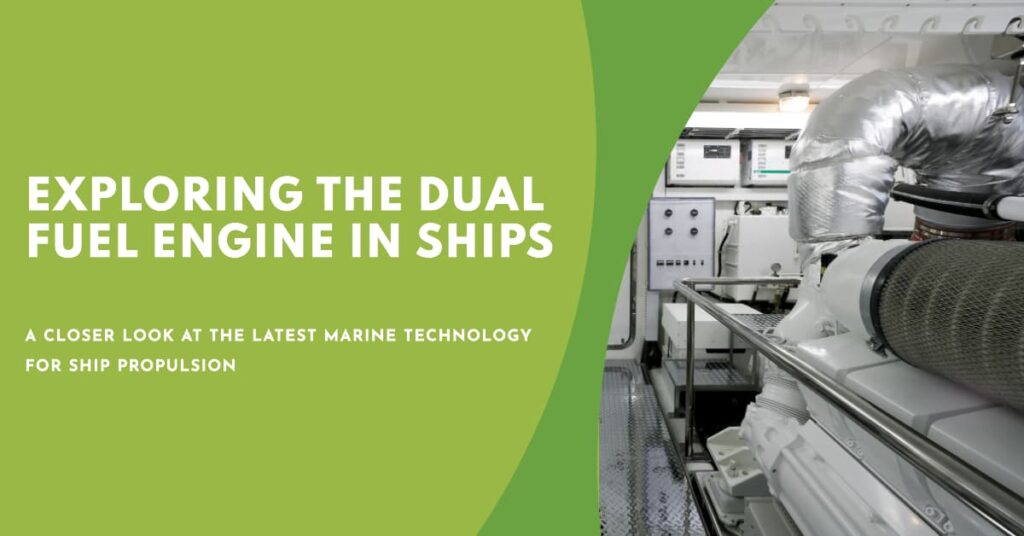
The term dual-fuel describes an engine that can run in gas mode — using a gaseous fuel for most combustion energy — or in diesel mode. Switching between modes is seamless at any load and does not require engine shutdown. The engine type and combustion principle determine which NOx tier applies under MARPOL Annex VI Regulation 13.
Two combustion principles govern marine dual-fuel designs: diesel pilot ignition (DPI) and spark ignition (SI). The choice between them affects methane slip, NOx output, thermal efficiency, and fuel gas supply cost. The principle underpinning a given engine determines its compliance trajectory under Resolution MEPC.328(76).
Dual-Fuel Engine Types: DPI vs SI Combustion Principle
MAN B&W ME-GI — High-Pressure Diesel Pilot Ignition
In a DPI engine, gas is injected at high pressure late in the compression stroke. A small diesel pilot charge — typically 1–5% of full-load energy — ignites it. Combustion follows the diesel cycle: near-stoichiometric, high peak pressure, high thermal efficiency.
The MAN B&W ME-GI two-stroke engine is the primary commercial DPI example. It has extensive operational history on LNG carriers with Höegh Autoliners, Knutsen, and MOL. The ME-LGIM variant powers methanol-capable container ships for Maersk.
The ME-GI operates at gas supply pressures of approximately 300 bar, requiring a high-pressure fuel gas supply (HPFGS) system. That system adds weight and capital cost over low-pressure alternatives. In gas mode, the ME-GI achieves Tier III NOx compliance under Regulation 13 — in most configurations without a standalone SCR unit.
Methane slip is extremely low — typically below 0.1 g/kWh — because unburned gas is not present in meaningful quantities in the exhaust.
WinGD X-DF — Low-Pressure Spark Ignition
An SI engine introduces gas at low pressure — typically 6–16 bar — mixed with air before combustion. A spark plug ignites the mixture. WinGD’s X-DF two-stroke engine is the principal alternative to the ME-GI in the large slow-speed market.
The X-DF powers multiple CMA CGM and Evergreen container vessel generations. It is also installed on tankers built for Trafigura and LNG carriers on the Knutsen and Evergas ethane programmes.
The X-DF burns a homogeneous lean mixture, so peak combustion temperatures stay lower than in diesel-cycle engines. This delivers inherently low NOx — approximately 30–40% below Tier II limits in gas mode, without exhaust treatment. The trade-off is methane slip.
The first-generation X-DF produced approximately 3–4 g/kWh methane slip at low loads. WinGD’s X-DF 2.0 and 3.0 reduced this to approximately 1–2 g/kWh through improved gas admission valve timing. The low-pressure supply system is simpler and cheaper than the ME-GI’s HPFGS but requires a compressor.
Wärtsilä DF Range — Four-Stroke Medium-Speed
Wärtsilä’s DF family — 31DF, 34DF, 46DF, 50DF, and 31DF-D — are medium-speed four-stroke engines. They suit vessels with electric or diesel-electric propulsion: cruise ships, RoPax ferries, offshore support vessels, and car carriers. The 31DF is installed on Viking Line’s Viking Grace, DFDS vessels, and Stena ferries.
The 46DF and 50DF power large cruise ships, including MSC World Europa, Carnival, and Royal Caribbean vessels. All Wärtsilä DF engines run on lean-burn SI in gas mode and revert to liquid fuel without load interruption. In gas mode, NOx complies with Tier II; Tier III in ECAs requires SCR or EGR.
SOx output in gas mode is effectively zero, satisfying MARPOL Annex VI Regulation 14 ECA limits of 0.10% m/m — without scrubbers.
The Dual-Fuel Orderbook: Where the Market Stands in 2026
The shift to dual-fuel propulsion is now structural, not cyclical. The World Shipping Council’s Dual-Fuel Fleet Dashboard records 400 dual-fuel vessels in service at end-2025. That is nearly double the 218 recorded at end-2024.
A further 726 vessels remain on order in those segments, representing over USD 150 billion in committed investment.
DNV’s Alternative Fuels Insight platform shows the alternative-fuel orderbook maintained a 38% share of gross tonnage in 2025. This held firm even as total newbuild ordering fell from 4,405 vessels in 2024 to 2,403. Container shipping was the exception: orders rose from 447 to 547 vessels, representing 68% of all alternative-fuel newbuild orders.
Across container ships and vehicle carriers, 74% of vessels on order are now dual-fuel capable. LNG dominated the 2025 orderbook with 188 orders representing 31% of alternative-fuel gross tonnage. Methanol orders collapsed from 149 in 2024 to just 61, reflecting regulatory uncertainty and operational problems in early fleets.
Only six ammonia-capable orders were placed across all segments in 2025, per Lloyd’s Register data. The January 2026 pipeline confirmed LNG’s dominance. DNV recorded 20 new alternative-fuel orders that month; 16 were LNG-fuelled container ships.
Why Bulk Carriers and Tankers Lag
The bulk carrier and tanker segments continue to order predominantly conventional-fuel tonnage. LNG and methanol bunkering is concentrated in a handful of major hub ports. Vessels on spot markets cannot guarantee access at every port of call.
Liner operators on fixed rotations are not subject to that constraint — which explains why containerships dominate. WinGD’s head of strategic marketing has stated publicly that most methanol engine orders are for liner container trades. Bulk carriers and gas carriers on long charters account for most of the rest.
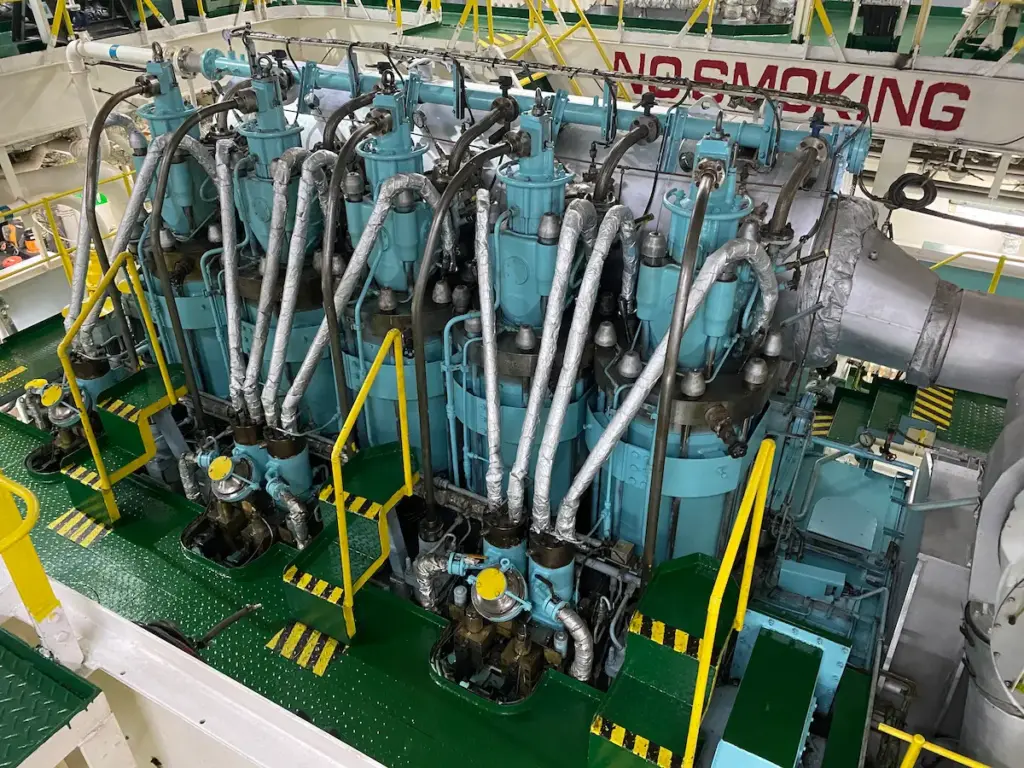
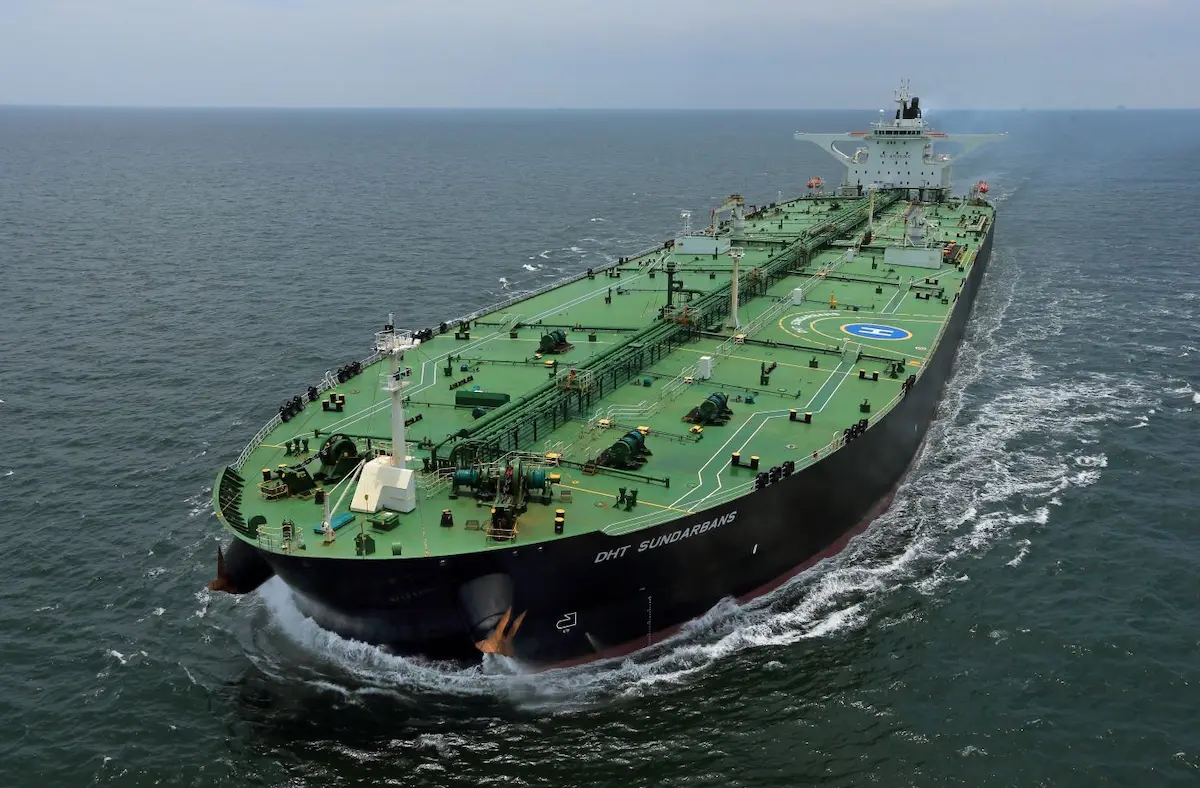
VLCC owners have adopted an “alternative fuel ready” approach: reserving space and piping runs at delivery but deferring installation. This reduces newbuild cost while preserving retrofit optionality. Owners ordering conventional tonnage today should model CII trajectories through 2030 against IMO improvement factors.
Methanol: Operational Reality vs the Marketing Narrative
Methanol attracted strong ordering momentum from 2022 to 2024, driven largely by Maersk’s programme. At the Global Ocean Decarbonization 2025 seminar, Maersk’s chief shipbuilder disclosed engine reliability issues requiring excessive maintenance. Of 12 delivered vessels, most were burning grey fossil methanol — not green — because supply was unavailable at scale.
Grey methanol produces a worse lifecycle CO₂ outcome than LNG. The environmental case for methanol evaporates without verified renewable supply. Bio-methanol averaged approximately USD 2,500 per tonne MGOe in 2025 — roughly three times the cost of marine gas oil.
DNV’s methanol white paper estimates current low-GHG production at 2.2 million tonnes per year. Projected shipping demand by 2040 is up to 60 million tonnes. The supply-demand gap is the primary barrier to methanol’s decarbonization claim.
LNG vs Methanol vs Ammonia: Comparative Reference
The table below covers properties and practical implications for fuel selection in 2025–2026. Figures assume the fuel pathway noted; actual lifecycle GHG depends on production source and methane slip.
| Parameter | LNG | Methanol | Ammonia |
| CO₂ vs HFO (tank-to-wake) | ~20–25% reduction (fossil LNG) | 0% if green; worse if grey fossil | Zero (if green ammonia) |
| SOx output | Zero | Zero | Zero |
| NOx in gas mode | ≥85% cut (DPI); ~30–40% cut (SI) | Significant reduction vs HFO | Combustion control required |
| Storage condition | Cryogenic −163°C, Type C tanks | Ambient temp and pressure | −33°C refrigerated or pressurised |
| Flash point | −188°C — IGF cryogenic rules | +11°C — IGF low-flashpoint rules | +132°C — not low-flashpoint |
| Energy density vs HFO | ~60% | ~50% | ~30% |
| Methane slip | 0.1 g/kWh (DPI) to 3 g/kWh (SI) | None | None |
| Bunkering availability | 200+ ports, established | ~130 ports; marine-specific limited | Non-existent for propulsion |
| Green pathway | Bio-LNG, e-LNG | Bio-methanol, e-methanol | Green ammonia |
| Toxicity | Asphyxiant in confined spaces | Toxic at low exposure levels | IDLH 300 ppm — highly toxic |
| Commercial status | Mature and proven | Operational; reliability issues noted | Pre-commercial — AiP stage |
Methane Slip: The LNG Penalty Quantified
Methane carries a GWP of 28–34 over 100 years and approximately 86 over 20 years, per IPCC AR6. Unburned methane in the exhaust — methane slip — can partially negate the CO₂ saving from LNG over HFO. MEPC.1/Circ.885 now requires methane slip to be accounted for in LNG-fuelled vessel CII calculations.
In the MAN B&W ME-GI (DPI), slip is typically 0.05–0.1 g/kWh — combustion is essentially diesel-cycle. The first-generation WinGD X-DF measured 3–5 g/kWh at low loads, falling to 1.5–2 g/kWh at high load. The X-DF 2.0 and later variants substantially reduced low-load slip through gas admission valve redesign.
The CII consequence is significant. Vessels with frequent low-load operations — port approaches, manoeuvring, slow-steaming — accumulate more slip than design-point figures suggest. A high-slip engine on such a voyage profile can produce a worse CII than an equivalent HFO vessel.
Maintaining engine load above 30% MCR in gas mode is the primary mitigation — slip rises sharply below this threshold. Switching to diesel mode during low-load port manoeuvring is standard practice for SI engine operators. Catalytic methane oxidation downstream of the turbocharger, developed by MAN and Wärtsilä, reduces exhaust-phase slip significantly.
MARPOL Annex VI, EEXI, and CII: The Regulatory Framework
NOx — MARPOL Annex VI Regulation 13
Regulation 13 sets NOx limits across three tiers. Tier I applies to engines on ships built on or after 1 January 2000. Tier II — approximately 15–20% below Tier I — applies globally to engines on ships built from 1 January 2011.
Tier III mandates approximately 80% reduction from Tier I. It applies in designated NOx ECAs: the North American, US Caribbean, and (since 1 January 2021) North Sea and Baltic Sea areas.
The MAN B&W ME-GI achieves Tier III in gas mode inherently through high-pressure DPI combustion. WinGD X-DF and Wärtsilä DF engines achieve Tier II in gas mode; SCR or EGR is required for Tier III within ECAs. Ship operators transiting the North Sea or Baltic must verify their engine’s Tier classification on the EIAPP certificate.
SOx — MARPOL Annex VI Regulation 14
Regulation 14 imposes a 0.50% m/m global sulfur cap since 1 January 2020 and 0.10% m/m inside SOx ECAs. LNG contains essentially zero sulfur; a vessel in gas mode produces no SOx. Compliance with both the global cap and ECA limits is achieved without a scrubber or fuel switch.
Methanol is likewise sulfur-free. Both fuels deliver ECA compliance without a scrubber. Scrubber installation costs typically range from USD 2–5 million depending on vessel size — an avoided cost with either alternative fuel.
EEXI — MEPC.333(76)
The Energy Efficiency Existing Ship Index — mandated by MEPC.333(76) — has applied to ships of 400 GT and above since 1 January 2023. EEXI measures theoretical design efficiency. A dual-fuel vessel on LNG benefits from LNG’s Cf of 2.75 tCO₂/tFuel versus HFO’s 3.114 — improving attained EEXI by approximately 12%.
Primary EEXI compliance mechanisms are shaft power limitation (EPL/SHaPoLi), engine derating, waste heat recovery, and air lubrication. A dual-fuel LNG retrofit provides an alternative compliance route in some configurations. EEXI is a one-time assessment — it is not recalculated unless a major conversion occurs under MARPOL Annex VI Regulation 1.
CII — MEPC.328(76)
The Carbon Intensity Indicator, adopted under MEPC.328(76), entered its rating phase from 1 January 2023. CII is an operational index recalculated annually from fuel consumption data submitted under IMO DCS. Ships are rated A through E; C is the minimum acceptable.
A D rating for three consecutive years, or an E rating for one year, triggers a mandatory corrective action plan. The required annual improvement factor tightens through 2030.
For a dual-fuel LNG vessel, CII is calculated from actual consumption applying each fuel’s Cf value plus the slip correction per MEPC.1/Circ.885. A vessel predominantly in gas mode achieves a materially better CII than an HFO equivalent. DPI engines deliver consistent gains; SI engines at low load may show reduced benefit depending on voyage profile.
FuelEU Maritime entered force on 1 January 2025 for vessels on EU trades. It imposes a well-to-wake GHG intensity limit tightening progressively to 2050. This intensifies the methane slip problem for SI LNG engines on EU routes and reinforces the case for DPI architecture.
Vessel-Type Applicability
LNG Carriers
LNG carriers are the natural home of dual-fuel propulsion: the vessel carries its engine fuel as cargo. Boil-off gas (BOG) from cargo tanks would otherwise require re-liquefaction or venting. Burning BOG in the engine improves cargo retention, reduces operating cost, and satisfies MARPOL simultaneously.
Modern Q-Flex and Q-Max LNG carriers for Qatar Energy and Nakilat use two-stroke ME-GI or X-DF engines. Independent carrier fleets from Knutsen, Höegh, and MOL follow the same configuration. Four-stroke Wärtsilä DFs typically handle auxiliary power trains on these vessels.
Converting older steam turbine LNG carriers to dual-fuel propulsion is one of the most active retrofit segments. Wärtsilä’s X72DF programme replaces steam plant with medium-speed diesel-electric propulsion; MAN’s two-stroke ME conversions are also in service. For a surveyor on an LNG carrier, the gas supply system is part of the cargo system survey scope. This covers BOG compressors, vaporisers, and HPFGS or LPFGS manifolds.
Container Ships
Container shipping accounts for 49% of alternative-fuel gross tonnage on order and 68% of all alternative-fuel newbuild orders (DNV, 2025). CMA CGM, Evergreen, COSCO, and MSC have committed to large LNG-fuelled fleets in the 15,000–24,000 TEU range. LNG bunkering at Rotterdam, Singapore, Tanjung Pelepas, Busan, and Zeebrugge makes it operationally practical for liner trades.
Maersk’s 25-vessel methanol programme is the main alternative thread in container shipping. Of 12 vessels delivered by mid-2025, only four were operating on methanol at the time of Maersk’s 2025 seminar disclosure. Engine reliability issues have been addressed by MAN PrimeServ but contributed materially to the slowdown in methanol ordering.
Cruise Vessels and RoPax Ferries
Carnival Corporation, MSC Cruises, and Royal Caribbean have adopted LNG dual-fuel for new large builds. Wärtsilä 46DF and 50DF generating sets supply the electric propulsion plant. MSC World Europa and AIDA Cosma entered LNG service in 2022–2023 and represent the current benchmark for large cruise ship gas operation.
More than 40% of cruise ships on order — 31 of 75 vessels — are specified for multi-fuel operation. DNV data puts 59% of cruise segment on-order gross tonnage as alternative-fuel. RoPax ferries from Viking Line, Stena, and DFDS have used Wärtsilä DF engines since the early 2010s.
Tankers
LNG dual-fuel on product tankers and crude carriers remains limited relative to container shipping. VLCC owners generally prefer the “alternative fuel ready” approach — reserving space without committing to a specific gas system. They await bunkering infrastructure development on the main tanker trading routes.
Methanol-capable MAN B&W engines fit naturally on chemical tankers that carry methanol as cargo under the IBC Code. Vessels with Stolt-Nielsen and Odfjell have entered service on this basis. LPG carriers can use propane or butane as propulsion fuel via the Wärtsilä 31DF or MAN B&W ME-LGIP.
Retrofit Economics and Class Society Approval
A dual-fuel retrofit involves four primary work packages. First: engine conversion or replacement. Second: fuel gas supply system installation — tanks, bunkering station, vaporisers, and compressors.
Third: hazardous area reclassification and ventilation upgrades to IGF Code requirements. Fourth: crew training and SMS revision. Indicative LNG retrofit costs for a medium-sized container vessel range from USD 8–15 million.
Methanol retrofits are simpler from an infrastructure standpoint: methanol is liquid at ambient temperature and requires no cryogenic storage. MAN Energy Solutions offers bolt-on conversion packages from ME-C to ME-LGIM (methanol) configuration. MAN’s head of retrofit has confirmed the conversion can be completed in a standard dry dock without cutting open the ship.
The world’s first VLCS methanol retrofit — Maersk Halifax — was completed in 2024. Technical feasibility is demonstrated; commercial viability depends on green methanol supply cost.
Class society approval follows the IMO IGF Code (Resolution MSC.391(95)), mandatory for new builds from 1 January 2017. Retrofits are subject to the same Code via flag state interpretation. ABS publishes supplementary requirements in Rules for Building and Classing Marine Vessels, Part 5C Chapter 15.
DNV requirements appear in Rules for Ships, Part 6 Chapter 2. Lloyd’s Register publishes its Rules for Ships Using Gases or Other Low-Flashpoint Fuels. All three must be read alongside the IGF Code.
The approval process involves: initial design review and approval in principle; HAZID/HAZOP against IGF Code Chapter 9. Failure mode analysis for gas detection and emergency shutdown is required, followed by formal plan approval. Workshop attendance for fabrication and pressure testing, and sea trial verification, complete the process.
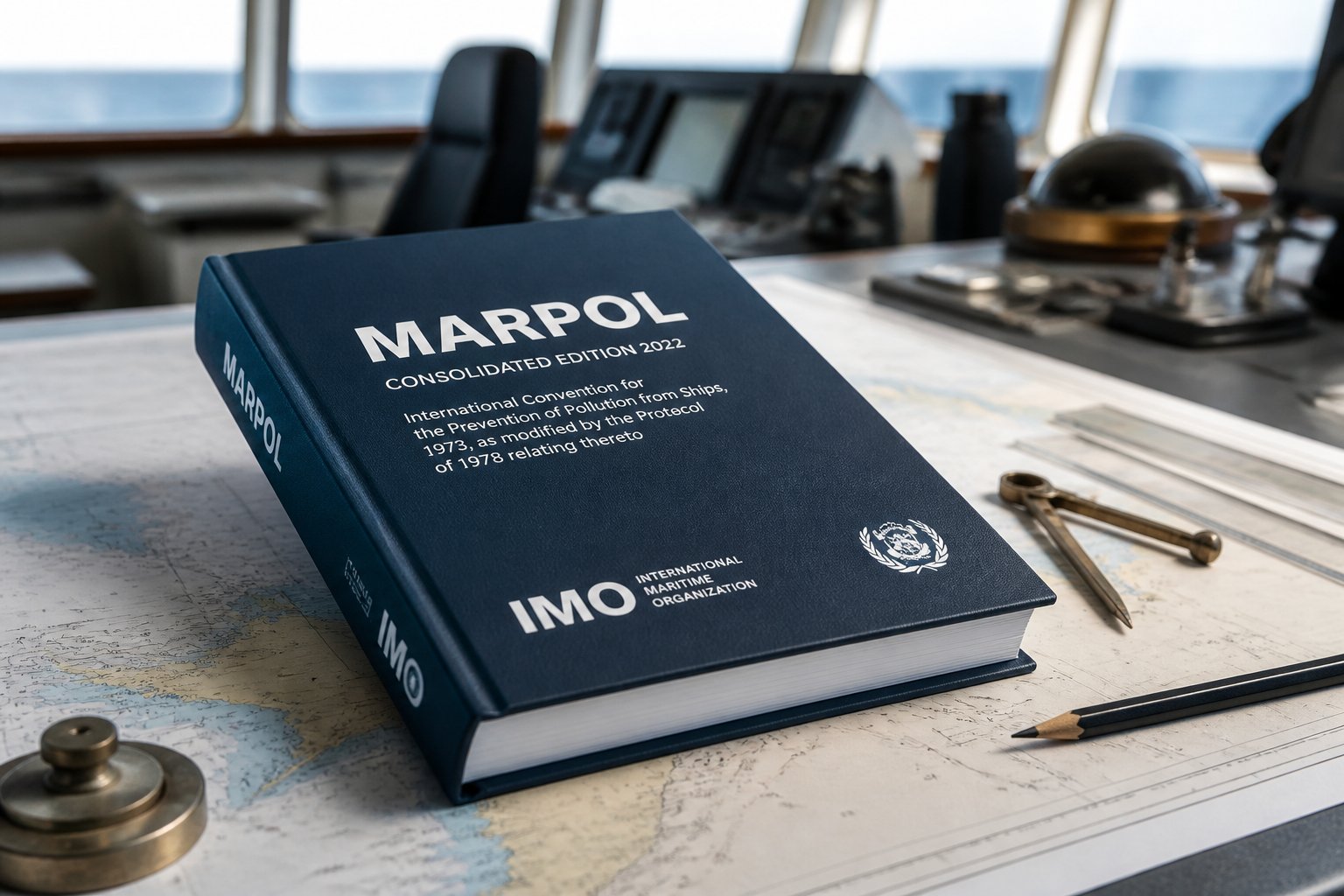
Flag state notification and amendment of the International Certificate of Fitness or IOPP Certificate is required in parallel. The IMO MARPOL Consolidated Edition (IA520E) is the definitive statutory reference for Annex VI Regulations 13 and 14, the EEXI and CII amendments, and the IGF Code.
Retrofit economics must account for the LNG price differential versus HFO or VLSFO. Scrubber avoided cost, CII improvement value, and EEXI compliance avoided cost are all inputs to the business case. The payback period is vessel- and route-specific; owners should commission a formal voyage model.
Frequently Asked Questions about Dual-Fuel Engines
What is the difference between a DPI and an SI dual-fuel engine?
A DPI engine such as the MAN B&W ME-GI injects gas at approximately 300 bar, ignited by a small diesel pilot charge. This produces near-diesel combustion efficiency and methane slip below 0.1 g/kWh. An SI engine such as the WinGD X-DF uses low-pressure gas and a spark plug, producing lower NOx inherently. Methane slip is higher — typically 1–3 g/kWh on current-generation variants.
What is methane slip and why does it matter under the CII regulation?
Methane slip is unburned methane that exits in the exhaust. Its GWP of 28–34 times CO₂ over 100 years (IPCC AR6) partially offsets LNG’s carbon advantage over HFO. Under MEPC.328(76), the CII calculation applies a methane slip correction per MEPC.1/Circ.885. High-slip SI engines in low-load operations can produce a worse CII than their design intent suggests.
Does a dual-fuel ship comply with MARPOL Annex VI Regulation 14 SOx limits in ECAs when operating on LNG?
Yes. LNG contains essentially zero sulfur, so a vessel in gas mode produces no SOx. It complies with both the global 0.50% m/m cap and the 0.10% m/m ECA limit under Regulation 14, without a scrubber or fuel switch. In diesel mode inside a SOx ECA, the vessel must use MGO or VLSFO at the applicable limit.
Does the MAN B&W ME-GI comply with Tier III NOx limits in gas mode?
In most configurations, yes. High-pressure DPI combustion keeps NOx within Tier III thresholds in gas mode — without a standalone SCR unit. This should be verified against the vessel’s EIAPP certificate, since engine tuning and pilot fuel ratio affect the tested NOx value.
What does a dual-fuel LNG retrofit involve and how long does it take?
An LNG retrofit covers engine conversion, Type C cryogenic tank installation, vaporisers, bunkering station, gas detection, and hazardous area re-rating. Ventilation upgrades and crew training are also required. Drydock time for a medium-sized vessel is typically 4–8 weeks; class approval under MSC.391(95) and flag state IOPP amendment must precede first LNG bunkering.
Is LNG or methanol the better fuel choice for a newbuild container ship in 2025?
For most operators, LNG is the stronger commercial choice in 2025. It offers bunkering at over 200 ports, proven engine technology, and full Annex VI compliance at lower fuel cost than green methanol. Methanol suits operators with secured renewable supply or vessels carrying methanol as cargo — but green methanol at scale is a 2027–2030 prospect.
How does EEXI apply to an existing vessel converting to dual-fuel LNG operation?
LNG’s Cf of 2.75 tCO₂/tFuel versus HFO’s 3.114 improves the attained EEXI score by approximately 12%. Converting to dual-fuel LNG requires recalculating EEXI and submitting it to class under MEPC.333(76). The attained EEXI must meet the required value for the vessel’s type — otherwise shaft power limitation or other measures are needed.
What class society rules govern dual-fuel engine approval?
The primary statutory framework is the IMO IGF Code (Resolution MSC.391(95)). ABS supplements it in Part 5C Chapter 15 of its Marine Vessel Rules. DNV requirements are in Rules for Ships, Part 6 Chapter 2. LR publishes its Rules for Ships Using Gases or Other Low-Flashpoint Fuels. The class society rules specify gas detection, emergency shutdown, and hazardous area classification in more detail than the IGF Code alone.


- VLCC Meaning: Very Large Crude Carrier Specs, Owners, Rates – September 21, 2026
- What Is SOLAS? Chapter-by-Chapter Overview and Enforcement – September 9, 2026
- What Is MARPOL? Guide to All Six Annexes and Enforcement – September 9, 2026