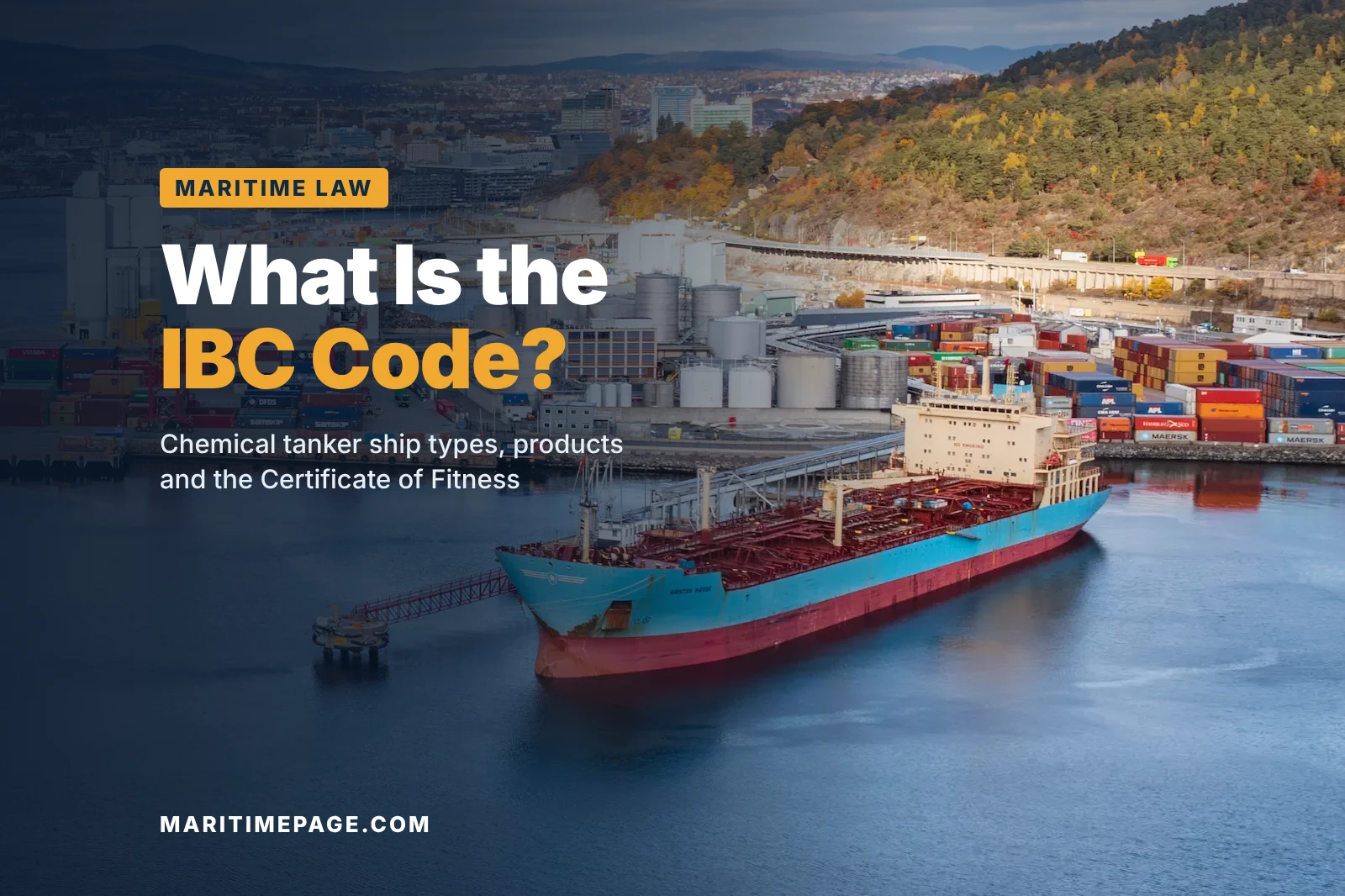
What Is the IBC Code? Ship Types, Products and Certificates
What the IBC Code requires of chemical tankers: scope, ship types 1, 2 and 3, the 21 chapters, Chapter 17 products, safety systems and certificates.

What the IBC Code requires of chemical tankers: scope, ship types 1, 2 and 3, the 21 chapters, Chapter 17 products, safety systems and certificates.
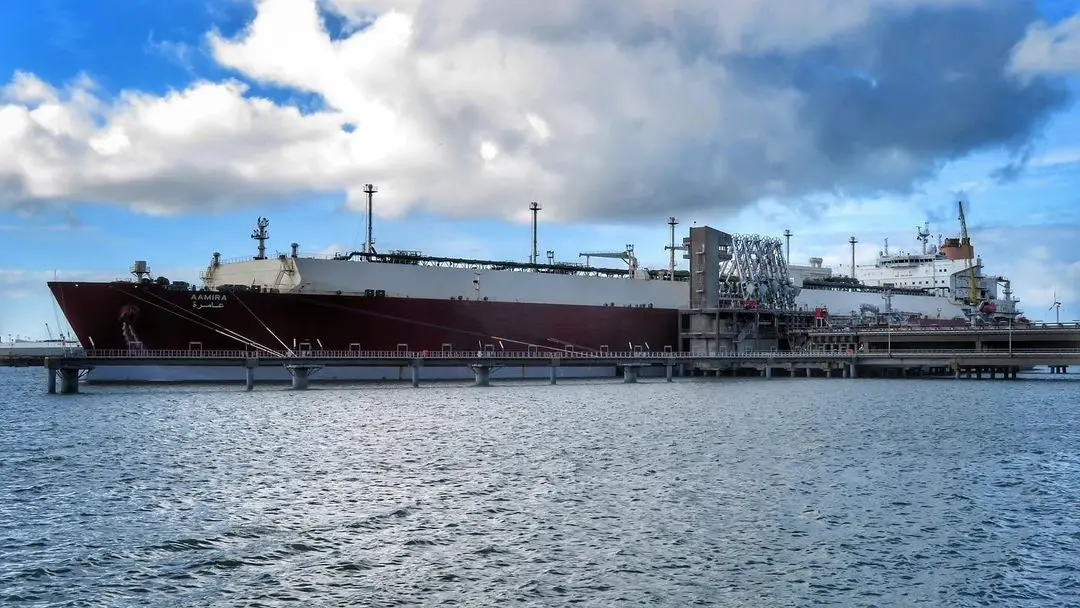
The types of gas carriers under the IGC Code explained: carriage conditions, ship types 1G, 2G, 2PG and 3G, Type A, B and C tanks, and LPG carrier sizes.
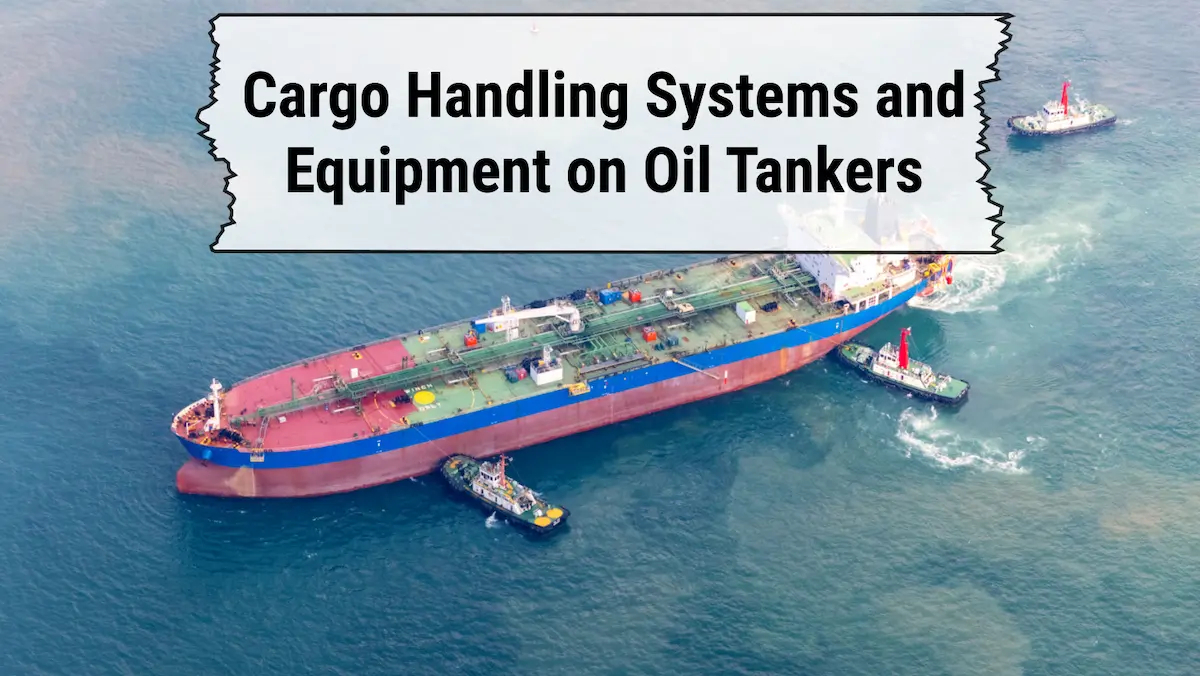
How oil tanker cargo handling works: pumps, pipelines, inert gas, venting, overfill alarms, crude oil washing and heating, with the SOLAS and MARPOL rules.
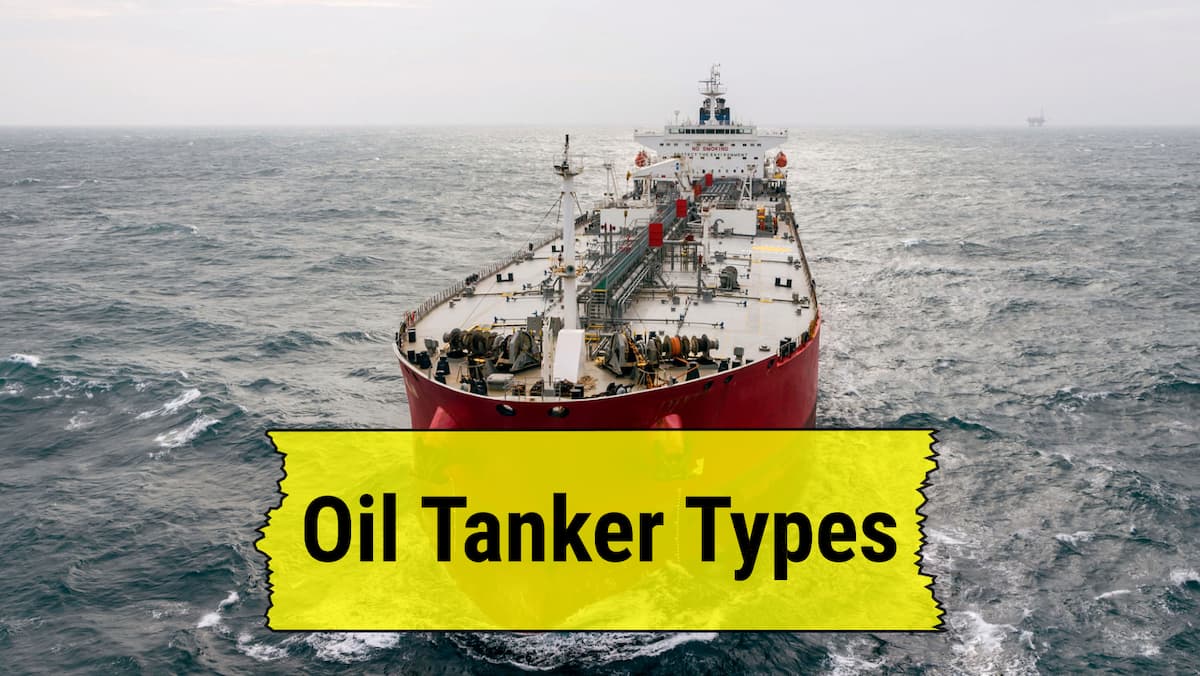
A guide to oil tanker types: crude and product tankers, size classes from General Purpose to ULCC, clean vs dirty trades, MARPOL categories and inspections.
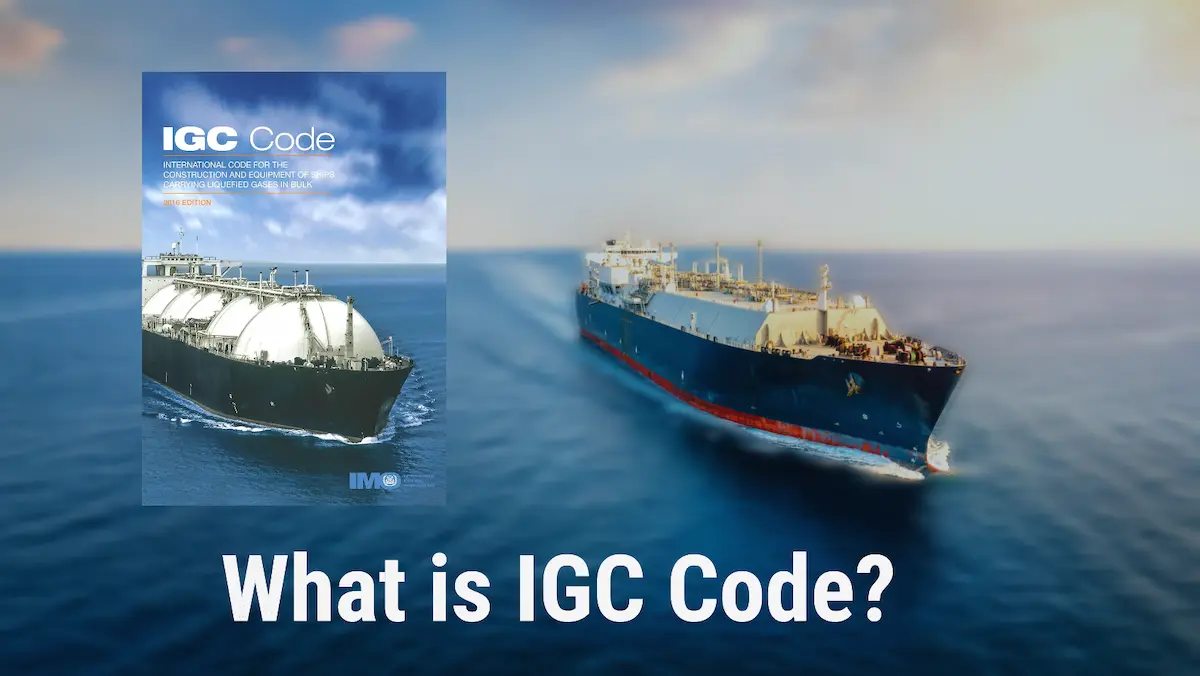
The IGC Code for gas carriers: liquefied gas definition, ship types 1G–3G, cargo tank types, the 19 chapters, Certificate of Fitness and inspections.
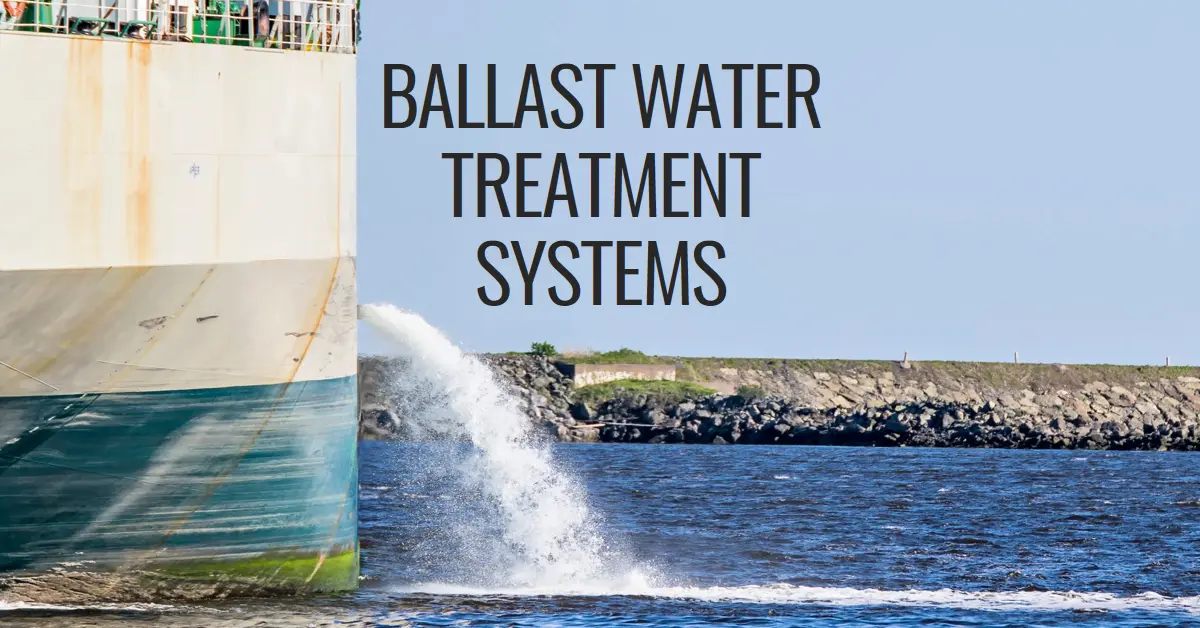
What a ballast water treatment system does, how filtration, UV and electrochlorination work, the IMO D-2 standard, required documents and PSC checks.
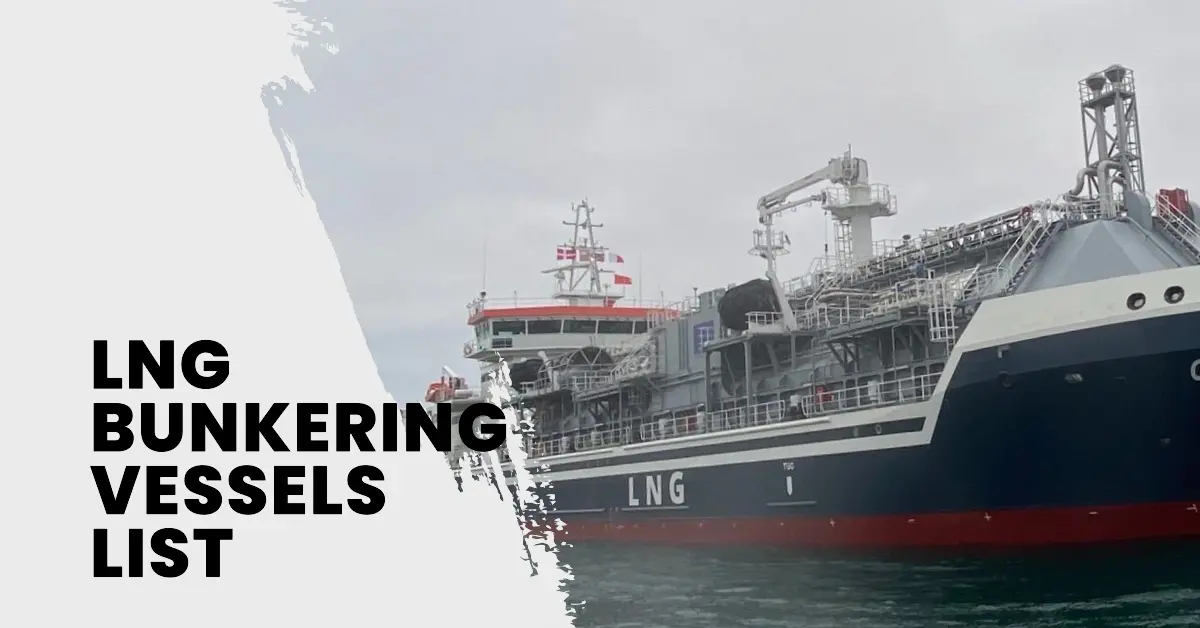
The LNG bunkering vessels list: 47 ships by delivery year and region, how many are in service, the largest units, size bands, design and where they work.
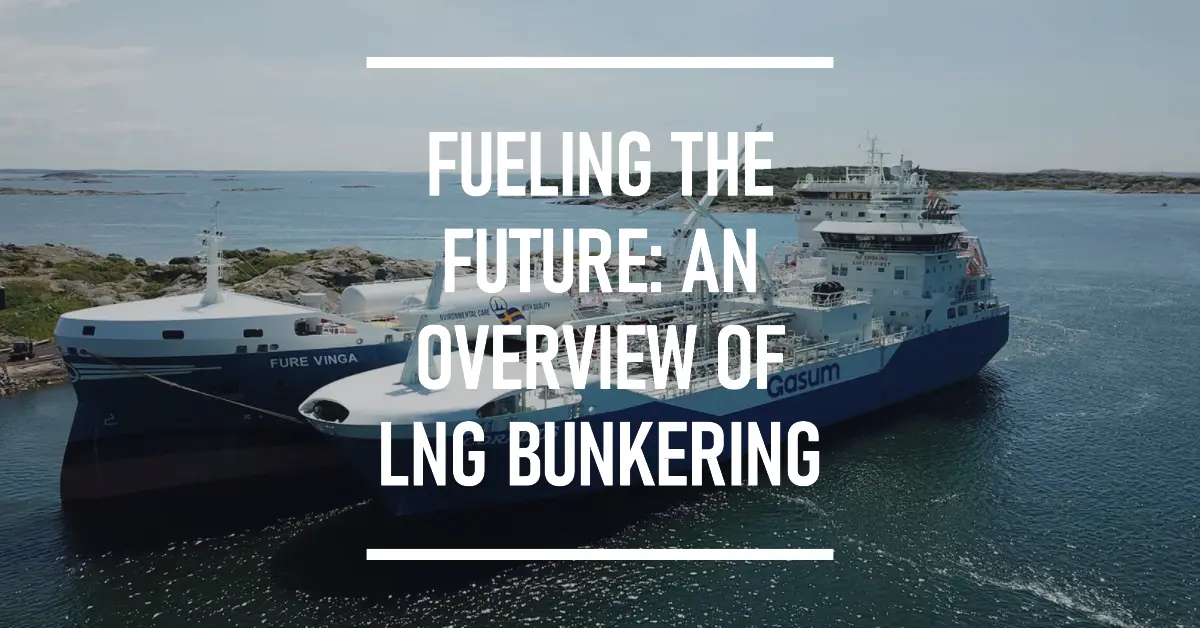
How LNG bunkering works: delivery methods, bunkering procedure, equipment, IGF and ISO 20519 rules, risks, emissions and where LNG fuel is available.
FOSFA acceptable list explained: which previous cargoes are allowed before oils and fats, grade conditions, the 60% rule, and EU, Codex and NIOP lists compared.
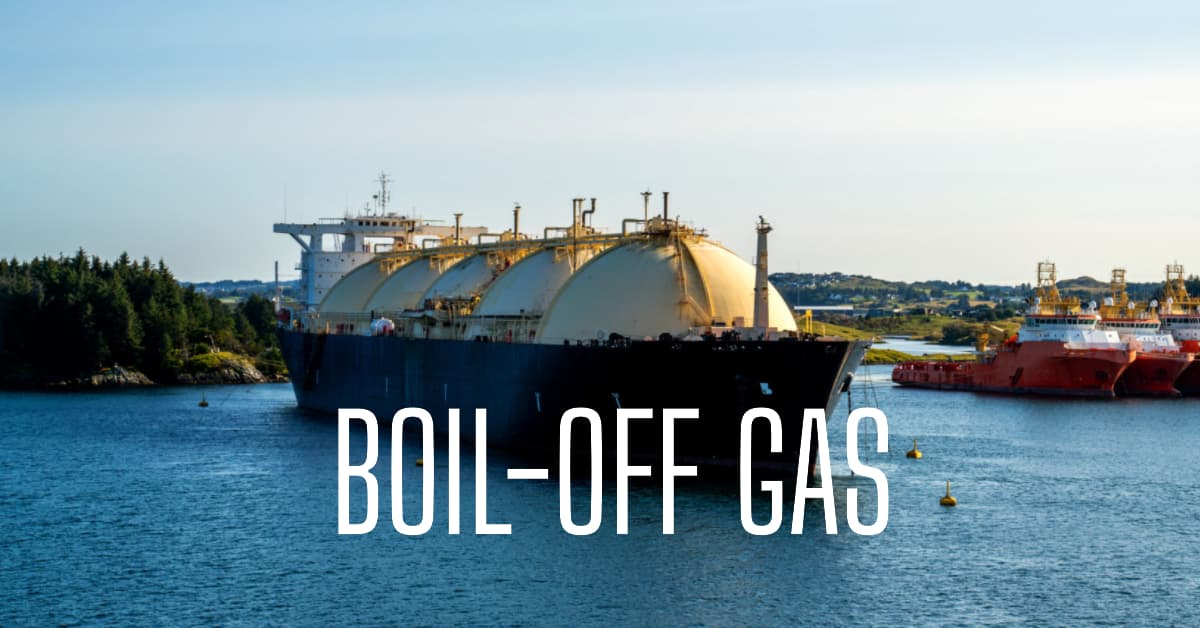
What boil-off gas is, why LNG cargo tanks generate it, modern boil-off rates, and how LNG carriers use BOG as fuel, reliquefy it or burn it in a GCU.