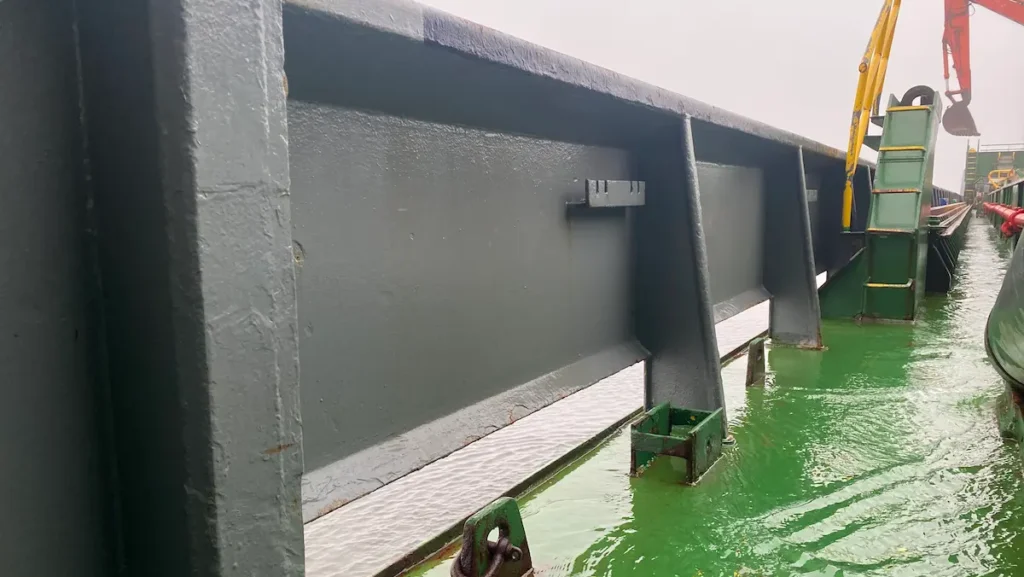
Freeing ports are openings in a ship’s bulwarks that allow water to drain quickly from exposed weather decks, helping maintain safety and stability in rough sea conditions. They are an essential feature on working vessels where waves can wash large amounts of water onto the deck.
On most ships, freeing ports are integrated into the ship’s bulwark structure at deck level and are designed to ensure that water does not accumulate and compromise vessel stability or crew safety.
Freeing ports are openings in the bulwark at deck level that allow water shipped onto exposed decks to drain overboard, improving vessel safety and stability.
Where Are Freeing Ports Located?
Freeing ports are typically installed along the sides of a ship within the bulwarks, at the level of the weather deck.
They are most commonly found on:
- cargo ships
- fishing vessels
- offshore support vessels
- other working ships with enclosed deck areas
Freeing ports are especially important in well deck areas, where bulwarks can trap water on deck if drainage is not properly provided.
Why Are Freeing Ports Important?
Freeing ports serve several critical safety and operational functions:
1. Prevent Water Accumulation
When waves break over the deck (often referred to as green seas), large volumes of water can collect on deck. Freeing ports allow this water to drain quickly overboard.
2. Maintain Ship Stability
Excess water on deck creates a free surface effect, which can reduce vessel stability. Rapid drainage through freeing ports minimizes this risk.
3. Improve Crew Safety
Standing water increases the risk of slipping and makes deck operations dangerous. Freeing ports help keep working areas safer and more manageable.
How Freeing Ports Work
Freeing ports operate through simple but effective drainage principles:
- Water comes onto the deck due to waves or heavy weather
- The deck is designed with slight camber or slope
- Water flows toward the ship’s side
- It exits through freeing ports in the bulwark
To ensure proper operation, freeing ports may be fitted with shutters, bars, or rails. These prevent blockage from debris or cargo while still allowing water to flow freely.
Regulatory Requirements for Freeing Ports
The design and sizing of freeing ports are governed by the International Convention on Load Lines (1966, as amended).
According to this convention, freeing port area is calculated based on the length of the well deck and the height of the bulwark (primarily under Regulation 24, with related safety provisions in Regulation 25 depending on layout).
? Regulation 24 – Drainage of Water
This regulation defines how water must be effectively drained from enclosed decks and bulwark wells.
Key requirements include:
- Ships with bulwarks forming wells must have sufficient freeing ports for rapid drainage
- The minimum total freeing port area is based on:
- Length of the well deck
- Height of the bulwark
- Sheer and camber of the deck
- If the bulwark height exceeds 1.2 meters, the required freeing port area must be increased
- Freeing ports must be arranged to ensure efficient and unobstructed water flow
Freeing ports may be fitted with shutters, bars, or rails to prevent blockage while still allowing effective drainage.
Classification societies (such as DNV, ABS, LR) adopt these requirements and provide detailed formulas and design criteria for structural strength, spacing, and effective drainage area.
Design Considerations for Freeing Ports
Proper design of freeing ports is essential for both safety and durability:
- Size and Area: Must meet regulatory drainage requirements
- Spacing: Evenly distributed along enclosed deck areas
- Structural Reinforcement: Required around openings to maintain strength
- Protection Against Blockage: Use of bars, shutters, or grids
- Drainage Efficiency: Positioned to align with deck slope and water flow
Poorly designed freeing ports can lead to water retention, increasing safety risks.
Freeing Ports vs Scuppers
Freeing ports are often confused with scuppers, but they serve different functions:
- Freeing ports
- Located in bulwarks
- Allow water to drain directly overboard from deck level
- Used in exposed deck areas
- Scuppers
- Part of a piping system
- Drain water from decks through pipes
- Common on enclosed or internal decks
Both systems are important, but freeing ports are specifically designed for rapid drainage in exposed conditions.
Common Problems and Maintenance
To remain effective, freeing ports must be regularly inspected and maintained.
Typical issues include:
- Blockage from debris, cargo residues, or paint buildup
- Corrosion due to constant exposure to seawater
- Structural damage around openings or reinforcements
- Malfunctioning shutters or covers
Routine inspection is critical, especially on vessels operating in harsh marine environments. Freeing ports are critical openings in ship bulwarks that allow water to drain from exposed decks. Learn how they work, why they’re required, and how they improve vessel safety and stability.
Relationship with Other Ship Systems
Freeing ports are closely connected to several key ship components and systems:
- Bulwarks – freeing ports are integrated into their structure
- Deck design – camber and layout influence drainage efficiency
- Stability systems – water accumulation directly affects stability
- Regulatory framework – governed by IMO Load Line Convention requirements
Together, these elements form a complete deck safety and drainage system.
Frequently Asked Questions (FAQ)
What is the purpose of freeing ports on a ship?
Freeing ports allow water that accumulates on deck to drain quickly overboard, improving safety and maintaining vessel stability.
Where are freeing ports located?
They are located in the bulwarks at deck level, typically along exposed weather decks.
Are freeing ports required by law?
Yes, under international regulations such as the Load Line Convention, freeing ports are required where bulwarks create enclosed deck areas.
What is the difference between freeing ports and scuppers?
Freeing ports drain water directly through the ship’s side, while scuppers use piping systems to remove water from decks.
How are freeing ports sized?
Their total area is determined by factors such as deck length, bulwark height, and drainage requirements defined by regulations.
Do all ships have freeing ports?
Not all ships use freeing ports; some rely on guard rails and scuppers instead. However, they are common on working vessels with bulwarks
Summary
Freeing ports are a critical safety feature on ships, designed to remove water from exposed weather decks quickly and efficiently. By preventing water accumulation, they help maintain vessel stability, protect crew, and ensure safe deck operations.
Their design and arrangement are governed by international regulations and classification society rules, making them an essential component of modern ship safety systems.
? Video Explanation

- Great Lakes Maritime Academy: Programs, Cost and Admission – October 14, 2026
- Bunker Delivery Note (BDN): Contents, MARPOL Rules and Checks – October 11, 2026
- Oil Record Book: Part I and Part II Entries, Rules and PSC Checks – October 11, 2026