
Ship transport is a critical mode of global transportation, responsible for moving over 75% of global goods. While historically known for slower speeds, technological advancements have pushed modern ships to new limits, making some faster than many land vehicles.
The Fastest Ship in the World: HSC Francisco
The fastest ship in the world is the HSC Francisco, which achieved its top speed of 58.2 knots (108.1 km/h) when launched in 2013. This high-speed catamaran can carry over 950 passengers and more than 120 cars, setting new standards for speed in maritime transport.
Built by Incat Shipyard in Tasmania, Australia, the ship is named in honor of Pope Francis.
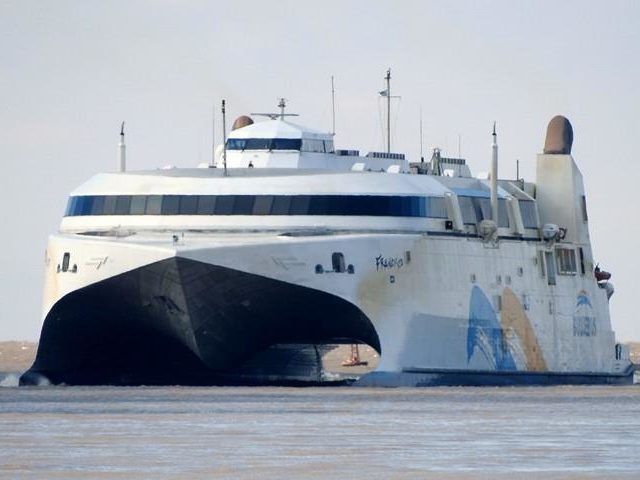
HSC Francisco travels between Buenos Aires and Montevideo. (Photo from MarineTraffic.com).
Key Facts about HSC Francisco:
- Powered by two GE gas turbines that run on marine distillate and liquid natural gas (LNG), utilizing a dual-fuel propulsion system.
- Fitted with advanced water jets to boost propulsion efficiency.
- Equipped with two LNG storage tanks and four fuel tanks to support long-distance operations.
- Capable of switching between LNG and distillate fuel to optimize fuel consumption efficiency and lower emissions.
How Fast is the Fastest Ship in the World?
The HSC Francisco reaches speeds of 58.2 knots or 108.1 km/h. For comparison, passenger ships typically cruise between 20 to 30 knots. However, during regular service, the HSC Francisco cruises at a more modest 45 knots (83.3 km/h) for fuel efficiency and operational safety.
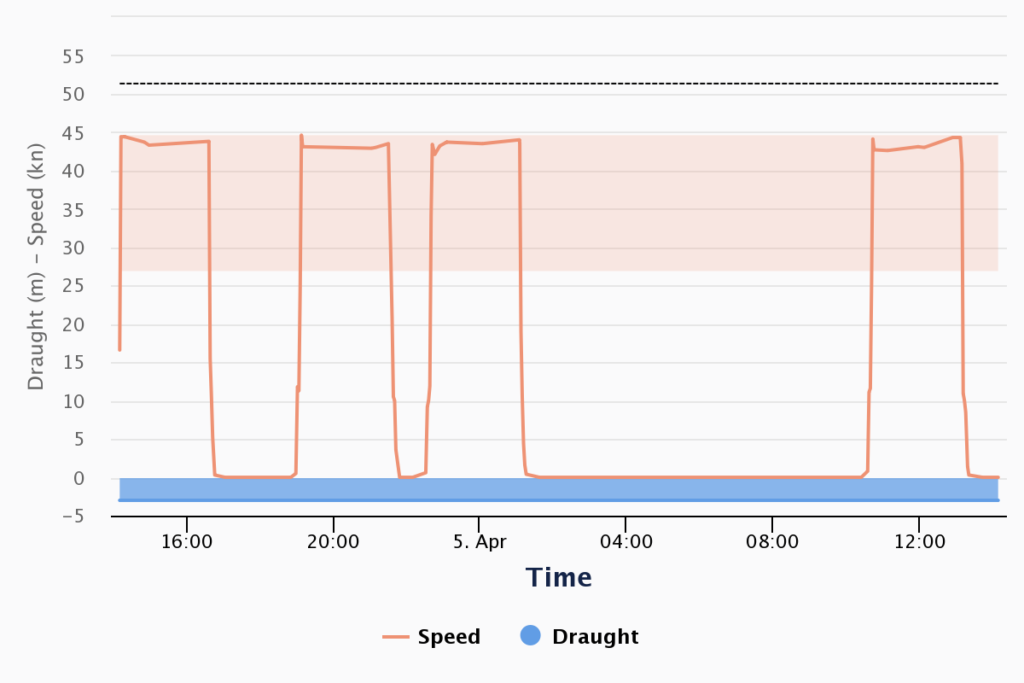
- Did you know? While the HSC Francisco’s top speed is 58.2 knots, its daily cruising speed is kept lower to ensure optimal safety and fuel economy.
The USS Plainview (AGEH-1), a US Navy hydrofoil experimental vessel, reached 91.9 knots in trials in the 1970s — the fastest self-propelled vessel ever recorded. The SES-100B surface effect ship reached approximately 91.9 knots in the same era. These records have never been broken by any commissioned vessel.
The fastest currently active naval vessels are patrol hydrofoils and surface effect ships operating in the 50–60 knot range. The Zumwalt-class destroyer is not a speed record holder by any measure — it is a stealth platform optimised for low observability, not speed.
The fastest by vessel type
| Vessel Type | Record Holder | Speed |
|---|---|---|
| Civilian passenger | HSC Francisco | 58.2 knots |
| Naval experimental | USS Plainview (hydrofoil) | 91.9 knots |
| Container ship | CMA CGM Kerguelen (class) | ~25 knots max |
| Cruise ship | Queen Mary 2 | 30 knots max |
| Oil tanker | TI class ULCC | ~16 knots |
| Bulk carrier | Capesize vessels | ~14 knots |
What Factors Affect the Speed of a Ship?
Several factors influence a ship’s speed, including:
- Wind Direction & Magnitude: Favorable winds can accelerate ships, while strong headwinds slow them down.
- Ship Structure: Ships with multiple propellers or hydrodynamic hull designs can achieve higher speeds.
- Location: Coastal vessels operate slower due to environmental regulations, while open-water ships cruise faster.
- Weather Conditions: Calm seas allow for higher speeds, while rough seas necessitate slower travel.
- Draft & Cargo: Heavier ships with more cargo move slower; lighter, less-loaded ships can go faster.
Do Different Ships Move at the Same Speed?
Different ship types have varying speeds based on their design and purpose. Passenger ships, for example, are typically faster than cargo ships, which are optimized for capacity over speed.
| Type of Ship | Cargo | Average Speed |
|---|---|---|
| Container Ships | Containers (dry, refrigerated, general) | 20–22 knots |
| Tanker Ships | Crude oil, chemicals, liquefied gases | 14 knots |
| Bulk Cargo Ships | Grains, ores, coal, heavy goods | 12 knots |
| Ro-Ro Ships | Cars, trucks, tractors | 21 knots |
| Passenger/Cruise Ships | Passengers, cars, pets | 26 knots |
Average speeds reflect typical operating conditions. Container ships can reach 24–25 knots at full sea speed; figures above reflect common service speeds under slow steaming protocols.
The largest cargo ships in the world, like dry bulk carriers, are among the slowest, averaging around 12 knots. On the other hand, cruise ships prioritize speed to adhere to strict schedules for their passengers.
Future of High-Speed Ships
The world of shipbuilding continues to evolve, with engineers pushing boundaries in speed, fuel efficiency, and sustainability. With the adoption of alternative fuels like LNG and innovations in hull design, ships like the HSC Francisco showcase the potential for high-speed, environmentally friendly maritime transport.
While current regulations limit the speeds of many cargo vessels to ensure safety and reduce emissions, the future may hold even faster, more efficient ships. Technological advancements will likely focus on balancing speed with sustainability to meet the demands of global trade.

- Great Lakes Maritime Academy: Programs, Cost and Admission – October 14, 2026
- Bunker Delivery Note (BDN): Contents, MARPOL Rules and Checks – October 11, 2026
- Oil Record Book: Part I and Part II Entries, Rules and PSC Checks – October 11, 2026
Leave a Reply