“How much does a cargo ship weigh?” has three different correct answers depending on which measurement you use. Displacement, deadweight tonnage, and lightship weight each describe a separate aspect of a ship’s mass, and confusing them produces wrong figures.
A laden Capesize bulk carrier and the same vessel in ballast differ by roughly 170,000 tonnes. That gap alone explains why the question has no single answer.
I encounter this confusion regularly when clients ask for a ship’s weight during a draft survey. The answer depends on what they need to know — hull weight, maximum cargo capacity, or current total displacement.
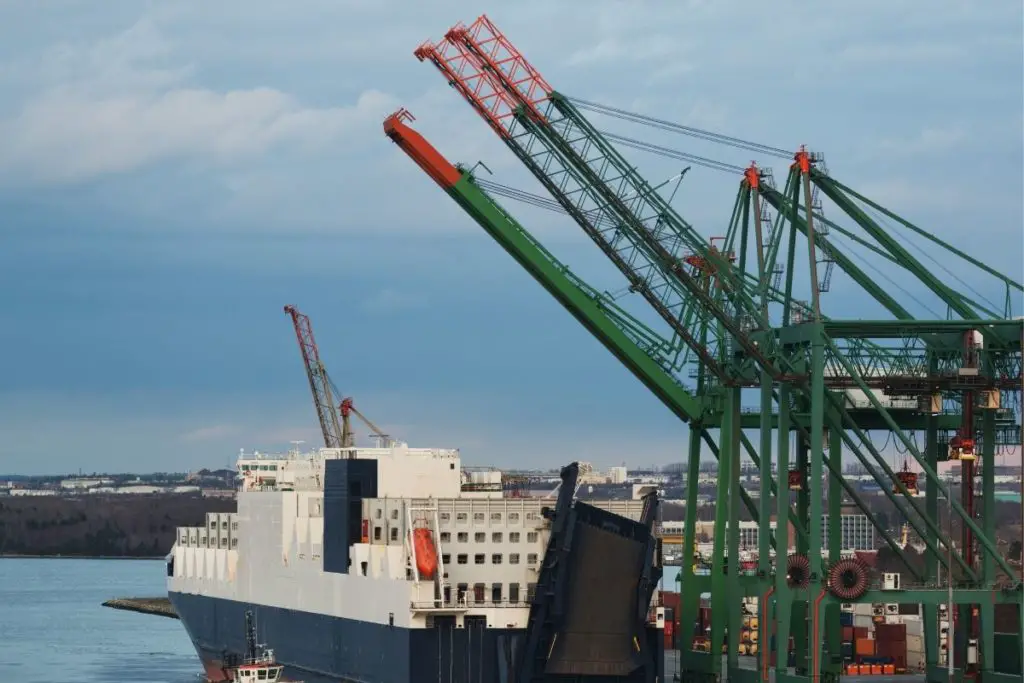
What Are the Three Ways to Measure a Cargo Ship’s Weight?
The three measurements are displacement, deadweight tonnage (DWT), and lightship weight. Displacement is the total weight of the vessel, including everything aboard. DWT is the cargo-carrying capacity; lightship weight is the hull and machinery alone, with nothing loaded.
What Is Displacement?
Displacement is the weight of water the ship displaces — by Archimedes’ principle, this equals the total weight of the vessel. That total includes hull, machinery, cargo, fuel, ballast water, stores, and crew. A vessel displacing 220,000 tonnes weighs exactly 220,000 tonnes; one metric tonne equals 1,000 kg or 2,204.6 pounds.
Displacement is expressed in two states. Loaded displacement is the total weight when the ship is fully laden. Light displacement (lightship weight) is the weight of the bare vessel — hull and fixed machinery only — with no cargo, fuel, ballast, or stores.
A laden VLCC displacing 300,000 tonnes weighs 300,000,000 kg or approximately 661,387,000 pounds. A loaded Panamax bulk carrier displacing 95,000 tonnes weighs 95,000,000 kg or approximately 209,440,000 pounds. These figures answer the “in kg” and “in pounds” query variants directly.
What Does Deadweight Tonnage (DWT) Mean?
Deadweight tonnage is the difference between a vessel’s loaded displacement and its lightship weight. It represents the maximum weight the ship can carry — not the weight of the ship itself. A vessel with 200,000 DWT can carry 200,000 tonnes of combined cargo, fuel, ballast water, fresh water, stores, and crew.
This is the single most common source of confusion in cargo ship weight discussions. A Capesize bulk carrier with 170,000 DWT does not weigh 170,000 tonnes. The ship’s hull and machinery add a further 30,000–40,000 tonnes on top of that carrying capacity.
DWT appears in charter parties, vessel databases, and port state records as the primary size descriptor for commercial vessels. It is not the weight of the ship; it is the weight the ship can carry.
For more on the full range of tonnage measurements used in commercial shipping, see what every tonnage measurement means and when each is used.
What Is Lightship Weight?
Lightship weight is the weight of the vessel as built — hull plating, structural steel, propulsion machinery, fixed pipework, and permanently installed equipment. No cargo, fuel, ballast, stores, or crew are included. It is the baseline from which all other weight measurements are calculated.
Lightship weight is established during inclining experiments at the shipyard and recorded in the vessel’s stability booklet. It changes over the vessel’s life as structural modifications, additional equipment, or hull coating accumulate mass.
Approximate lightship weights by vessel type:
- Handysize bulk carrier: 8,000–12,000 t
- Panamax bulk carrier: 15,000–22,000 t
- Capesize bulk carrier: 25,000–40,000 t
- VLCC oil tanker: 40,000–55,000 t
- Large container ship (18,000 TEU): 55,000–70,000 t
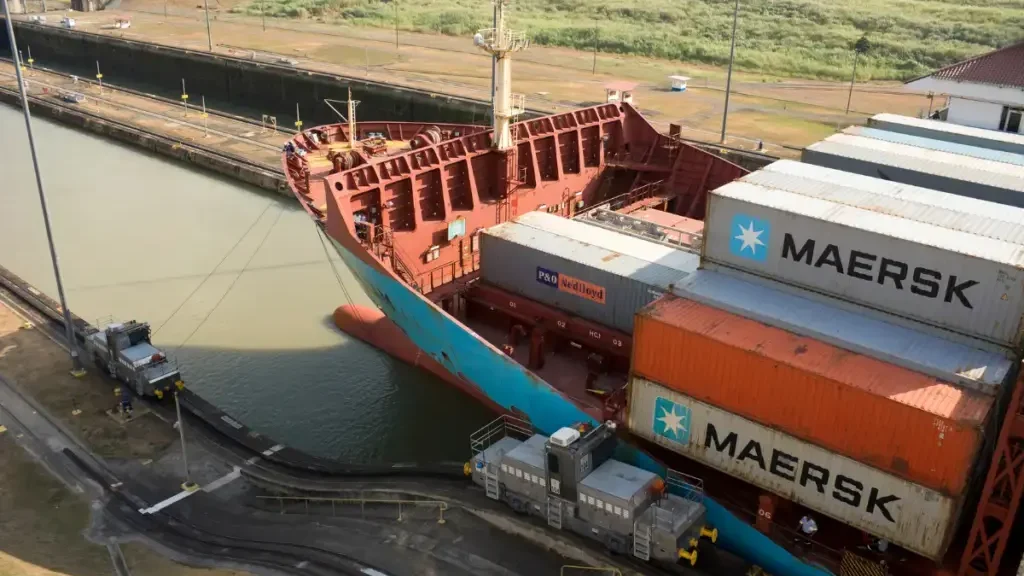
How Much Do Different Cargo Ships Weigh?
Cargo ship weight varies by vessel type, size class, and loading state. The table below gives DWT, loaded displacement, and lightship weight for the main commercial vessel classes. To convert to kg, multiply by 1,000; to convert to pounds, multiply by 2,204.6.
| Vessel Type | DWT | Loaded Displacement | Lightship Weight |
|---|---|---|---|
| Handysize bulk carrier | 25,000–40,000 t | 33,000–52,000 t | 8,000–12,000 t |
| Supramax bulk carrier | 50,000–60,000 t | 65,000–78,000 t | 13,000–18,000 t |
| Panamax bulk carrier | 65,000–85,000 t | 83,000–108,000 t | 15,000–22,000 t |
| Capesize bulk carrier | 150,000–180,000 t | 185,000–220,000 t | 28,000–42,000 t |
| Aframax oil tanker | 80,000–120,000 t | 100,000–150,000 t | 18,000–28,000 t |
| Suezmax oil tanker | 120,000–200,000 t | 148,000–245,000 t | 26,000–42,000 t |
| VLCC oil tanker | 200,000–320,000 t | 240,000–380,000 t | 38,000–55,000 t |
| ULCC oil tanker | 320,000–550,000 t | 380,000–650,000 t | 55,000–80,000 t |
| Panamax container ship | 50,000–80,000 t | 65,000–100,000 t | 14,000–22,000 t |
| Large container ship (12,000 TEU) | 130,000–150,000 t | 160,000–185,000 t | 35,000–45,000 t |
| ULCV (20,000+ TEU) | 190,000–220,000 t | 235,000–270,000 t | 50,000–65,000 t |
All figures are representative fleet ranges. Actual figures vary by builder and specification.
A laden VLCC at 300,000 tonnes displacement weighs 300,000,000 kg or approximately 661,000,000 pounds. A Handysize bulk carrier at loaded displacement weighs roughly 33,000,000–52,000,000 kg (73,000,000–115,000,000 pounds).
For a detailed breakdown of dry bulk carrier classes and their defining characteristics, see dry bulk carrier sizes and types explained.
How Is a Cargo Ship’s Weight Actually Measured?
A draft survey is the standard method for measuring a vessel’s displacement and calculating cargo weight in commercial shipping. A marine surveyor reads the draft marks, then applies the ship’s hydrostatic tables to convert draft to displacement. Known weights — fuel, ballast, fresh water, and stores — are deducted to arrive at cargo weight.
No instrument measures a ship’s total weight directly. The displacement is calculated, not read from a gauge.
The process follows these steps:
- Read six draft marks — forward, midships, and aft on both the port and starboard sides. All six marks are read independently; they are rarely identical due to trim and list.
- Calculate mean draft — apply trim correction and list correction using the vessel’s hydrostatic data to determine the equivalent even-keel draft at the midship frame.
- Apply hydrostatic tables — the corrected mean draft is entered into the vessel’s hydrostatic tables (or the Trim and Stability booklet) to obtain displacement.
- Deduct the constants — subtract lightship weight, fuel oil, diesel oil, lubricating oil, ballast water, fresh water, and stores to isolate the cargo weight.
- Difference survey — cargo weight equals the difference between arrival and departure displacement, corrected for any change in constants between the two surveys.
This displacement difference is the figure used for freight payment in bulk cargo trades. It is legally defensible, reproducible, and independent of any declaration by the vessel’s officers.
I have conducted draft surveys where the AIS-declared draught differed by 20–30 centimetres from the actual mark readings. At that scale — a Capesize loading iron ore — a 20 cm error in mean draft translates to several thousand tonnes of discrepancy. The draft survey is not a formality; it is the authoritative weight record.
For the relationship between cargo weight and stowage planning, see how stowage factor is used and calculated. For the stability implications of loading large cargo parcels, see free surface effect and how it affects ship stability.
Why Does the Same Ship Weigh Very Differently in Ballast vs Loaded?
A Capesize bulk carrier in ballast draws approximately 7–9 metres and displaces 45,000–55,000 tonnes. The same vessel fully loaded with iron ore draws 18–19 metres and displaces 200,000 tonnes or more. The difference of roughly 150,000 tonnes is the combined weight of the cargo, additional fuel for the laden voyage, and ballast water.
Ballast water is carried when a ship is unladen to maintain stability, propeller immersion, and controllable trim. A vessel proceeding to a loading port in ballast carries ballast water in dedicated tanks — typically double bottom and wing tanks on bulk carriers. This can add tens of thousands of tonnes to the displacement.
For the technical details of ballast tank arrangements and why ballast management matters operationally, see ballast systems and ballast tanks on ships.
What Is the Difference Between Gross Tonnage and Ship Weight?
Gross tonnage is not a measure of weight — it is a dimensionless number derived from the enclosed volume of the ship. It is used for administrative purposes: port dues, canal fees, and safety equipment requirements under SOLAS. A vessel with 100,000 GT does not weigh 100,000 tonnes and the two figures have no mathematical relationship.
The formula for gross tonnage is GT = K₁V, where V is the total enclosed volume in cubic metres and K₁ is a coefficient. It produces a number, not a mass. Net tonnage follows a similar calculation but excludes non-revenue spaces.
Gross and net tonnage are used by port authorities, canal operators, and flag state administrations for levying fees and determining regulatory thresholds. They do not describe the physical weight of the ship or its cargo. The word “tonnage” in this context is historical — it has no connection to the tonne as a unit of mass.
What Are the Heaviest Cargo Ships Ever Built?
The heaviest cargo ships ever operated represent the upper boundary of what marine engineering has so far achieved. A small number of vessels are in a different weight class from the standard commercial fleet.
Pioneering Spirit (crane and pipe-lay vessel, formerly Pieter Schelte) is the largest displacement vessel currently in service. Her loaded displacement is approximately 900,000 tonnes, with 1,000,000 tonnes at maximum draft. She was purpose-built for single-lift removal of offshore platforms and large-diameter pipeline installation — not a conventional cargo carrier.
TI class VLCCs (TI Africa, TI Asia, TI Europe, TI Oceania) were built at 441,585 DWT each. They were the largest oil tankers ever to trade commercially. Loaded displacement exceeded 500,000 tonnes.
MSC Irina currently holds the record for the largest container ship by TEU capacity at approximately 24,116 TEU. Loaded displacement is approximately 230,000 tonnes.
Seawise Giant (later Jahre Viking, then Mont) held the record for the largest ship ever built by deadweight at 564,763 DWT. Full details on her dimensions and history are at Seawise Giant — the largest ship ever built.
For the full category of ultra-large tankers, see ULCC: ultra large crude carriers. For the evolution of container ship sizes, see container ships — evolution, sizes and future. For an overview of all cargo ship types and their operating roles, see types of cargo ships.
Frequently Asked Questions
How much does a cargo ship weigh in kg?
It depends on the vessel type and whether it is loaded or in ballast. A loaded Panamax bulk carrier displaces approximately 83,000,000–108,000,000 kg. A laden VLCC oil tanker can reach 300,000,000 kg or more.
How much does a fully loaded cargo ship weigh?
A fully loaded Capesize bulk carrier weighs approximately 185,000–220,000 tonnes in displacement. A laden VLCC displaces 240,000–380,000 tonnes. The difference between loaded and ballast displacement can exceed 150,000 tonnes on large vessels.
What is the difference between DWT and displacement?
Displacement is the total weight of the ship including hull, machinery, cargo, fuel, and stores. DWT is the maximum weight the ship can carry — cargo, fuel, ballast, and stores — not including the ship’s own structural weight. A vessel with 180,000 DWT and a 30,000-tonne lightship weight has a loaded displacement of approximately 210,000 tonnes.
How is a cargo ship’s weight measured?
A draft survey is the standard method — a marine surveyor reads the vessel’s draft marks, applies the hydrostatic tables, and calculates displacement. The difference between arrival and departure displacement gives the exact weight of cargo loaded or discharged. This calculation is the basis for freight payment in bulk cargo trades.
How much does a container ship weigh compared to a bulk carrier?
A large container ship (18,000 TEU) has a loaded displacement of approximately 220,000–250,000 tonnes — comparable to a Capesize bulk carrier. The container ship’s lightship weight is significantly higher relative to its DWT because of the structural complexity required to carry stacked containers. A Capesize bulk carrier is more weight-efficient per tonne of cargo carried.


- What Is MARPOL? Guide to All Six Annexes and Enforcement – September 9, 2026
- 14 Marine Surveyors in Ohio – June 14, 2026
- Boat Salvage Yards in Alabama (2026): Used Marine Parts & Locations – June 14, 2026