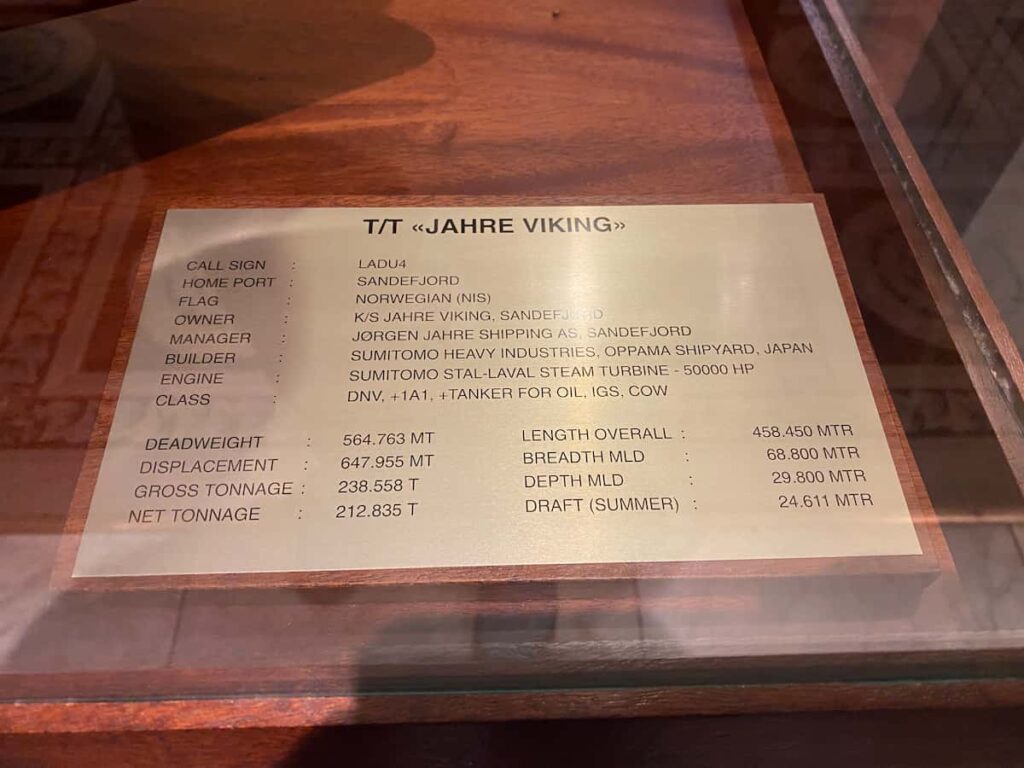
The Seawise Giant (later Knock Nevis) was the largest oil tanker and ship ever built, with a length of 458.45 meters (1,503 feet) and a deadweight tonnage of 564,763 DWT.
This ultra-large crude carrier (ULCC) was constructed by Sumitomo Heavy Industries in Yokosuka, Japan, between 1974 and 1979.
Launched in 1979, the ship achieved the highest recorded deadweight tonnage. Fully loaded, its displacement reached 657,019 tonnes, making it nearly twice as long as the RMS Titanic.
Key Specifications
| Attribute | Details |
|---|---|
| Length | 458.45 m (1,503 ft) |
| Beam | 68.8 m (225.7 ft) |
| Depth | 29.8 m (97.8 ft) |
| Draft (full) | 24.61 m (80.74 ft) |
| Displacement | 657,019 tonnes |
| Carrying Capacity | 4.1 million barrels of crude oil |
| Engines | Originally a Ljungström steam turbine (50,000 shp). Later refitted with 8 MAN-B&W diesel engines producing 110,000 HP. Learn more about what a ship main engine is. |
| Propeller | Single, ~9 m diameter |
| Top Speed | 16 knots (30 km/h; 18 mph) |
| Range | 20,000 nautical miles |
The ship’s draft and tonnage made it impossible to traverse the Panama Canal or Suez Canal. For context, see what ship tonnage means.
Seawise Giant Engine and Propulsion
The ship was first powered by a Ljungström steam turbine, generating 50,000 shp. When converted and renamed Jahre Viking, the ship received 8 MAN-B&W diesel engines, producing 110,000 HP, which powered a 9-meter propeller.
This upgrade improved fuel efficiency and maneuverability. The refit makes the Jahre Viking engine system one of the most powerful marine propulsion retrofits ever carried out.
How Does the Seawise Giant Compare to the Titanic?
The RMS Titanic is the cultural benchmark most people reach for when imagining a large ship. It is the wrong benchmark — but it is the useful one, because almost everyone has a sense of the Titanic’s scale.
| RMS Titanic | Seawise Giant | |
|---|---|---|
| Length | 269 m (882 ft) | 458.45 m (1,504 ft) |
| Beam | 28.2 m (92.5 ft) | 68.8 m (225.7 ft) |
| Displacement | 52,310 tonnes | 657,019 tonnes |
| Cargo capacity | 3,547 passengers + crew | 4.1 million barrels of crude oil |
| Top speed | 23 knots | 16 knots |
| Fuel consumption | ~620 tonnes/day (coal) | ~200 tonnes/day (oil, later refit) |
| Fate | Sunk 1912, wreck preserved | Scrapped 2010, no remains |
The Seawise Giant was 1.7 times longer than the Titanic, 12.5 times heavier when fully loaded, and nearly two and a half times wider. If you placed the Titanic alongside it, the Titanic would fit within the Seawise Giant’s beam with room to spare on both sides.
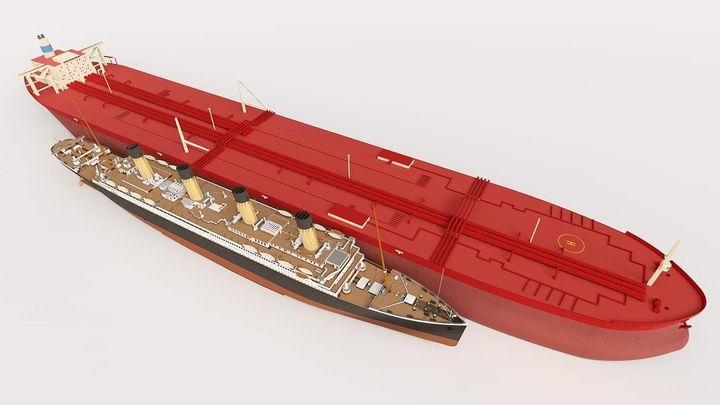
The Titanic became the reference point for ship scale not because of its actual size — it was not the largest ship of its era — but because of its cultural imprint after 1912 and later the 1997 film. For maritime professionals, the more relevant comparison is to modern VLCCs: the Seawise Giant carried roughly twice the cargo of a typical VLCC operating today.
One operational difference worth noting: the Titanic’s 23-knot top speed was ambitious for 1912 and contributed to the disaster. The Seawise Giant, by contrast, was never a fast ship — 16 knots fully laden — because speed was irrelevant to a vessel whose entire purpose was moving the maximum possible volume of crude oil per voyage. Economics, not engineering limits, defined its pace.
Knock Nevis Compared to Human Scale
If placed upright, the Seawise Giant would be taller than the Empire State Building. A human standing beside the hull appeared smaller than one of its anchor chain links, each weighing more than a car.
Overview of the Seawise Giant
Over its lifetime, the Seawise Giant underwent several name changes, including Oppama, Happy Giant, Jahre Viking, Knock Nevis, and finally Mont. Built for transporting crude oil along global maritime trade routes, the ship faced constant operational challenges due to its enormous size.
The vessel required a two-mile turning circle and more than five miles to stop, making it impractical for narrow waterways like the English Channel, Panama Canal, or Suez Canal. It frequently traveled around the Cape of Good Hope instead.
What Is the History of the Seawise Giant?
The ship was originally commissioned by Greek shipping magnate Stavros Niarchos and launched in 1979 as Oppama. It later changed ownership and names multiple times.
Ownership Timeline
- 1979 – Built for Stavros Niarchos as Oppama.
- 1980s – Sold to Orient Overseas Container Line (OOCL), renamed Seawise Giant.
- 1989 – Purchased by Norwegian magnate Jørgen Jahre, renamed Jahre Viking.
- 2004 – Converted to FSO Knock Nevis under Fred Olsen Production, later renamed Mont in its final years (MarineTraffic vessel details).
To better understand how such ships manage bulk cargo, read about the main spaces on cargo ships.
What Accidents and Repairs Did the Seawise Giant Undergo?
- 1988 Attack: During the Iran–Iraq War, Iraqi forces struck the ship with an Exocet missile, sinking it in shallow waters. It was salvaged, repaired, and returned to service as Jahre Viking.
- 2004 Collision: A pier collision in Taiwan caused major damage. After repairs, the vessel was converted into a floating storage and offloading unit (FSO), renamed Knock Nevis.
Why Was the Seawise Giant Converted to Knock Nevis?
After its original owner went bankrupt, the ship was sold to a Hong Kong company and renamed Happy Giant. In 1989, Jørgen Jahre upgraded it with:
- A new diesel engine system.
- A bow thruster for improved maneuverability.
In 2004, it became an FSO (Floating Storage and Offloading Unit) with a capacity reduced to 260,000 tonnes, stationed off Qatar. See cargo handling systems for how FSOs operate.
What Happened in the Seawise Giant’s Final Years?
The Knock Nevis (renamed Mont) retired in 2009. In December that year, it arrived at Alang, India, for dismantling at one of the world’s largest ship-breaking yards (India Today report).
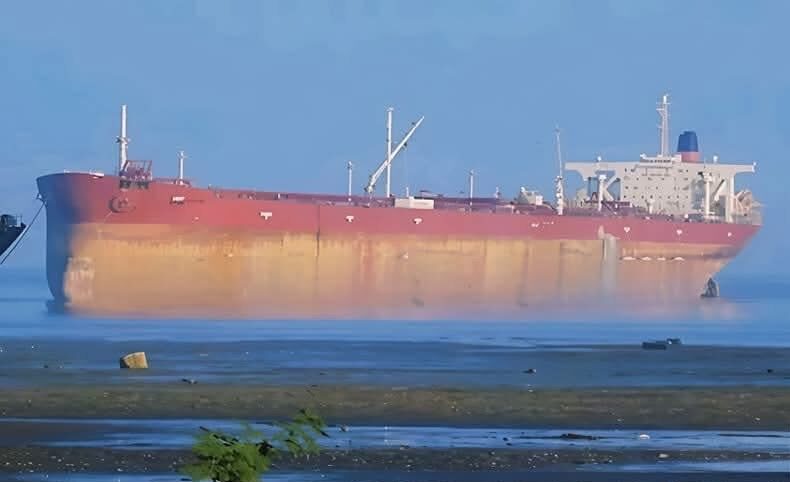
Alang was chosen because it is the global hub for shipbreaking and ship recycling, offering massive beaching space, low labor costs, and the ability to recycle large quantities of steel. The scrapping process was completed in 2010.
Knock Nevis Scrapping and Wreck
- The ship was too large to tow intact and was dismantled in pieces.
- No wreck remains; only steel parts were recycled.
- Its 1988 sinking was temporary — the ship was refloated and restored.
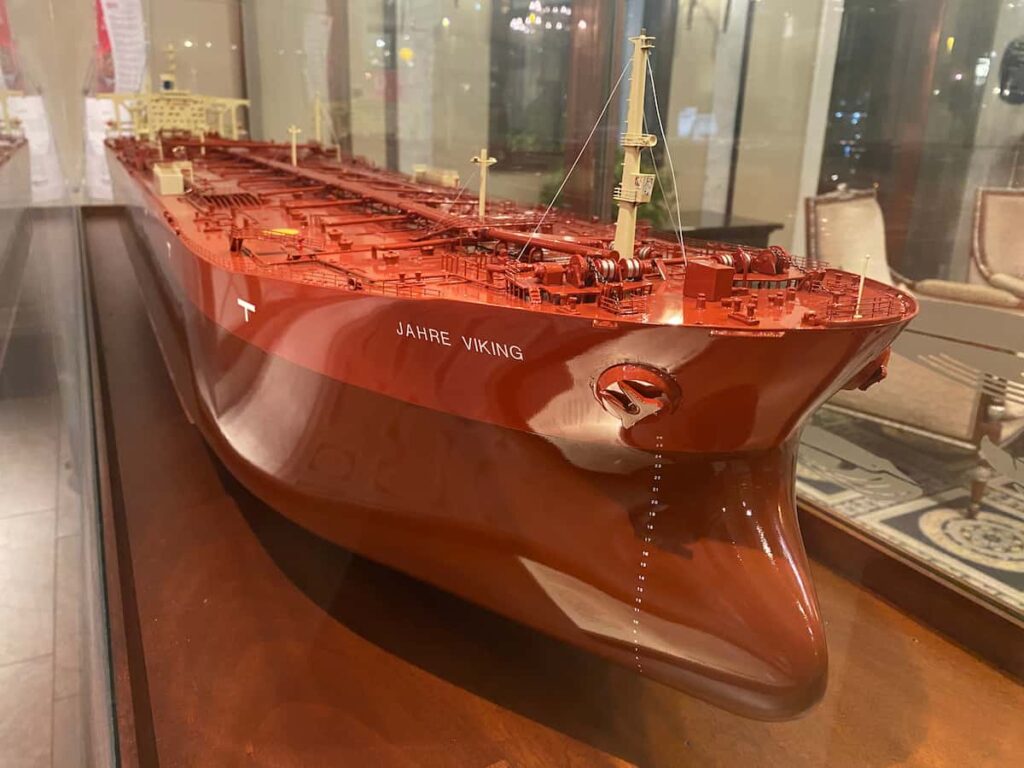
Unlike iconic wrecks like the Titanic, the Seawise Giant no longer exists today, except in photographs and models. Its final scrapping was widely reported in 2009–2010 (India Today).
Legacy of the Seawise Giant
The ship remains the largest self-propelled vessel ever built, representing a milestone in maritime engineering. It influenced later ULCC designs, though few matched its size due to cost and practicality.
Why No Ship Surpassed the Seawise Giant
The Seawise Giant remains the biggest ship in history because larger vessels proved uneconomical.
- Shipyard limits: Drydocks and cranes couldn’t handle larger hulls.
- Port restrictions: No major port could berth ships beyond its scale.
- Fuel inefficiency: Over 200 tonnes per day made operating costs unsustainable.
- Insurance & scrapping: Risk and costs grew with ship size.
Instead, shipping shifted to VLCCs and container mega-ships like Ever Ace and cruise giants like Wonder of the Seas.
What Impact Did the Seawise Giant Have on Shipping?
- Industry Trends: Established a size benchmark for tankers and ULCCs.
- Challenges: Limited maneuverability and port access reduced economic viability.
Seawise Giant Demise and Current Status
The ship was retired in 2009 and dismantled in 2010 at Alang, India. Unlike wrecks preserved for museums, the Seawise Giant no longer exists today. Only scale models and photos document the world’s biggest ship.
What Environmental Concerns Surrounded the Seawise Giant?
- Burned 200+ tonnes of fuel daily, producing extreme emissions.
- Oil spill risk and cleanup complexity were higher due to sheer size.
- Pressure from environmental groups and regulators led to size restrictions in waterways.
See fuel consumption of shipsfor comparisons with modern vessels.
Did You Know?
- The Seawise Giant was so massive that it couldn’t fit through the Suez Canal or Panama Canal.
- Fully loaded, its weight exceeded 724,000 short tons, making it the largest self-propelled ship ever built.
- Taller than the Empire State Building if upright.
Frequently Asked Questions About the Seawise Giant
Why did no ship ever surpass the Seawise Giant in size?
Economics made larger vessels unviable, not engineering. No major port could berth them, drydock infrastructure could not service a bigger hull, and fuel costs above 200 tonnes per day made each voyage unprofitable at any realistic freight rate.
What happened to the Seawise Giant during the Iran–Iraq War?
Iraqi aircraft hit the ship with Exocet missiles in May 1988, killing 28 crew and sinking it in shallow waters. It was salvaged, fully rebuilt in Singapore, and returned to service in 1991 as Jahre Viking — one of the most significant ship recoveries ever attempted.
Could the Seawise Giant pass through the Suez or Panama Canal?
No — its 68.8-metre beam and 24.61-metre loaded draft made both canals impassable even in ballast. It sailed around the Cape of Good Hope on every voyage, adding thousands of miles and significant operating cost.
Where is the Seawise Giant now?
It no longer exists. The ship arrived at Alang, India in December 2009 and was fully dismantled by 2010 — no wreck, no preserved section, nothing remaining beyond photographs and scale models.
What was the Seawise Giant’s daily fuel consumption?
Approximately 200 tonnes of heavy fuel oil per day at 16 knots. The later refit to MAN-B&W diesel engines under the Jahre Viking name improved on the original steam turbine’s efficiency considerably.
How does the Seawise Giant compare to modern supertankers?
A modern VLCC runs around 330 metres at 300,000–320,000 DWT. The Seawise Giant was 458 metres at 564,763 DWT — roughly 40% longer and nearly twice the deadweight of the largest tankers operating today.

- What Is the ISM Code? SMS, DOC, SMC and Audits Explained – October 6, 2026
- What Is the IS Code? IMO Intact Stability Criteria Explained – October 5, 2026
- Ship Stopping Distance: Crash Stop and IMO Limits Explained – October 5, 2026