Deck cadet duties and responsibilities combine supervised bridge watchkeeping, cargo and mooring work, deck maintenance and safety duties. A deck cadet is a trainee officer who learns each task under the officers. The cadet builds the sea time needed for a first officer of the watch certificate.
The captain of the ship has to start somewhere at the beginning of their career. It is in the cadetship program that future officers are trained in their future responsibilities. A long line of famous captains in maritime history started down the same path, long before their names became known.
This guide is for cadets about to join their first ship and for anyone considering a deck career. It covers familiarization, port and sea duties, sea-time rules and what officers expect from a cadet.
What Is a Deck Cadet?
A deck cadet is a trainee deck officer serving on a merchant ship as part of an approved training programme. The cadet holds a seaman’s book but is not yet an officer and never stands a watch alone.
In the shipboard organization and ranks, the cadet sits below the third officer and reports to the chief officer. The engine department has its own engine cadets on a parallel path.
Deck Cadet Duties at a Glance
| Area | Typical cadet duties | Works under |
|---|---|---|
| Bridge watch | Lookout, position fixing, logbook entries, using radar, ECDIS and GMDSS | Officer of the watch |
| Cargo and port | Tank soundings, draft readings, cargo watch, gangway and ISPS watch | Chief officer, second and third officers |
| Mooring and anchoring | Line handling, windlass, forward or aft station, pilot ladder | Chief officer or second officer at stations |
| Deck maintenance | Chipping, painting, greasing, wire renewal, cargo gear upkeep | Bosun |
| Safety | Drills, lifesaving and firefighting equipment checks | Third officer (safety officer) |
| Training | Training record book tasks, study for the officer exam | Chief officer, master |
Deck Cadet Familiarization
Familiarization is the cadet’s first task on joining: learning the ship, the safety equipment and their emergency duties before any other work. The cadet reports to the master and is assigned to the chief officer, who leads this induction.
This is where the cadet first sees what working and living on board a real vessel is like.
As with any new crew member, safety familiarization comes first. The cadet receives a personal lifejacket and immersion suit and is briefed on fire and abandon-ship duties and the location of the emergency headquarters.
In a fire, the cadet is assigned either to the bridge or to the support team. On the bridge, he assists the third officer and the master during drills and real emergencies. In the support team, he prepares fire hoses and hydrants.
For abandon ship, the cadet is assigned to a designated lifeboat, port or starboard. He learns how the boat is launched and what it carries, and may be tasked with securing the drain plug or holding the painter.
What are the Duties of Deck Cadets in Port?
In port, a deck cadet assists with cargo watches, tank soundings, draft readings, mooring and security duties. Officers may also take the cadet ashore on shore leave when the ship’s schedule allows.
Daily tasks include tank soundings for ballast and fresh water tanks. Soundings feed the stability and cargo calculations that the cargo officers update every day.
The cadet also learns draft surveys under the second or third officer, from reading drafts to measuring water density. He may join the officers’ six-hour cargo watches.
With the ABs, the cadet checks mooring lines and maintains cargo-handling equipment. For day work in port, he is under the bosun’s direction.
Arrival and departure are key training moments. From rigging the pilot ladder to preparing the gangway for stevedores, the cadet learns how a ship is made ready for port.
He may be assigned to the forward station for anchoring or docking maneuvers, handling mooring lines, the mooring winch and the windlass under supervision.
Preparing cargo holds is another port task. Cadets also stand piracy and ISPS watch in port or at anchor.
What are the Duties of Deck Cadets at Sea?
At sea, a deck cadet splits time between bridge watchkeeping under an officer and deck maintenance under the bosun. Both build the skills needed for a first watchkeeping certificate and, later, for leading a crew.
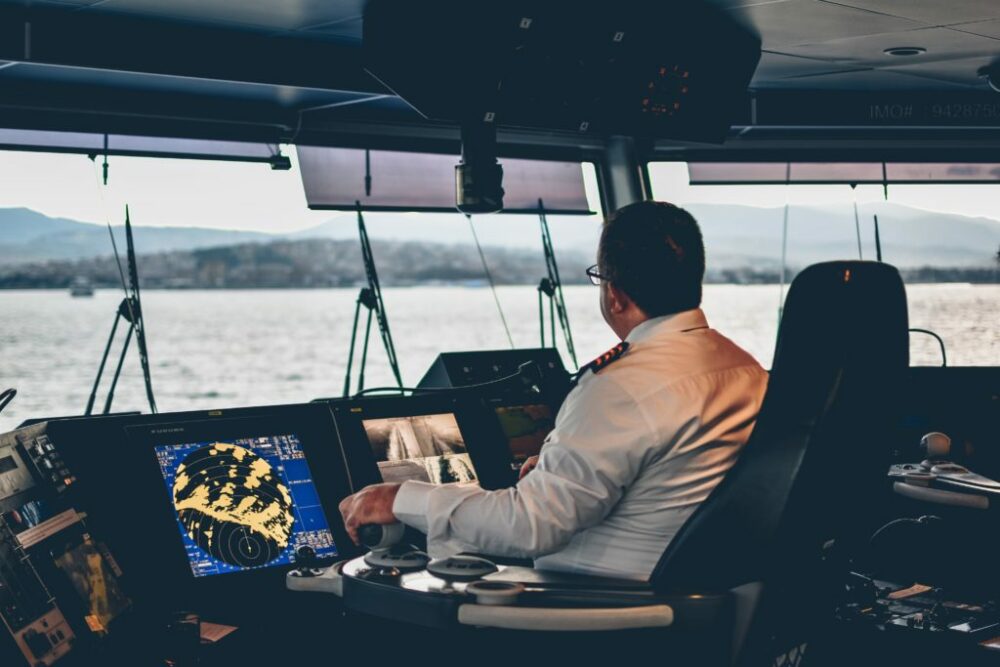
On the bridge, the cadet keeps navigational watch with the third officer, second officer or chief officer. He keeps lookout, fixes the ship’s position, makes deck log entries and helps prepare port documents.
Learning the bridge equipment is a core goal: ARPA radar, ECDIS, AIS, GPS, the echo sounder and gyro steering. Cadets also learn the GMDSS equipment: VHF, Inmarsat-C, MF/HF, EPIRB and SART.
The master and chief officer oversee this training, so the cadet can become a fully fledged officer.
Deck work is the other half of the job. Maintenance includes surface preparation, chipping and feathering, and applying the right paint system, and this is where cadets learn good seamanship skills.
From the forecastle to the poop deck, cargo holds and cargo gear, the cadet helps with greasing, wire renewal and oil changes. He works alongside the deck crew and the bosun to keep every piece of deck equipment in working order.
Some deck tasks need a permit to work, such as hot work or work aloft. Entry into tanks and holds follows the rules for enclosed spaces, and a cadet never enters one alone.

How Much Sea Time Does a Deck Cadet Need?
Under STCW Regulation II/1, a deck cadet needs at least 12 months of approved seagoing service in an approved training programme. At least six months of it must be bridge watchkeeping under a qualified officer.
- Training record book: every task is recorded and signed by the supervising officer, and reviewed by the master
- Without an approved programme: the minimum rises to 36 months of seagoing service
- Minimum age for the certificate: 18 years
- Exam: after sea time and college, the cadet sits the national exam for an officer of the watch STCW certificate
Many national programmes require more than the STCW minimum, so check your college’s rules. In the US, cadets usually train through one of the maritime colleges and academies in the US, combining sea terms with commercial ship time.
What Are a Deck Cadet’s Working Hours?
A deck cadet works watches and day work like the rest of the crew. STCW and the MLC 2006 require at least 10 hours of rest in any 24 hours and 77 hours in any 7 days.
Cadets under 18 are not normally allowed to work at night under the MLC 2006. Approved training programmes can be an exception, under the flag State’s rules.
What Does a Deck Cadet Job Description Include?
A typical deck cadet job description lists supervised watchkeeping, cargo and mooring duties, maintenance and training-record tasks. Companies usually add requirements such as a cadet programme enrolment, STCW basic safety training and a valid medical certificate.
- Assist the officer of the watch with lookout, navigation and logbook entries
- Assist in cargo operations, soundings, draft readings and port watches
- Take part in mooring, anchoring and pilot ladder operations
- Carry out deck maintenance under the bosun
- Join all drills and maintain lifesaving and firefighting equipment with the third officer
- Complete the training record book and study for the officer exam
How Is a Deck Cadet Different From an Engine Cadet?
A deck cadet trains for navigation and cargo work, while an engine cadet trains in the engine room toward an engineer officer certificate. The engine cadet’s sea time falls under STCW Regulation III/1 and includes workshop training.
Both join drills and share the same safety training, but their daily work rarely overlaps. Deck cadets learn from the officers on the bridge and the bosun on deck; engine cadets learn from the second engineer and the engine ratings.
What Does a Senior Deck Cadet Do?
A senior deck cadet is a cadet in the later stage of sea training, often on a second or third ship. Officers give a senior cadet more responsibility, such as taking part in passage planning, cargo calculations and leading junior cadets.
The senior cadet still works under supervision, but should be ready to act as a junior officer soon after passing the exam.
How Is a Deck Cadet Assessed on Board?
The chief officer, or another designated officer, supervises the cadet’s training and signs off completed tasks in the training record book. At the end of the contract, the master and chief officer usually write an appraisal for the company.
A poor appraisal or unsigned tasks can delay the cadet’s sea-time approval or next contract. The fix is to ask early which tasks remain and to show initiative on watch and on deck.
Related Topics
- Merchant navy age limits and health requirements
- Lifeboat regulations and requirements
- Types of work permits used on ships
Frequently Asked Questions
What is a deck cadet?
A deck cadet is a trainee deck officer serving on a merchant ship as part of an approved training programme. The cadet works under the officers and never stands a watch alone.
What are the main duties of a deck cadet?
A deck cadet assists with bridge watchkeeping, cargo work, tank soundings, mooring and anchoring. The cadet also does deck maintenance under the bosun and takes part in all drills.
Who does a deck cadet report to?
The cadet reports to the master on joining and is then assigned to the chief officer, who supervises the training. Day to day, the cadet works under the officer of the watch or the bosun.
How long is deck cadet sea time?
STCW requires at least 12 months of approved seagoing service in a training programme, including six months of bridge watchkeeping. Many national programmes require more.
Can a deck cadet stand a watch alone?
No. A cadet is not a certificated officer and always keeps watch with a qualified officer of the watch.
Can a deck cadet operate a crane or winch?
Only under supervision and if company procedures allow it. Cadets usually learn to operate mooring winches and cargo gear with an officer or the bosun present.
What happens if the chief officer does not sign the training record book?
Unsigned tasks do not count toward the sea-time requirement, which can delay the cadet’s exam. Raise missing sign-offs with the chief officer early, and with the master if needed.
What is the difference between a deck cadet and a deck officer?
A deck officer holds an STCW certificate of competency and can stand a watch in charge. A deck cadet is still training toward that certificate.

- Great Lakes Maritime Academy: Programs, Cost and Admission – October 14, 2026
- Bunker Delivery Note (BDN): Contents, MARPOL Rules and Checks – October 11, 2026
- Oil Record Book: Part I and Part II Entries, Rules and PSC Checks – October 11, 2026