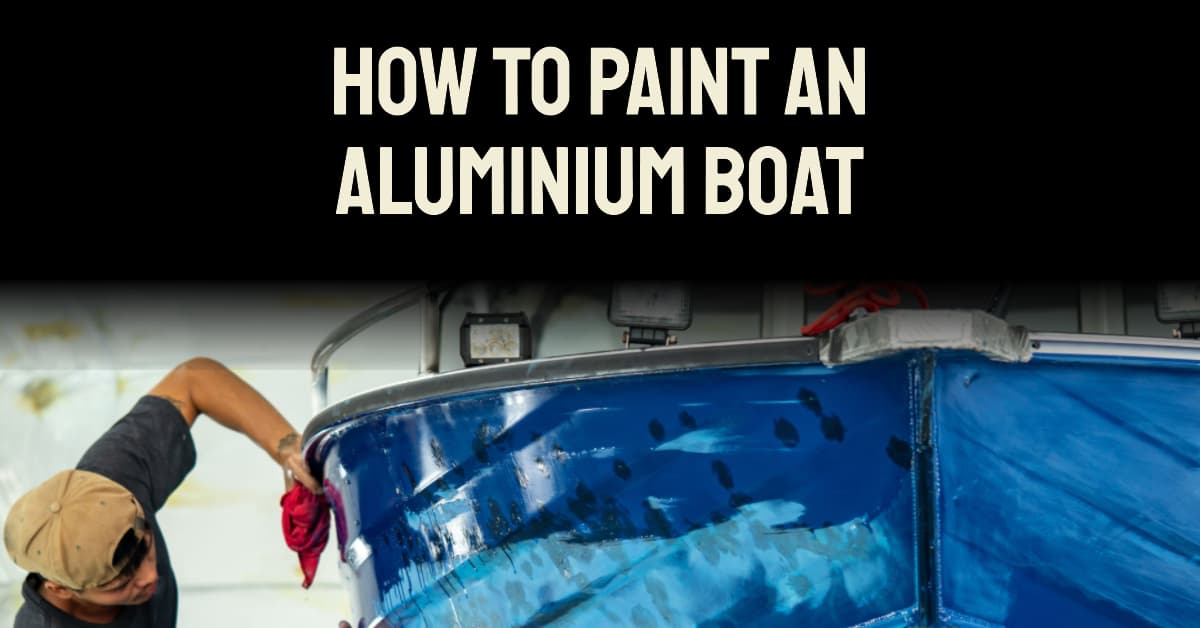
Painting an aluminum boat protects it from corrosion and extends its working life, but the process only holds up if the surface prep is right. Bare aluminum (also spelled “aluminium” outside the US) is notoriously hard to get paint to stick to — skip a step and the finish peels within a season.
Preparing Your Aluminum Boat for Painting
The prep work determines how long the paint job lasts more than the paint itself does.
Cleaning Your Boat
Give your aluminum boat a thorough wash to remove dirt, salt, and grime before doing anything else. A standard garden hose works, or use a pressure washer for a more thorough clean.
See our Center Console Aluminum Boats Guide for additional care tips specific to that hull style.
Materials Needed for Cleaning Your Boat
- Marine-friendly detergent: Star brite Non-Skid Deck Cleaner is a popular choice due to its protective polymers and gentle yet effective cleaning power.
Inspecting Your Boat
Once the boat is clean, check for dents or scratches that could affect the finish of your paint job.
If you’re dealing with a 14-foot Jon boat, our guide covers some hull-specific considerations worth checking first.
Repairing Your Boat
Repair any damage found during inspection before you go further. Small dents and scratches can be filled using an aluminum-friendly filler, available at most marine supply stores.
Larger damage may need professional repair — a smooth surface is what leads to a smooth paint job, so it’s worth getting right before moving on.
Materials needed for Repairing Aluminum:
Aluminum-friendly filler: 3M Marine High Strength Repair Filler is highly recommended in the boating community.
Sanding Aluminum Boat
Removing Old Paint
If your boat has been painted before, remove the old paint first — either with a chemical paint stripper, or by sanding it off manually. Manual sanding requires the right grit of sandpaper.
Our Marine Paint for Boats guide covers this step in more detail.
Sanding the Surface
Start with a rough 120-grit sandpaper to remove any remaining paint or primer, then progress to a finer 220-grit to smooth out the surface. Sanding removes unwanted material and gives the new paint a better surface to adhere to.
Materials needed for Sanding Aluminum Boat
- Sandpaper: Brands like 3M and Dura-Gold offer high-quality sandpaper in various grits.
- Paint stripper (if needed): Dumond Chemicals, Inc. Smart Strip Marine Paint Remover is noted for its effectiveness.
Polishing the Surface
After sanding, polish the aluminum surface — similar to buffing a car after a wash — using an aluminum polish and rotary polisher. Work around the boat until the surface is smooth and shiny, ready for etching and priming.
Etching Primer: Why Aluminum Needs an Extra Step
Aluminum forms a natural oxide layer the instant it’s exposed to air, and standard primers don’t bond well to it. An etching primer solves this — it contains a mild acid (typically phosphoric acid) that chemically bites into the bare metal, creating a rough profile the topcoat can grip.
Skipping this step on bare or heavily sanded aluminum is the single most common reason DIY paint jobs peel within months. If any bare metal is showing after sanding, apply etching primer before your regular primer, not instead of it — the two serve different purposes and most systems require both.
Priming Aluminum Boat
Choosing the Right Primer
An epoxy primer is generally recommended for aluminum boats — it forms a strong bond with the metal and creates a good base for the topcoat. Beyond adhesion, it adds a layer of corrosion protection.
Applying Primer
Thin coats work better than thick ones. Use a spray gun or roller to apply primer evenly, letting each coat dry fully before the next.
Two to three coats is typically enough to build a strong, even base for the paint.
Materials needed for Priming Aluminum Boat:
Primer: Interlux InterProtect Marine Epoxy Primer is widely recognized for its excellent bonding and protective qualities.
Painting Aluminum Boat
Choosing the Right Paint
Choosing the right paint matters as much as the primer choice. There’s a wide range of marine paints available, each with its own advantages and disadvantages.
If your boat will spend significant time in saltwater, check our best paint for aluminum boats guide — the antifouling section there covers copper-free options that avoid galvanic corrosion, which is a real risk on aluminum hulls with standard copper-based bottom paint.
Applying Paint
Apply paint the same way as primer: thin, even coats rather than one thick one. Several thin coats produce a better finish than a single heavy coat, which tends to drip and dry unevenly.
TotalBoat Aluminum Boat Paint or Interlux Brightside Polyurethane Paint are both formulated for marine environments and available in a range of colors.
Final Touches
Applying a Clear Coat
Once the paint is fully dry, a clear sealer or varnish adds extra protection and a glossy finish. This step isn’t mandatory, but it noticeably extends how long the paint job looks fresh.
Clear Sealer: TotalBoat Krypton Copper Free Antifouling Bottom Paint provides a high-gloss, UV-protected finish that’s suited to aluminum boats.
Final Inspection
With the boat painted and sealed, check for missed spots, drips, or uneven areas, and touch up small areas as needed.
Quick Reference
| Steps | Description | Popular Products |
|---|---|---|
| Cleaning | Remove dirt, salt and grime | Star brite Non-Skid Deck Cleaner |
| Repairing | Fix dents and scratches | 3M Marine High Strength Repair Filler |
| Sanding | Remove old paint and smooth the surface | 3M Sandpaper, Dumond Chemicals, Inc. Smart Strip Marine Paint Remover |
| Etching | Bite into bare aluminum so primer bonds properly | Phosphoric-acid etching primer |
| Priming | Apply epoxy primer to create a good base for paint | Interlux InterProtect Marine Epoxy Primer |
| Painting | Apply marine paint evenly | TotalBoat Aluminum Boat Paint, Interlux Brightside Paint |
| Final Touches | Apply a clear sealer for extra protection | TotalBoat Krypton Copper Free Antifouling Bottom Paint |
Frequently Asked Questions
Do you need etching primer to paint an aluminum boat?
Yes, on any bare or freshly sanded aluminum. Etching primer chemically bonds to the metal’s oxide layer, giving standard primer and topcoat something to grip. Skipping it is the most common cause of paint peeling within months.
Can you paint an aluminum boat without sanding?
No. Sanding removes old paint, oxidation, and surface contaminants, and creates a rough profile the primer needs to bond. Paint applied over an unsanded surface fails quickly regardless of paint quality.
What paint should I use on an aluminum boat used in saltwater?
Use a copper-free antifouling bottom paint below the waterline to avoid galvanic corrosion between the copper and the aluminum hull, and a marine-grade epoxy or polyurethane topside paint above it.
How long does paint last on an aluminum boat?
A properly prepped and painted aluminum boat (etched, primed, and topcoated correctly) typically holds up for 3-5 years in saltwater and longer in freshwater before needing a full repaint, though touch-ups may be needed sooner in high-wear areas.
Can you paint the inside floor of an aluminum boat?
Yes, using the same prep steps as the hull. Non-skid deck paint or a textured marine floor coating is generally preferred over standard topside paint for interior floors, since it adds grip in wet conditions.

- Great Lakes Maritime Academy: Programs, Cost and Admission – October 14, 2026
- Bunker Delivery Note (BDN): Contents, MARPOL Rules and Checks – October 11, 2026
- Oil Record Book: Part I and Part II Entries, Rules and PSC Checks – October 11, 2026