An oil rig is a structure or vessel used to drill wells for oil and gas. The types of oil rigs differ mainly in how they are supported and how deep the water is. This guide explains what an oil rig is and covers the types of oil rigs and production platforms used offshore today.
Each type gets a summary here, with links to the pages that cover it in depth. Water depths are typical ranges from published sources, not limits for every unit.
What Is an Oil Rig?
An oil rig is the equipment and structure used to drill an oil or gas well. Offshore, most drilling rigs are mobile units that move from well to well, while production platforms stay on one field for years.
The IMO MODU Code defines a mobile offshore drilling unit (MODU) as “a vessel capable of engaging in drilling operations” for resources beneath the seabed. In law, then, a jack-up, a semi-submersible and a drillship are all vessels.
What Is the Difference Between an Oil Rig and an Oil Platform?
A drilling rig drills the well. BSEE describes it as mobile, moving “from location to location in search of oil and gas resources.” A production platform stays on a field and processes the oil and gas that the wells produce.
In everyday use the two words overlap, and many production platforms also carry a drilling rig on deck. The distinction still matters when comparing types, because drilling units and production facilities are built to different requirements.
What Are the Main Parts of an Oil Rig?
- Derrick or mast: the tower that lifts and lowers drill pipe and casing.
- Drill floor: the working deck where the crew makes up and runs pipe.
- Substructure: API RP 54 calls it the “structure on which the derrick sits,” with space for wellhead and well control equipment.
- Blowout preventer (BOP): the valve stack that seals the well if control is lost.
- Hull, legs or foundation: offshore, the structure that supports everything and keeps it on station.
- Accommodation, power and utilities: living quarters, generators, mud systems and storage.
What Are the Main Types of Oil Rigs?
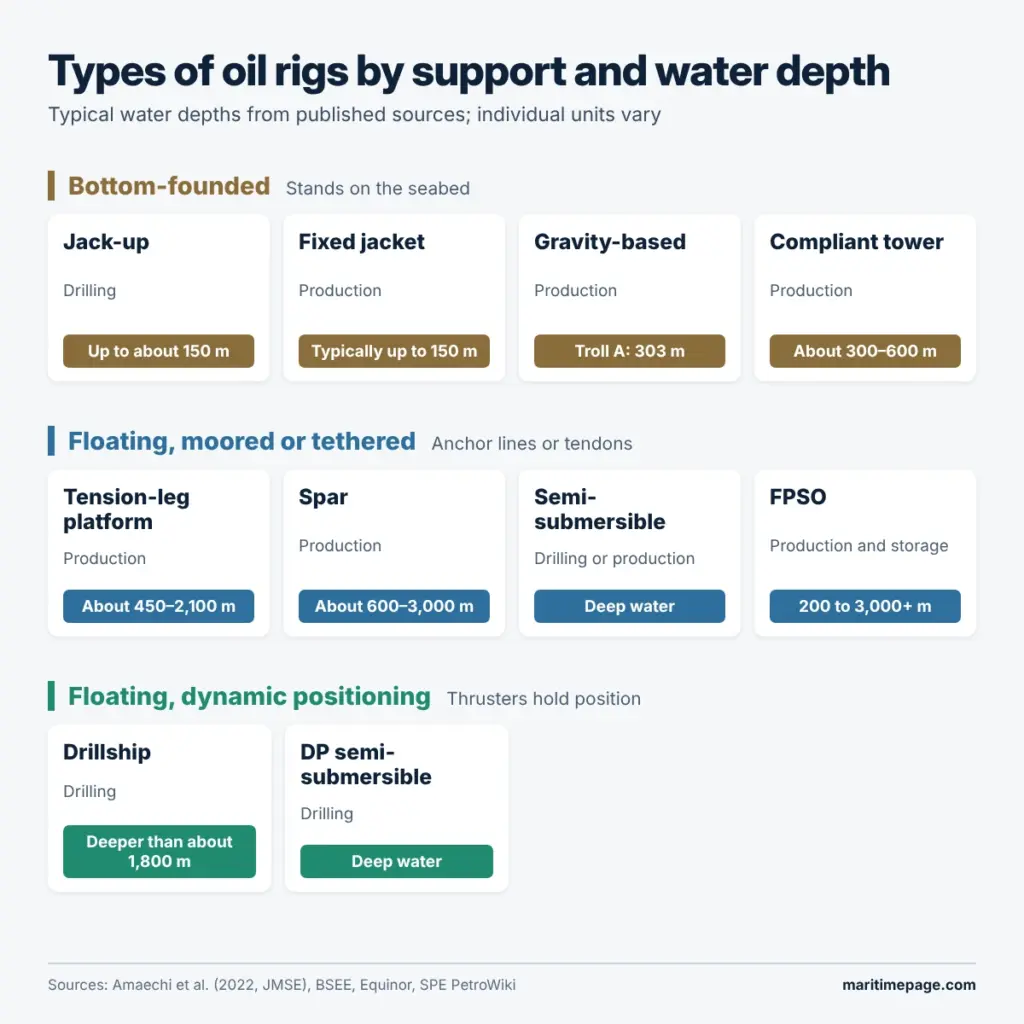
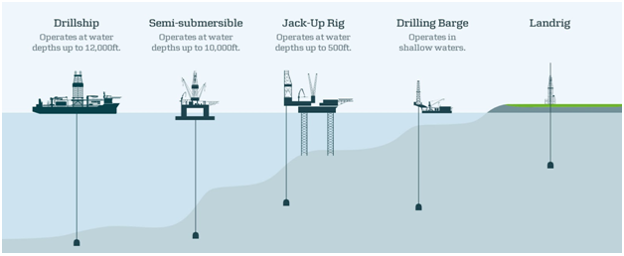
Offshore oil rigs fall into two groups. Mobile drilling units are jack-ups, semi-submersibles and drillships. Production platforms are fixed jackets, gravity-based structures, compliant towers, tension-leg platforms, spars and FPSOs.
| Type | Main use | How it is supported | Typical water depth |
|---|---|---|---|
| Jack-up | Drilling | Legs on the seabed | Shallow, up to about 150 m |
| Semi-submersible | Drilling or production | Floating on pontoons and columns | Deep water |
| Drillship | Drilling | Floating ship-shaped hull | Deep and ultra-deep water |
| Fixed (jacket) platform | Production | Steel legs piled into the seabed | Up to about 150 m |
| Gravity-based structure | Production | Concrete base held down by its own weight | Troll A stands in 303 m |
| Compliant tower | Production | Narrow, flexible piled tower | About 300–600 m (1,000–2,000 ft) |
| Tension-leg platform | Production | Floating, held down by tensioned tendons | About 450–2,100 m |
| Spar | Production | Floating deep-draft cylinder, moored | About 600–3,000 m |
| FPSO | Production and storage | Floating ship-shaped hull, moored | About 200 m to more than 3,000 m |
Compliant tower depths come from BSEE’s platform fact sheet and the Troll A depth from Equinor. The other ranges come from a 2022 review by Amaechi and colleagues in the Journal of Marine Science and Engineering. Individual units can work outside these ranges.

What Types of Mobile Offshore Drilling Rigs Are There?
The MODU Code recognizes three main hull forms: self-elevating units (jack-ups), column-stabilized units (semi-submersibles), and surface units (drillships and barges). Each suits a different water depth and sea state.
Jack-Up Rigs
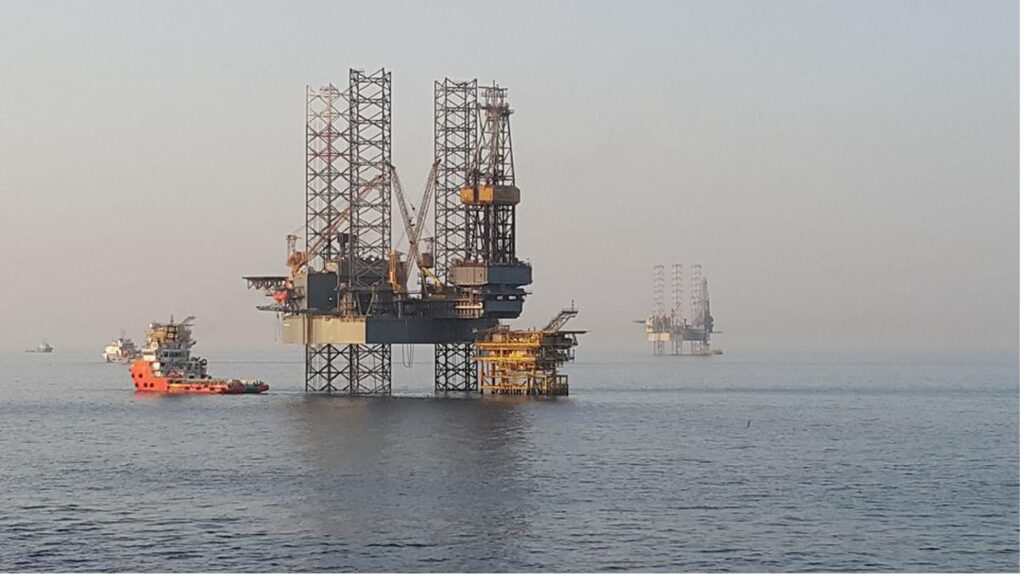
For shallow wells, jack-up rigs are used. A jack-up floats to the site, lowers its legs to the seabed, and raises its hull clear of the waves. SPE’s PetroWiki notes many units for 25 to 300 feet of water, with some able to work deeper than 400 feet.
Unlike the floating types below, a jack-up stands on the seabed while it drills. Self-propelled lift boats use the same jacking principle for service and construction work rather than drilling.
Semi-Submersible Rigs
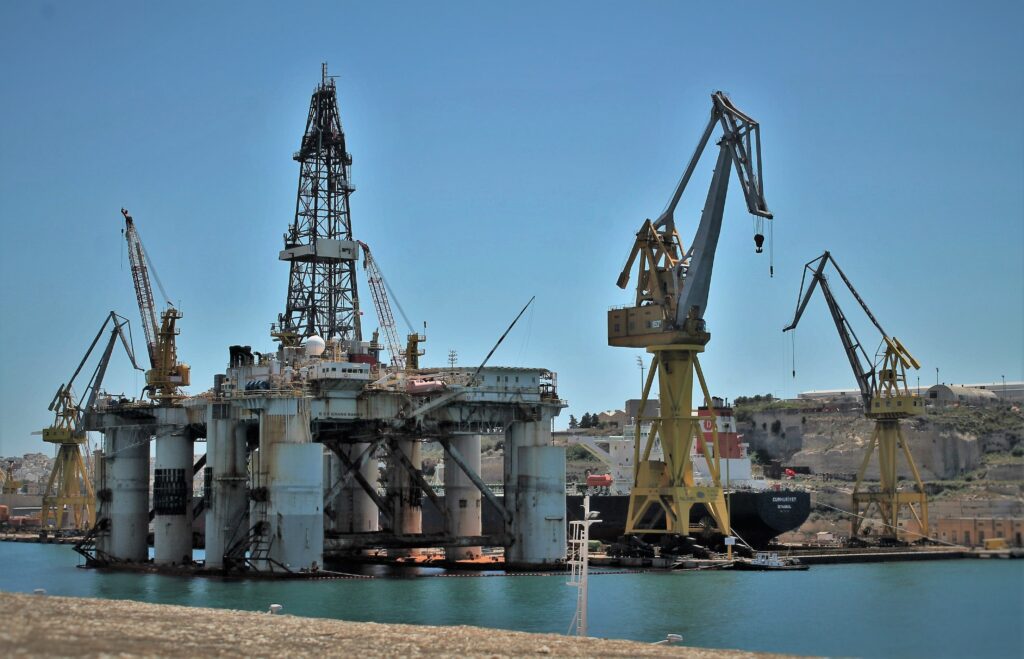
A semi-submersible is a column-stabilized unit: its deck sits on columns above large submerged pontoons. BSEE describes it as a “floating vessel supported on large pontoon-like structures,” able to operate in deep water.
PetroWiki explains that the columns let waves pass through with little energy transferred to the hull, so motions stay smooth. Semi-submersibles hold position with spread moorings, taut-line moorings or a dynamic positioning system.
Deep-water semi-submersibles are used for both drilling and production. BP’s Deepwater Horizon was a dynamically positioned semi-submersible drilling rig.
Drillships
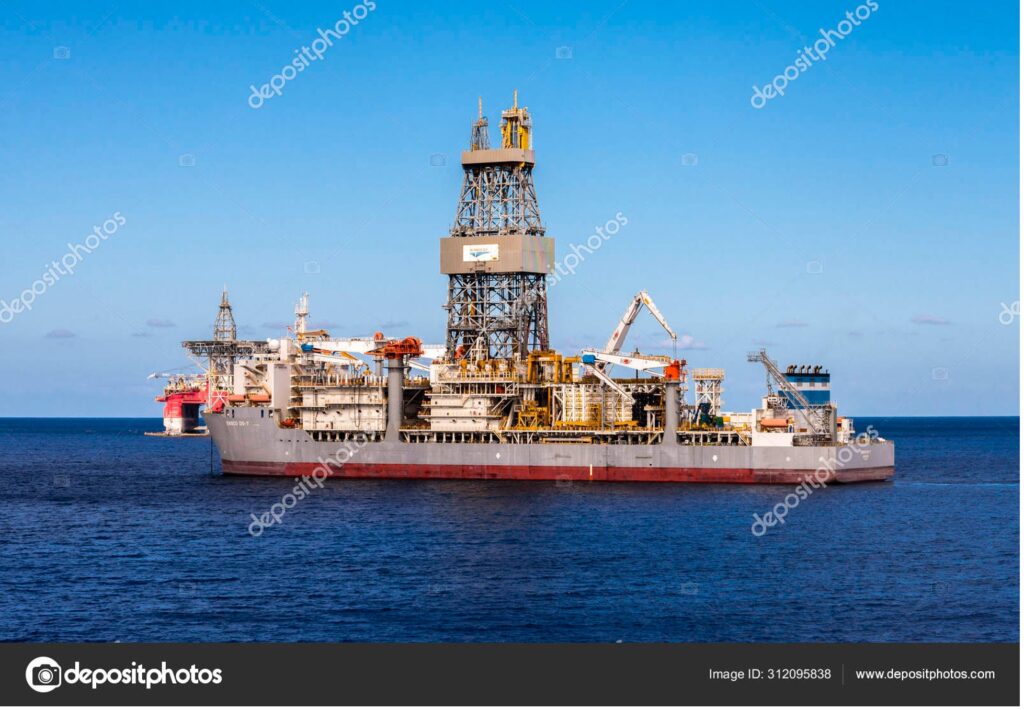
A drillship is the “oil rig ship”: US rules define it as “a surface type unit with a single shipshape displacement hull.” The drilling derrick sits over an opening in the hull, and the ship usually holds position by dynamic positioning.
Because they are self-propelled ships, drillships can move between distant sites under their own power. The Amaechi review places them in water deeper than about 1,800 m.
Long-idle drillships rarely return to work. In September 2025, Esgian counted 12 cold-stacked drillships, about 11% of the fleet. For the longest-stacked units, it judged recycling or conversion more viable than reactivation.
Demand for working floaters is recovering, though. Westwood reported in March 2026 that floater rig days booked for 2026 were already 4% above the 2025 total. Its analysts expect the market to tighten further in 2027.
Land Rigs
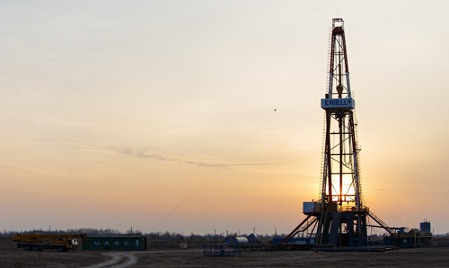
Onshore, a drilling rig stands on its substructure rather than on a hull. The parts are the same as offshore, but the rig is moved by road between well sites instead of being towed or sailed.
What Types of Offshore Production Platforms Are There?
Production platforms are either bottom-founded (fixed jackets, gravity-based structures and compliant towers) or floating (TLPs, spars, semi-submersibles and FPSOs). Floating designs take over as water gets deeper.
Fixed (Jacket) Platforms
A fixed platform has steel legs, called a jacket, piled into the seabed, with the deck and topsides on top. BSEE notes that fixed platforms have steel legs anchored to the sea floor. The Amaechi review gives water depths up to about 150 m for typical jackets.
Deeper jackets exist: NOAA lists Shell’s Bullwinkle (1991) at 412 m (1,353 ft) as the deepest fixed platform in its 2005 data. Regional examples are covered in oil platforms in the Gulf of Mexico.
Gravity-Based Structures (Condeep)
A gravity-based structure is a concrete base that stays on the seabed under its own weight, without piles. Norway’s Condeep platforms are the best-known examples.
The largest, Troll A, was lowered to the seabed in 303 m of water on May 17, 1995, according to Equinor’s history pages. The platform is 472 m tall in total.
Compliant Towers
A compliant tower is, in BSEE’s words, “a narrow, flexible tower with a piled foundation.” It bends with wind and waves instead of resisting them rigidly. BSEE gives typical water depths of 1,000 to 2,000 feet.
Tension-Leg Platforms (TLP)
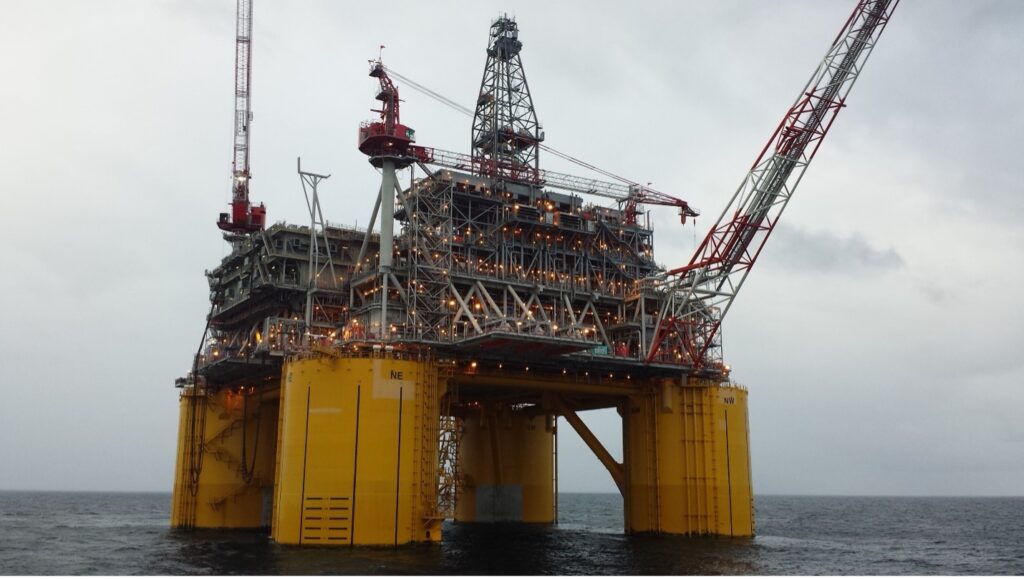
A tension-leg platform is a floating platform held down by vertical tendons anchored to the seabed. The hull’s buoyancy keeps the tendons in tension, which restrains vertical motion while allowing some sideways movement.
The world’s first TLP was installed on the Hutton field in the UK North Sea in 1984. BSEE records the first mini-TLP, a smaller version for smaller reserves, in the Gulf of Mexico in 1998.
Spar Platforms
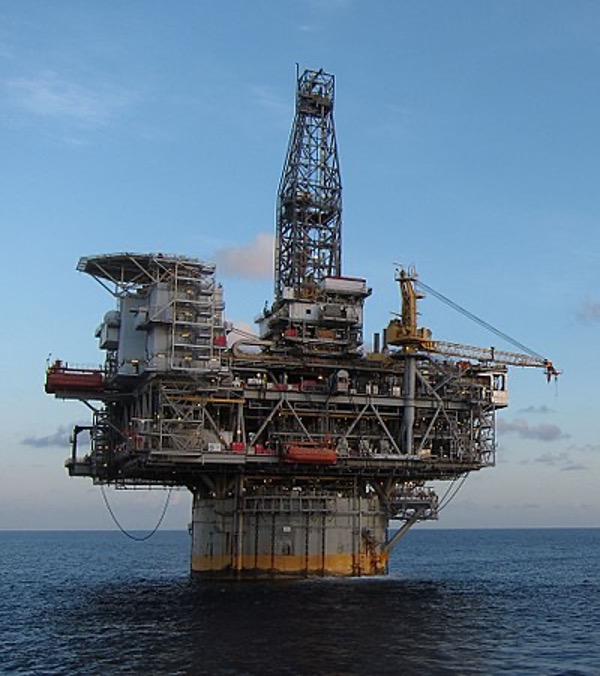
ISO 19901-7 defines a spar as a “deep-draught, small water-plane area floating structure.” BSEE describes it as a large-diameter single vertical cylinder that supports a deck, held in place by moorings.
Much of the cylinder sits deep below the surface, which keeps the spar steady in waves. The Amaechi review places spars in about 600 to 3,000 m of water.
FPSOs
An FPSO (floating production, storage and offloading unit) is, in BSEE’s description, “a large tanker type vessel that is moored to the seafloor.” It processes oil on board, stores it in the hull and offloads it to shuttle tankers.
Because it stores its own oil, an FPSO suits fields far from pipelines. The Amaechi review gives water depths from about 200 m to more than 3,000 m.
Normally Unattended Installations (NUI)
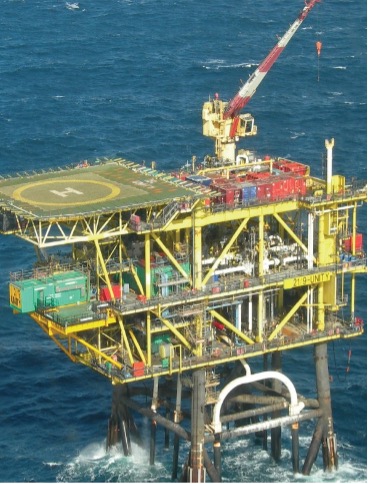
A normally unattended installation is a small platform without a permanent crew. A 2016 IChemE paper on unmanned wellhead platforms notes there is no single definition. It describes the simplest type as having low visit frequency, minimal facilities and no overnight stay.
Some fields need no surface platform at all. Subsea wells can be tied back by pipeline to a host platform, the method NOAA lists alongside the platform types.
How Do Floating Oil Rigs Stay in Position?
Floating rigs stay afloat on the buoyancy of their hulls, pontoons or columns. They stay on station with moorings, tensioned tendons or dynamic positioning, which uses computer-controlled thrusters.
- Spread or taut-line moorings: anchor lines run out to the seabed in several directions. Semi-submersibles, spars and FPSOs use them.
- Tendons: vertical steel tethers in tension, used by TLPs.
- Dynamic positioning: thrusters hold the unit over the well with no anchors. Drillships and many deep-water semi-submersibles use it.
Mooring a rig is offshore marine work in its own right. Anchor handling tug supply (AHTS) vessels run and recover the anchors and tow rigs between sites.
How Are Oil Rigs Moved Between Sites?
Jack-ups are towed with their legs raised, and drillships sail under their own power. Semi-submersibles are towed or self-propelled, depending on the design. Fixed production platforms stay on their field until decommissioned.
For long ocean moves, a rig can also travel as dry cargo on a semi-submersible heavy-transport ship. The largest heavy-lift ships are built for exactly this kind of load.

Related Topics
Frequently Asked Questions
What is an oil rig?
An oil rig is the equipment and structure used to drill an oil or gas well. Offshore drilling rigs are usually mobile units, such as jack-ups, semi-submersibles and drillships, that move from well to well.
What are the main types of oil rigs?
The mobile drilling types are jack-ups, semi-submersibles and drillships, plus land rigs onshore. Production platforms include fixed jackets, gravity-based structures, compliant towers, tension-leg platforms, spars and FPSOs.
Is an oil rig a ship?
Mobile offshore drilling units are vessels in law. The IMO MODU Code calls a MODU a vessel capable of drilling for resources beneath the seabed. A drillship is a ship-shaped unit, while fixed platforms are not vessels.
What is the difference between an oil rig and an oil platform?
A drilling rig drills wells and usually moves between locations. A production platform stays on one field for years and processes the oil and gas. Many platforms also carry a drilling rig on deck.
What is a semi-submersible rig?
A semi-submersible is a floating unit whose deck sits on columns above submerged pontoons. Waves pass between the columns, so motions stay smooth. It is held in place by moorings or dynamic positioning.
What is a jack-up rig?
A jack-up is a self-elevating drilling unit for shallow water. It floats to the site, lowers its legs to the seabed and raises its hull above the waves before drilling.
What is an FPSO?
An FPSO is a floating production, storage and offloading unit. It is a ship-shaped vessel moored over a field that processes oil on board, stores it in the hull and offloads it to shuttle tankers.
How do floating oil rigs stay in place?
They use moorings, tensioned tendons or dynamic positioning. Moorings and tendons tie the unit to the seabed, while dynamic positioning uses computer-controlled thrusters to hold it over the well without anchors.

- What Is a Jack-Up Rig? Legs, Preloading and Punch-Through Explained – October 31, 2026
- Great Lakes Maritime Academy: Programs, Cost and Admission – October 14, 2026
- Bunker Delivery Note (BDN): Contents, MARPOL Rules and Checks – October 11, 2026