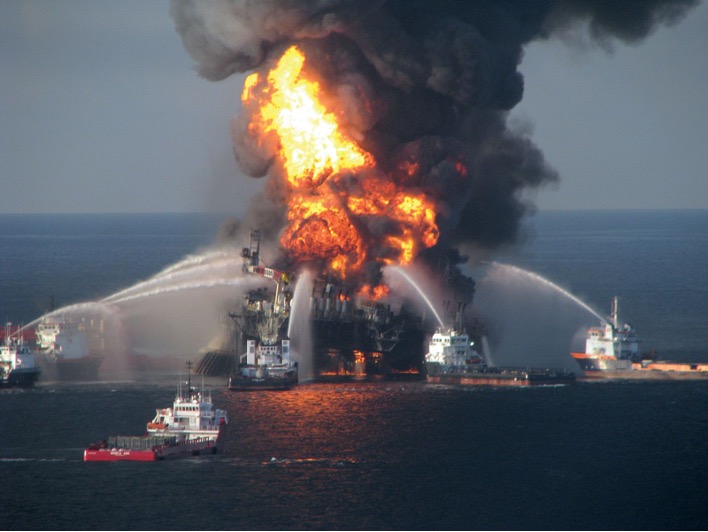
On 20 April 2010, the semi-submersible drilling rig Deepwater Horizon exploded in the Gulf of Mexico, 41 miles off the Louisiana coast. Eleven workers were killed. The Macondo well blew out, and over the next 87 days, an estimated 4.9 million barrels of crude oil were discharged into the Gulf. It remains the largest accidental marine oil spill in recorded history.
The disaster exposed fundamental failures in well control, blowout preventer (BOP) integrity, and offshore safety oversight. It triggered the largest environmental liability settlement in US history and prompted a complete overhaul of federal offshore drilling regulation. This article covers the technical causes, the legal and regulatory consequences, and the changes to offshore safety management that followed.
The Deepwater Horizon Rig and the Macondo Prospect
Deepwater Horizon was an ultra-deepwater, dynamically positioned, semi-submersible mobile offshore drilling unit (MODU). Built in 2001 by Hyundai Heavy Industries in South Korea, it was owned by Transocean and registered in Majuro under the Marshallese flag. It was on charter to BP from 2001 through September 2013.
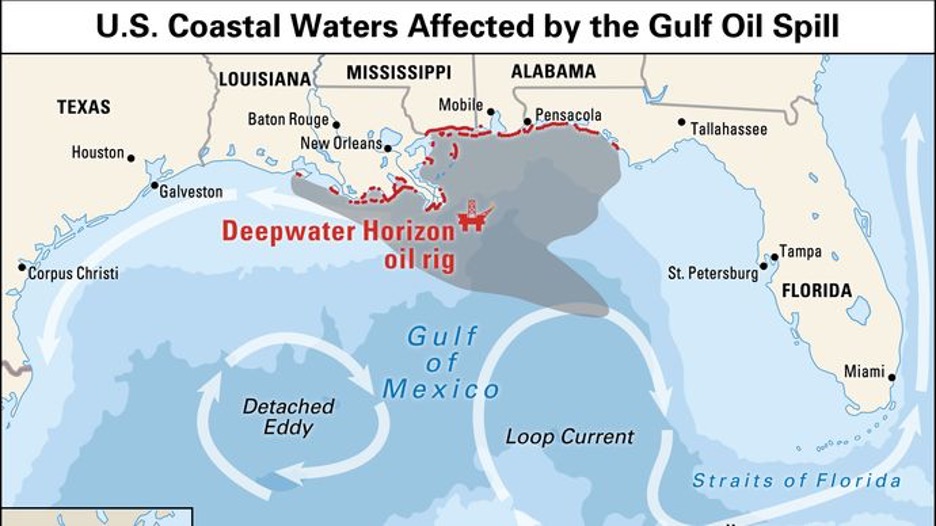
At the time of the blowout, the rig was drilling an exploratory well at the Macondo Prospect — Mississippi Canyon Block 252. The well was located approximately 5,000 feet (1,500 metres) below the sea surface. Total depth reached approximately 18,360 feet (5,600 metres) below sea level.
BP was the operator and principal developer, holding a 65% share. Anadarko Petroleum held 25%, and MOEX Offshore 2007 held the remaining 10%. The rig’s dynamic positioning system maintained station above the wellhead without anchoring — standard practice for ultra-deepwater operations, and relevant context for understanding what was lost when the rig sank.
Dynamic positioning systems of this class require continuous power and thruster availability to maintain position over the wellhead. Their failure or loss — whether from an explosion, flooding, or power outage — means the riser and BOP stack are immediately placed under unplanned tension.
The Well Control Failure: What Actually Went Wrong
The Macondo well was in its final completion phase when the blowout occurred. A cement job — contracted to Halliburton — had been placed to seal the production casing. Negative pressure tests conducted that evening should have confirmed well integrity. They did not.
At approximately 21:45 CDT on 20 April, a surge of hydrocarbons — predominantly methane gas — travelled up the riser and onto the rig floor. The gas ignited, producing a series of explosions and a fireball visible 40 miles away. An attempt to activate the blowout preventer failed. The blind shear ram, the BOP’s last-resort closure device, did not seal the well.
Blowout Preventer Failure
The BOP stack on the Macondo well had last been inspected by the American Bureau of Shipping (ABS) in 2005 — five years before the blowout. Post-incident investigation found that the blind shear ram failed to activate correctly due to a hydraulic leak and a design deficiency in the ram’s ability to cut the drill pipe at that location. The BOP manufacturer, Cameron, and BP both faced findings related to BOP design and maintenance shortfalls.
The Presidential Commission and subsequent investigations identified multiple concurrent failures: misinterpretation of the negative pressure test, displacement of drilling mud with seawater before the cement had been adequately verified, and inadequate BOP testing protocols. No single decision caused the blowout. It was a sequence of risk-accepting choices, each one individually defensible to the decision-maker at the time.
The Cement Job and Halliburton’s Role
Halliburton’s cement design for the final casing string used a nitrogen-foamed slurry that later testing suggested was inherently unstable. Internal Halliburton modelling had flagged the design as potentially inadequate. That assessment was not communicated to BP’s well site team before the cement was placed.
Halliburton subsequently reached a $1.1 billion settlement with the US Department of Justice. The settlement included an agreement to pay the maximum criminal fine and contribute to a fund for Gulf Coast restoration.
The Oil Spill: 87 Days, 4.9 Million Barrels
Deepwater Horizon sank on 22 April 2010, two days after the explosion. As the rig went down, the riser — still connected to the wellhead — ruptured. Oil began flowing directly from the seabed, approximately 1,500 metres below the surface.
BP’s initial public estimate of the flow rate was approximately 1,000 barrels per day. US government scientists later calculated the peak discharge at over 60,000 barrels per day. The total discharge before the well was capped on 15 July 2010 was estimated at 4.9 million barrels — approximately 210 million US gallons.
For comparison, the Exxon Valdez spilled approximately 257,000 barrels into Prince William Sound in 1989. Deepwater Horizon discharged roughly 19 times that volume. It exceeded the previous largest marine spill, the Ixtoc I blowout of 1979, by an estimated 8–31%.
Containment and Response Efforts
Multiple containment strategies were attempted before the well was successfully capped. A series of containment domes deployed in early May failed due to hydrate formation blocking the collection riser. A “top kill” procedure — pumping drilling mud into the well under pressure — was attempted in late May and failed.
BP drilled two relief wells simultaneously to intercept the Macondo wellbore at depth and kill the well with cement from below. The first relief well intersected the Macondo casing on 5 August 2010. The well was declared effectively dead on 19 September 2010, 152 days after the initial explosion.
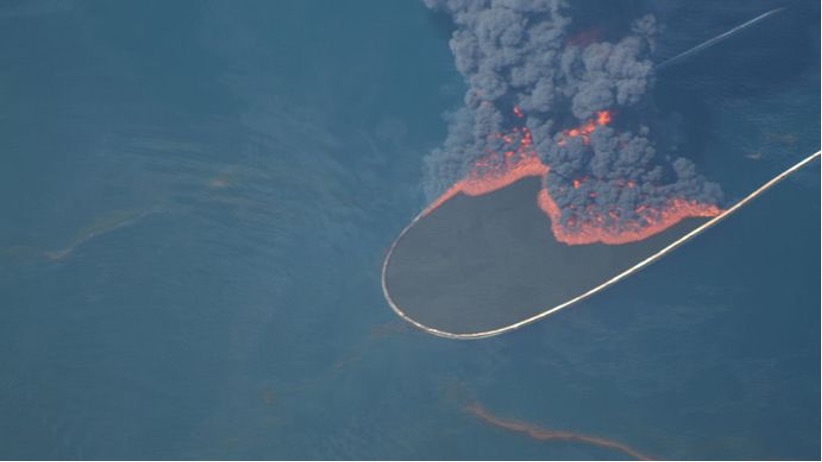
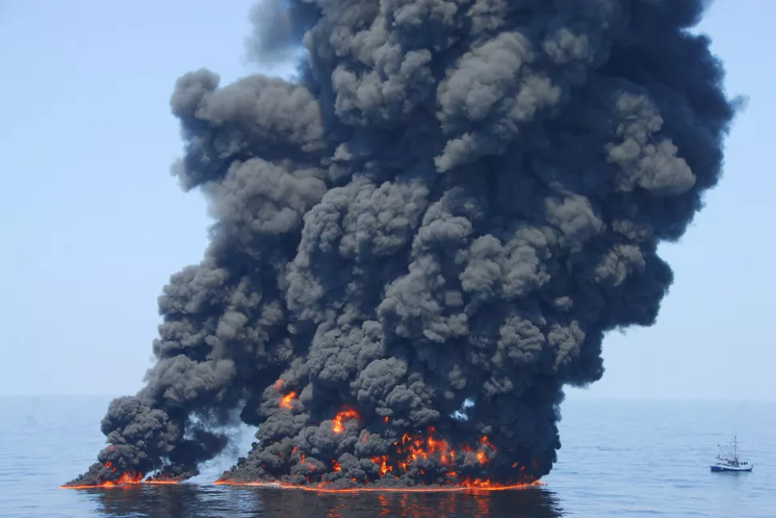
In total, 1.84 million gallons of chemical dispersants were applied — both aerially and, controversially, at the wellhead itself. Over 411 controlled burns were conducted on surface oil. NOAA fisheries closures eventually covered approximately 37% of the Gulf of Mexico at their peak.
MARPOL Implications of the Deepwater Horizon Spill
The Deepwater Horizon event was not primarily a MARPOL matter — MARPOL Annex I governs oil pollution from ships, not from subsea well blowouts. However, the spill’s interaction with the broader maritime and offshore regulatory framework is significant and often misunderstood.
The Deepwater Horizon itself was registered as a vessel and was subject to flag state requirements under Marshallese law. As a MODU operating in US waters, it was also subject to USCG jurisdiction and US regulations implementing MARPOL obligations for offshore units. The rig carried an International Oil Pollution Prevention (IOPP) Certificate as required under MARPOL Annex I for applicable vessels.
MARPOL Annex I Regulation 15 governs discharges of oil from machinery spaces, and Regulation 34 covers cargo spaces. Neither regulation was designed to address a sustained blowout from a subsea well. The spill’s regulatory handling therefore, fell primarily under US domestic law — specifically the Oil Pollution Act of 1990 and the Clean Water Act — rather than the MARPOL framework.
What the spill did affect at an international level was the broader conversation around offshore installation safety. The IMO’s Marine Environment Protection Committee (MEPC) and the Legal Committee both addressed the gaps exposed by Deepwater Horizon, particularly the absence of a binding international instrument governing offshore installation blowout response and liability. That gap remains only partially closed by voluntary guidelines and bilateral arrangements.
OPA 90 and the Liability Framework
The Oil Pollution Act of 1990 (OPA 90) was enacted in direct response to the Exxon Valdez disaster. It established a federal liability framework for oil spills in US navigable waters and the exclusive economic zone. Deepwater Horizon was the first event to test OPA 90’s provisions at anything approaching this scale.
Under OPA 90, the responsible party — in this case, BP as the lease operator — bears strict liability for removal costs and damages up to the statutory cap. For offshore facilities, the OPA 90 cap was $75 million for damages, plus unlimited removal costs. However, the cap does not apply where the responsible party is found to have been grossly negligent or to have wilfully violated safety regulations.
BP waived the OPA 90 liability cap early in the response and agreed to pay all legitimate claims directly. This was both a legal strategy and a public relations decision. The company established a $20 billion escrow fund — the Gulf Coast Claims Facility (GCCF), later replaced by the Deepwater Horizon Claims Center (DHCC) — to process individual and business claims.
The $65 Billion Settlement
Final resolution of the Deepwater Horizon litigation extended over more than a decade. The most significant milestone was a 2015 consent decree between BP, the United States, and the five Gulf states. The settlement totalled $20.8 billion — including up to $8.8 billion in natural resource damages — and was the largest environmental damage settlement in US history.
Transocean separately pleaded guilty to a misdemeanour violation of the Clean Water Act and paid $1 billion in criminal and civil penalties. Halliburton’s $1.1 billion settlement followed in 2014. In total, across all parties and all categories of claims, estimates of total BP expenditure by 2018 exceeded $65 billion.
The DHCC processed approximately 390,000 claims. Eligible claimants included commercial fishermen, tourism businesses, coastal property owners, and individuals who suffered economic losses attributable to the spill. As of 2018, thousands of claims remained unresolved, and BP contested a significant number on documentation grounds.
The BSEE Overhaul: What Changed in Offshore Regulation
At the time of the Deepwater Horizon explosion, offshore drilling safety in the US was regulated by the Minerals Management Service (MMS). The MMS combined royalty collection, resource management, and safety oversight in a single agency — a structural conflict of interest that multiple investigations identified as compromising enforcement. The Presidential Commission’s 2011 report was direct: the MMS’s safety culture had been subordinated to revenue generation.
In 2010, the Obama administration disbanded the MMS. Its functions were split across three new bodies: the Bureau of Safety and Environmental Enforcement (BSEE), the Bureau of Ocean Energy Management (BOEM), and the Office of Natural Resources Revenue (ONRR). BSEE took over all safety and environmental enforcement for offshore operations.
Well Control Rule and SEMS
BSEE implemented the Safety and Environmental Management Systems (SEMS) rule in 2011, later strengthened in 2013. SEMS required offshore operators to implement a formal safety management system — analogous in structure to the ISM Code that governs shipboard safety management. Operators must demonstrate hazard identification, risk assessment, and management of change procedures across all offshore activities.
The Well Control Rule followed in 2016, imposing new requirements for BOP testing, well control training, and third-party BOP verification. Specific requirements included BOP inspection and testing intervals, subsea BOP shear ram capacity requirements, and real-time monitoring of well control parameters. The rule also required operators to use independent third parties to verify BOP functionality.

The Well Control Rule was partially rolled back under the Trump administration in 2019, relaxing some BOP testing intervals and removing certain real-time monitoring requirements. The Biden administration subsequently moved to restore core provisions, though the regulatory position has shifted with successive administrations. The underlying technical requirements for BOP design and shear capacity remain more stringent than pre-2010 standards.
Offshore Safety Culture: The ISM Parallel
The post-Deepwater Horizon SEMS framework has explicit parallels to the ISM Code (International Safety Management Code), which became mandatory for most seagoing vessels under SOLAS Chapter IX from 1998. Both systems require a documented safety management system, designated responsible persons, internal audits, and non-conformity reporting. The difference is that ISM applies internationally through flag state enforcement, while SEMS is a US domestic regulatory requirement.
For maritime professionals, the Deepwater Horizon investigation findings are instructive precisely because they mirror the failure patterns that the ISM Code was designed to address aboard ships. Normalisation of deviance — the incremental acceptance of practices that deviate from standard because they have not yet caused an accident — was central to the pre-blowout culture on the Macondo well. The same dynamic has been identified in significant vessel casualties.
Environmental Consequences and Long-Term Recovery
The spill affected 8,332 species across the Gulf ecosystem, including over 1,270 fish species, 218 bird species, 29 marine mammal species, and 4 sea turtle species. Between May and June 2010, polycyclic aromatic hydrocarbon (PAH) concentrations in spill-area waters were measured at 40 times pre-spill levels. Damage to deep-sea coral communities was confirmed in 2012.
Fifteen years after the spill, the ecosystem picture remains mixed. Brown pelicans, whose populations had declined sharply in the immediate aftermath, have largely recovered. Bottlenose dolphin populations in Barataria Bay, Louisiana — one of the most heavily oiled coastal areas — continue to show elevated disease burden and suppressed reproductive rates.
The Natural Resource Damage Assessment (NRDA) process, coordinated by NOAA and a consortium of federal and state trustees, resulted in a restoration programme funded by the $8.8 billion natural resource damages component of the 2015 settlement. Restoration projects have included coastal wetland rehabilitation, oyster reef construction, and sea turtle monitoring programmes. The scale of the NRDA process was unprecedented — the largest such assessment ever undertaken.
The oil platforms in the Gulf of Mexico that continued operating after 2010 did so under fundamentally different regulatory conditions. Deepwater Horizon changed what was considered acceptable risk in offshore operations, not just in the United States but in regulatory frameworks globally.
Industry-Wide Consequences and the Offshore Safety Shift
Deepwater Horizon accelerated a global review of offshore drilling safety that was already under way in several jurisdictions. The European Union’s Offshore Safety Directive (2013/30/EU) was developed partly in response to the spill, imposing mandatory safety case requirements on offshore operators in European waters. Norway, which had operated under a safety case regime since the 1990s, pointed to its existing framework as a model.
The concept of the safety case — in which the operator must demonstrate to a regulator that all major hazards have been identified, assessed, and controlled to a level as low as reasonably practicable (ALARP) — gained significant traction after 2010. It mirrors, in offshore terms, what port state control inspectors look for in the ISM Code compliance of a seagoing vessel. The types of surveys carried out on ships under classification society rules follow a similar logic: periodic verification that critical systems remain fit for purpose.
For anchor handling tug supply (AHTS) vessels and other offshore support craft working alongside MODUs, the post-2010 environment brought tighter well control awareness requirements and clearer emergency response protocols. Crew on vessels in the exclusion zone around a drilling rig are now subject to more rigorous briefing on emergency well control procedures than was standard before 2010.
The drillships and semi-submersible rigs built after 2010 reflect updated BOP design standards, including more robust shear ram configurations and dual-ram redundancy requirements. Class societies, including DNV, ABS, and Lloyd’s Register, updated their MODU rules to reflect post-Deepwater Horizon findings.
Financial Scale and Career Context
The financial consequences for BP were severe and lasting. The company’s share price fell approximately 55% between the explosion date and late June 2010. BP divested over $38 billion in assets between 2010 and 2013 to fund liabilities and restore its balance sheet.
For individuals working in offshore energy, Deepwater Horizon redefined the risk environment. Oil rig workers in the Gulf of Mexico now operate under a fundamentally different safety management regime than existed before April 2010. Competency requirements for well control — assessed through the IWCF and IADC WellCAP certification programmes — became more rigorous and more consistently enforced.
The spill also reshaped maritime environmental compliance more broadly. Ship operators working near offshore infrastructure became more aware of OPA 90 exposure. Port state control inspectors in the Gulf region intensified scrutiny of oil record books and bilge management systems on vessels operating in the affected area.
The development of sustainable shipping practices and the push toward lower-emission marine fuels has a complex relationship with offshore oil production. Deepwater Horizon did not stop offshore drilling, but it permanently raised the bar for what operators must demonstrate before regulators will permit deepwater operations.
Frequently Asked Questions
What caused the Deepwater Horizon blowout?
The blowout resulted from multiple concurrent failures: a flawed cement job that failed to seal the well, misinterpretation of negative pressure test results, and failure of the blowout preventer to close the well when activated. No single decision caused the disaster. It was a sequence of risk-accepting choices, each one compounded by inadequate safety oversight.
How much oil spilled from the Deepwater Horizon?
The US government estimated total discharge at approximately 4.9 million barrels (210 million gallons) over 87 days. This makes Deepwater Horizon the largest accidental marine oil spill in history, surpassing both the Exxon Valdez (257,000 barrels) and the Ixtoc I blowout of 1979.
What is OPA 90 and how did it apply to Deepwater Horizon?
The Oil Pollution Act of 1990 established strict liability for oil spill removal costs and damages in US waters. BP, as the Macondo lease operator, was the responsible party under OPA 90. The company waived the $75 million damage cap and agreed to pay all legitimate claims, eventually contributing to settlements exceeding $65 billion across all categories.
Does MARPOL apply to offshore drilling blowouts?
MARPOL Annex I governs oil discharges from ships and offshore installations in their machinery and cargo operations. It was not designed to address sustained blowout discharges from subsea wells. The Deepwater Horizon spill was handled under US domestic law — primarily OPA 90 and the Clean Water Act — rather than the MARPOL framework.
What is BSEE and why was it created?
The Bureau of Safety and Environmental Enforcement (BSEE) was created in 2010 when the Minerals Management Service was dissolved following Deepwater Horizon. It took over all offshore safety and environmental enforcement functions. Its creation separated safety regulation from royalty collection, eliminating the structural conflict of interest that had compromised MMS oversight.
What is the SEMS rule?
The Safety and Environmental Management Systems (SEMS) rule requires offshore operators in US waters to implement a formal safety management system covering hazard identification, risk assessment, and management of change. It is structurally similar to the ISM Code that governs shipboard safety management under SOLAS Chapter IX.
How much did BP pay in total for the Deepwater Horizon spill?
By 2018, BP’s total expenditure across all Deepwater Horizon liabilities was estimated to exceed $65 billion. This included the $20.8 billion federal and state settlement, criminal fines, individual compensation claims, and spill response and clean-up costs. It remains the largest corporate environmental liability payout in history.
Has the Gulf of Mexico recovered from the Deepwater Horizon spill?
Recovery has been uneven. Some species, including brown pelicans, have largely recovered. Others, particularly bottlenose dolphins in heavily oiled areas like Barataria Bay, continue to show elevated disease rates and suppressed reproduction 15 years after the spill. Deep-sea coral communities near the wellhead site remain damaged.

- What Is SOLAS? Chapter-by-Chapter Overview and Enforcement – September 9, 2026
- What Is MARPOL? Guide to All Six Annexes and Enforcement – September 9, 2026
- 14 Marine Surveyors in Ohio – June 14, 2026