A fathom equals exactly 6 feet, or 1.8288 meters. Mariners use it to measure water depth and rope length, as part of the broader system of nautical units of measurement. This guide covers common fathom-to-feet conversions, including the widely searched 100-fathom depth, and where the unit comes from.
How Deep Is a Fathom?
One fathom is exactly 6 feet, or 1.8288 meters. The measurement was standardized internationally under the 1959 yard-and-pound agreement and reconfirmed by the U.S. National Geodetic Survey in 2022. It applies equally to water depth and rope length.
Older references cite a 6.08-foot “sea fathom,” tied to Britain’s historical 6,080-foot nautical mile. That variant is obsolete — every maritime authority now uses the exact 6-foot fathom.
How Deep Is 100 Fathoms?
100 fathoms is 600 feet, or 182.88 meters. That’s roughly the maximum depth early sailors could reliably measure by hand with a weighted sounding line. It’s why the 100-fathom mark became a standard reference depth in charts and regulations.
Ships carried a longer, weighted “deep-sea lead” for water beyond 100 fathoms. Modern echo sounders replaced both tools for surface vessels, though depth still matters well past this range — see how deep submarines can operate underwater.
Fathom-to-Feet-and-Meters Conversion Table
Convert any fathom measurement with two formulas: feet = fathoms × 6, and meters = fathoms × 1.8288. The table below covers the most commonly searched depths.
| Fathoms | Feet | Meters |
|---|---|---|
| 1 | 6 | 1.83 |
| 2 | 12 | 3.66 |
| 5 | 30 | 9.14 |
| 10 | 60 | 18.29 |
| 20 | 120 | 36.58 |
| 30 | 180 | 54.86 |
| 40 | 240 | 73.15 |
| 50 | 300 | 91.44 |
| 60 | 360 | 109.73 |
| 75 | 450 | 137.16 |
| 100 | 600 | 182.88 |
| 120 | 720 | 219.46 |
| 150 | 900 | 274.32 |
| 180 | 1,080 | 329.18 |
| 200 | 1,200 | 365.76 |
| 300 | 1,800 | 548.64 |
| 1,000 | 6,000 | 1,828.8 |
Do All Nautical Charts Still Use Fathoms?
No — most modern charts use meters as the standard depth unit, following the international standard set by the International Hydrographic Organization. Older U.S. charts still show soundings in feet or fathoms, so checking a chart’s units before reading depths is essential.
Every chart’s title block states its sounding unit and datum — meters, feet, or fathoms. Misreading that unit is a genuine grounding risk, not just a conversion inconvenience.
Where Does the Word Fathom Come From?
Fathom comes from Old English fæðm, meaning outstretched arms or an embrace. It’s cognate with Old Norse faðmr and Danish favn, both describing the same arm-span gesture ancient measurers used before standardized units existed.
The unit began as a practical measure — both arms stretched wide, close to 6 feet for an average adult. Sailors measured rope by armspan long before it became a fixed nautical standard.
Fathoms and nautical miles were once linked directly: Britain’s old Admiralty nautical mile (6,080 feet) equaled exactly 1,000 fathoms. Today’s international nautical mile (1,852 meters) is defined independently — about 1,012.7 fathoms.
How Do Sailors Measure Depth With a Fathom?
Sailors traditionally measured depth with a leadline — a weighted rope marked at fixed fathom intervals with leather, cloth, or knots. Dropping the line and reading the marker at the waterline gave an instant depth reading without instruments.
Modern ships rely on echo sounders for continuous depth readings. Many still carry a leadline as a manual backup when electronics fail.
What Do Leadline Markers Mean?
Traditional leadlines use different materials at set fathom marks so a sailor can identify depth by feel, even in the dark. Each interval has its own marker — leather strips, colored cloth, or knotted cord.
| Fathoms | Marker |
|---|---|
| 2 | 2 strips of leather |
| 3 | 3 strips of leather |
| 5 | White cloth |
| 7 | Red cloth |
| 10 | Leather with a hole |
| 13 | Blue cloth |
| 30 | Small line with 3 knots |
What Is the 100-Fathom Line?
The 100-fathom line is a depth contour on nautical charts marking 600 feet of water, historically the practical limit of hand-sounding. NOAA and state fisheries agencies still use it, alongside other depth-contour lines, as a management boundary for groundfish regulations.
Sunlight penetrates water down to roughly 100 fathoms, supporting photosynthesis and a rich marine food web. That makes it a productive fishing zone for species like tuna, marlin, and swordfish, especially off the Gulf of Mexico and Hawaii.
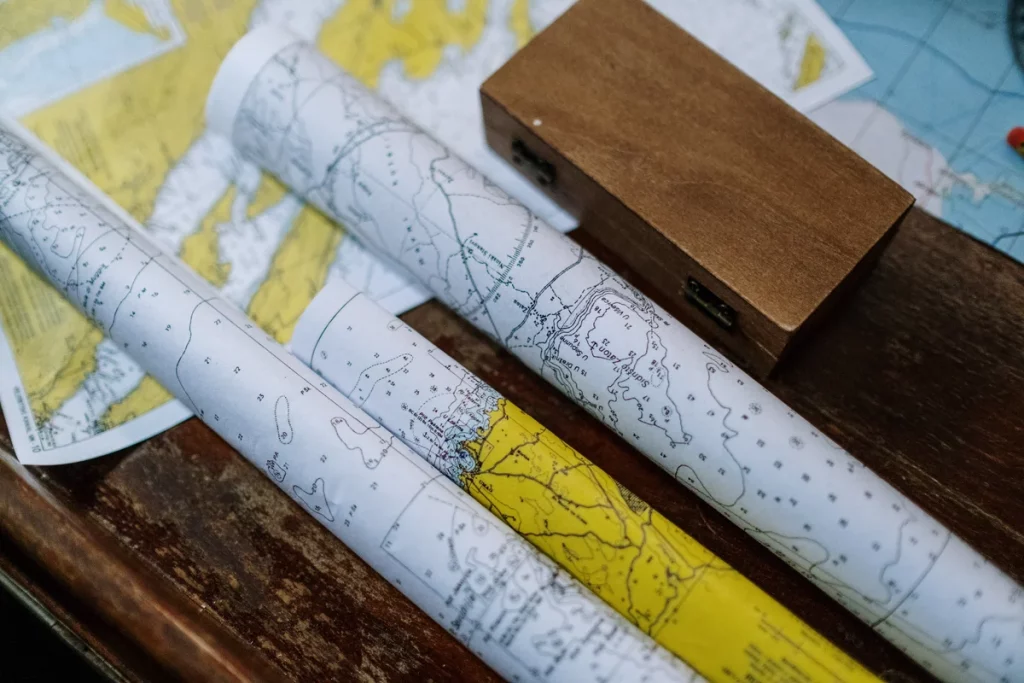
NOAA Fisheries and state agencies use several depth-contour lines, from 20 to 200 fathoms, as Pacific Coast groundfish management boundaries under 50 CFR Part 660. These lines define where certain species and gear types face depth-based restrictions.
Fathom-based charting rarely exceeds a few hundred fathoms. For genuinely extreme depths, see the deepest points of the world’s oceans, and how ships handle anchoring in deep water well beyond the 100-fathom line.
Frequently Asked Questions
What is a fathom?
A fathom is a unit of length and depth equal to exactly 6 feet, or 1.8288 meters. Mariners use it mainly to measure water depth and rope or chain length at sea.
How deep is 100 fathoms in feet?
100 fathoms is exactly 600 feet, or 182.88 meters. It’s one of the most commonly searched fathom depths, historically the limit of hand-line sounding.
How many feet are in a fathom?
There are exactly 6 feet in a fathom. Multiply any fathom value by 6 to convert it to feet.
How long is a fathom in meters?
A fathom is 1.8288 meters. Multiply any fathom value by 1.8288 to convert it to meters.
Why is a fathom 6 feet?
The 6-foot fathom was standardized internationally under the 1959 yard-and-pound agreement. Before that, some countries used a 6.08-foot “sea fathom” tied to Britain’s older nautical mile definition.
Is a fathom used for length or depth?
Both. Sailors use fathoms to measure water depth and also to measure the length of ropes, chains, and cables aboard ship.
What is the 100-fathom line?
The 100-fathom line is a depth contour on nautical charts marking 600 feet of water. It’s used as a reference depth in fishing regulations and historically marked the practical limit of hand-sounding.
How many fathoms are in a nautical mile?
Historically, exactly 1,000, when Britain’s Admiralty nautical mile measured 6,080 feet. Today’s international nautical mile (1,852 meters) equals about 1,012.7 fathoms, since the two units are now defined independently.

- 14 Marine Surveyors in Ohio – June 14, 2026
- Boat Salvage Yards in Alabama (2026): Used Marine Parts & Locations – June 14, 2026
- Boat Salvage Yards in Tennessee (2026): Used Marine Parts & Locations – June 14, 2026