A microskiff is a narrow, flat-bottomed boat under about 17 feet, built to carry one or two anglers into skinny water larger boats can’t follow. This guide defines the microskiff class, breaks down the three portability types, and reviews seven current models by length, weight, and horsepower. It closes with the trade-offs against a standard flats skiff, so you know what you’re giving up for the shallower draft.
What Is a Microskiff?
A microskiff is a slender, flat-bottomed boat rarely over 17 feet long, with a beam narrow enough to keep hull weight under 450 pounds. It carries one or two anglers and drafts as little as 3 inches in flat water.
There’s no official spec for the category. Builders, dealers, and anglers disagree on the exact cutoff between a microskiff and a small flats skiff, and the terms overlap in casual use.
What’s consistent is the hull: flat-bottomed, sometimes with molded-in seating, and light enough that a small outboard moves it easily. Motors typically run 9.9 to 30 horsepower, with a handful of larger microskiffs accepting up to 50 hp.
The boat is built for one job: fishing shallow, protected flats, marshes, and backwater creeks. It isn’t rated for open water, and wind or chop will punish its low freeboard fast.
A microskiff isn’t a separate category from the flats skiff — it’s the smallest, lightest end of it. Once a flats skiff grows past about 17 feet and 450 pounds, most builders and buyers stop calling it a microskiff at all.
What Are the Types of Microskiffs?
Microskiffs split into three types based on how you move them, not how they fish. Dealers and builders use these terms consistently enough that they’re worth knowing before you shop.
- Full-sized. The largest microskiffs need a trailer and a boat ramp. Expect an outboard or trolling motor, room for two passengers, and more stability than the smaller classes — at the cost of portability.
- Ultralight. The most common type, weighing around 150 pounds with or without a motor. Easier to launch and steer than a full-sized microskiff, though it gives up some rough-water performance.
- Car-top. The lightest class, usually under 100 pounds and small enough to carry on a car roof or fit inside an SUV — the same category as a Coleman Scanoe. Two people can lift and launch it without a trailer.
What Are the Best Microskiff Boats?
These seven models cover the range from ultralight paddle skiffs to full-sized, trailer-launched boats. Specs come from each builder’s published listings; check current pricing directly, since it shifts with options and dealer.
| Model | Length | Beam | Hull Weight | Max HP |
|---|---|---|---|---|
| Hell’s Bay Glades Skiff | 17’8″ | — | 440 lb | — |
| East Cape Glide | 17′ | — | — | 30 hp |
| Gheenoe Classic | 15’6″ | 55″ | 245 lb | 25 hp |
| Dragonfly Marsh Hen 15 | 15′ | 50″ | 200 lb | 9.9 hp |
| Ankona Caicos | 16’7″ | 68″ | 350 lb | — |
| Beavertail Skiffs Micro | 16’8″ | 60″ | 400 lb | 30 hp |
| Bote Rover | 14′ | 40″ | — | paddle or small outboard |
Hell’s Bay Glades Skiff
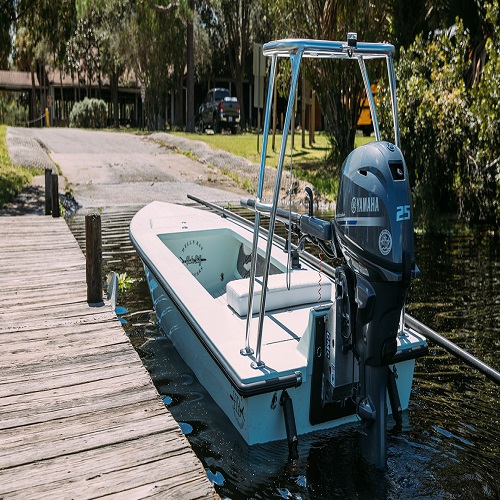
The Glades Skiff is 17’8″ and 440 pounds — long and heavy for the microskiff class. It’s still one of the best-selling technical poling skiffs on the market. A Carbon Innegra hull and vacuum-infused Core Cell construction keep it stiff without adding weight.
It rides quietly and shallow despite the length, with seat cushions and carpeting most microskiffs skip. You’ll need a trailer to move it, but it poles and idles through skinny water with ease once launched.
East Cape Glide
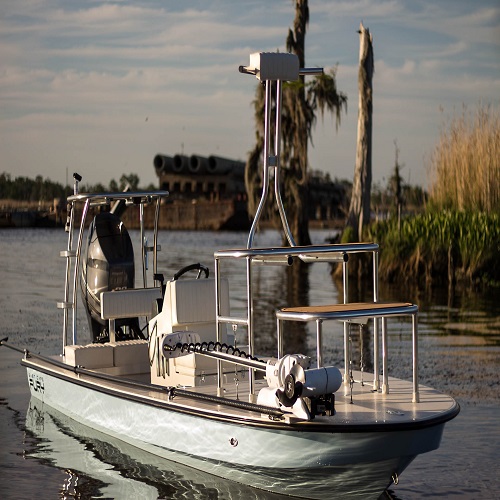
The 17′ Glide sits below the waterline on a 4-degree deadrise and launches almost anywhere. It’s rated for outboards up to 30 hp, and the light hull makes the most of that power.
It’s built for anglers who need to close the distance quietly — the entry is sharp and the hull stays quiet at idle. Expect room for one or two anglers, not more.
Gheenoe Classic
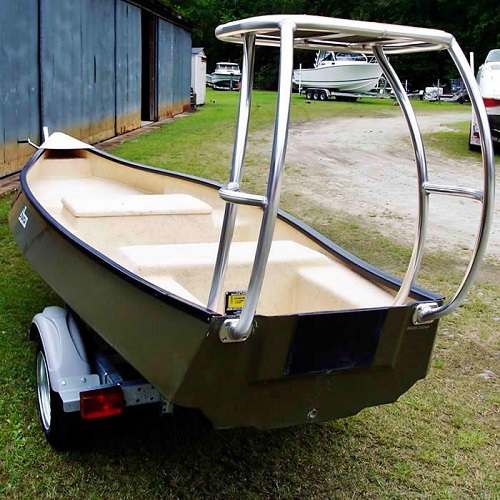
Gheenoe builds some of the smallest microskiffs on the market — even its largest model tops out at 16 feet. The Classic is the mid-sized option at 15’6″, with a 55″ beam and a 245-pound hull.
A 25 hp motor gives it real speed for the size, and it’s a common base for a poling-platform upgrade. Gheenoe also sells a 13′ car-top model for buyers who want something smaller still.
Dragonfly Marsh Hen 15
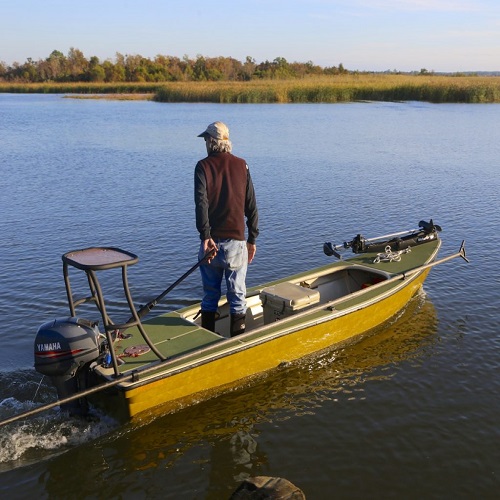
At 15 feet, a 50″ beam, and 200 pounds, the Marsh Hen balances stability against low weight better than most microskiffs its size. A rounded chine gives it a quiet entry, which matters when you’re closing on spooky fish.
It only carries a 9.9 hp engine, less power than most of this list. The trade-off is a lighter hull that still moves at a decent clip and stays easy to pole.
Ankona Caicos
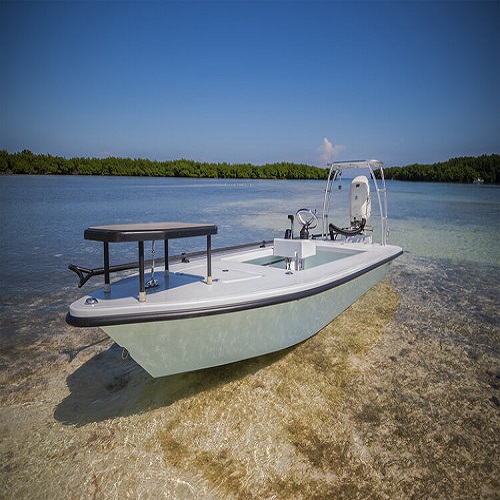
The Caicos is one of the larger microskiffs here, at 16’7″, a 68″ beam, and a 350-pound hull. Its carbon hybrid laminate keeps that size from turning into dead weight.
It has a weight capacity of 425 pounds and holds three people. That makes it one of the few microskiffs suited to a family outing rather than a solo or two-angler trip.
Beavertail Skiffs Micro
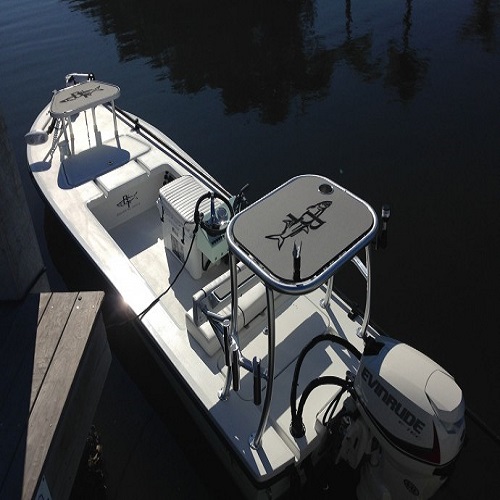
Beavertail scaled its Mosquito line down into the Micro, a 16’8″ microskiff with a 60″ beam and 400-pound gross weight. Loaded, it drafts just 5 inches.
It’s rated up to 30 hp, fast for a microskiff this size, and carries the dry ride Beavertail’s larger boats are known for. That combination makes it one of the more capable full-sized options on this list.
Bote Rover
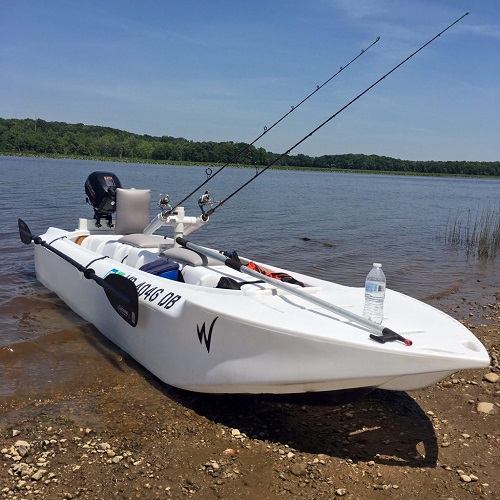
At 14 feet and just 40 inches wide, the Rover is the most compact boat here. It’s also the only one built to run equally well as a paddle craft or a powered microskiff. Its 3-inch draft clears sandbars other boats can’t touch.
Gatorshell construction keeps it light and quiet. The deep-V nose cuts through chop while paddling, then lifts for smooth turns once you’re running under power.
Should You Buy a Microskiff?
A microskiff makes sense for anglers chasing shallow flats and backwater fish that bigger boats can’t reach. It’s a worse fit for anyone who needs to cover open water, carry a crew, or stay dry in chop.
Pros
- Price. Used microskiffs run from about $500 to $20,000, with a deep secondhand market. Minimal fittings mean cheap repairs and little routine maintenance.
- Ease of use. Simple enough for a first-time boater to run confidently, with a shallow learning curve most experienced boaters find relaxing rather than demanding.
- Portability. Car-top and ultralight microskiffs need no trailer at all; even full-sized models launch from a small trailer almost anywhere with water access.
- Shallow-water access. Some models draft as little as 3 inches, reaching fish that never see a larger boat’s hull.
- Versatility. A removable outboard lets you paddle into no-motor zones without owning a second boat.
- Efficiency. Most microskiffs run on 30 hp or less, yet the light hull still delivers real speed.
Cons
- Comfort. Seating is minimal, legroom is tight with a second passenger, and the ride gets rough compared to a larger hull.
- Storage. Cargo space is limited by design — packing light isn’t optional, it’s a requirement for keeping the boat’s performance intact.
- Limited conditions. Microskiffs are built for flat water. Most can’t handle real chop, and a few models can’t take a motor at all.
What is a microskiff?
A microskiff is a narrow, flat-bottomed boat under roughly 17 feet, built to fish shallow flats and marshes with one or two anglers aboard. It typically weighs under 450 pounds and drafts as little as 3 inches.
What is the difference between a microskiff and a flats skiff?
A flats skiff is the broader category; a microskiff is its smallest, lightest end, usually under 17 feet and 450 pounds. Larger flats skiffs run 17 to 21 feet and carry more gear, power, and passengers.
How much does a microskiff cost?
Microskiffs range from about $500 for a used car-top model to $20,000 or more for a new full-sized technical poling skiff. A strong secondhand market keeps entry-level prices low.
What size motor does a microskiff need?
Most microskiffs run outboards between 9.9 and 30 horsepower. A handful of larger, full-sized models accept up to 50 hp, though anything above 30 hp is uncommon on this boat class.
How shallow can a microskiff go?
Some microskiffs draft as little as 3 inches loaded, letting them cross sandbars and grass flats that would ground a standard flats skiff. Draft varies by hull weight and design.
Is a microskiff good for a beginner boater?
Yes. The simple, single-outboard setup and forgiving flat-bottom hull make a microskiff one of the easier boats to learn on, provided you stay on calm, protected water.
What are the best microskiff brands?
Hell’s Bay, East Cape, Gheenoe, Dragonfly, Ankona, Beavertail, and Bote all currently build microskiffs, ranging from ultralight paddle craft to full-sized, trailer-launched models.


- VLCC Meaning: Very Large Crude Carrier Specs, Owners, Rates – September 21, 2026
- What Is SOLAS? Chapter-by-Chapter Overview and Enforcement – September 9, 2026
- What Is MARPOL? Guide to All Six Annexes and Enforcement – September 9, 2026