
Nautical Science

  • What Are the Differences Between Consignee, Shipper and Notify Party?

    What Are the Differences Between Consignee, Shipper and Notify Party?

    Whenever you import some goods, whether as an individual or as an agent, there are other parties that are involved until you receive the goods. There is you as the consignee, a consigner or the shipper, and a notify party. A consignee is an individual, a client, or an entity that receives the shipment from…
  • What Are Kamsarmax Vessels? Fully Explained And Compared

    What Are Kamsarmax Vessels? Fully Explained And Compared

    As the shipping industry was expanding in the early 2000s, there was a need for vessels more efficient than Panamax-designed ships. To address this, an innovative idea of a ship was conceptualized around the year 2005. Hence, the Kansarmax was launched, to carry more cargo, be fuel-efficient, wave and wind-resistant, and still flexible enough to…

  • What Is An Echo Sounder And How Does It Work?

    What Is An Echo Sounder And How Does It Work?

    Grounding is one of many possible accidents that a vessel encounters. This happens when the bottom of the ship touches the seabed. The damage can be minor or it can lead to a severe oil spill. To avoid this, bridge officers can check the paper charts or ECDIS (for paperless vessels) for the depth and…

  • What is a Ship Cargo Plan?

    What is a Ship Cargo Plan?

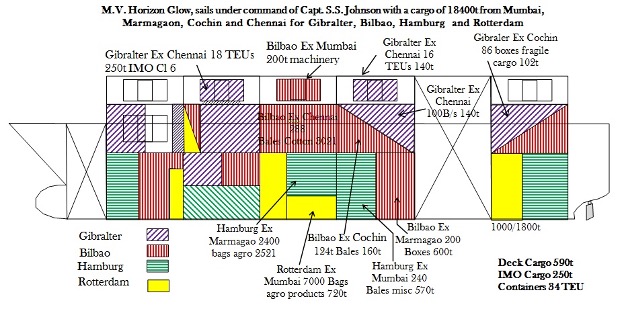
    For a ship to be commercially viable for carrying cargo the spaces on board need to be optimally utilized. This means cargo cannot be dumped haphazardly into the cargo spaces but rather must be loaded in an organized manner. This is done through careful planning and the result of such careful planning is a cargo…

  • Comprehensive Explanation of the COLREGs Rule 1

    Comprehensive Explanation of the COLREGs Rule 1

    The COLREGs are the International Regulations for Preventing Collisions at Sea. They are a set of information, advice, guides, and mandatory rules that all ships must follow in order to avoid collisions. Much like how all other regulations are structured, the Colregs set out by first defining and demarcating the responsibilities of the major contracting…

  • Dry Bulk Carriers – All Major Sizes and Types

    Dry Bulk Carriers – All Major Sizes and Types

    The first bulk carrier “John Bowes” was launched in 1852, and since then this type of vessel has been actively improved and developed. Modern bulk carriers are significantly superior to their predecessors in terms of size, equipment, and computerized equipment. Dry bulk carriers, bulkers, or bulk freighters – are vessels for the transportation of only…

  • Cargo Stowage Factor – How to use and calculate!

    Cargo Stowage Factor – How to use and calculate!

    Carriage of cargo by sea transport starts with planning and searching for an appropriate cargo vessel, and the cargo stowage factor plays a crucial role in this process. A ship must be fit for each cargo and cost-effective to keep trade beneficial for all parties. Here is my simple cargo stowage factor calculator: Stowage Factor…