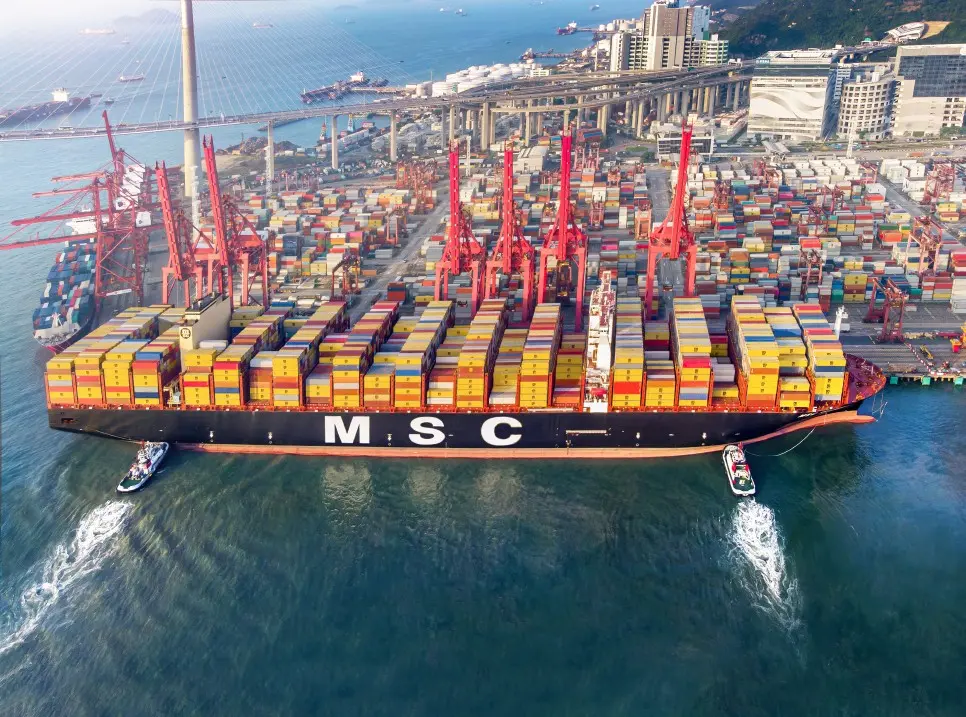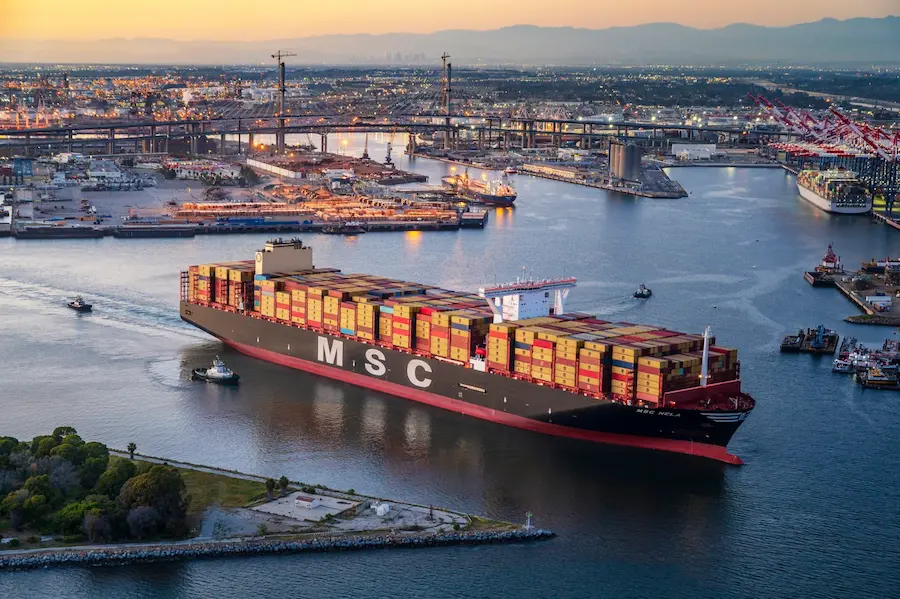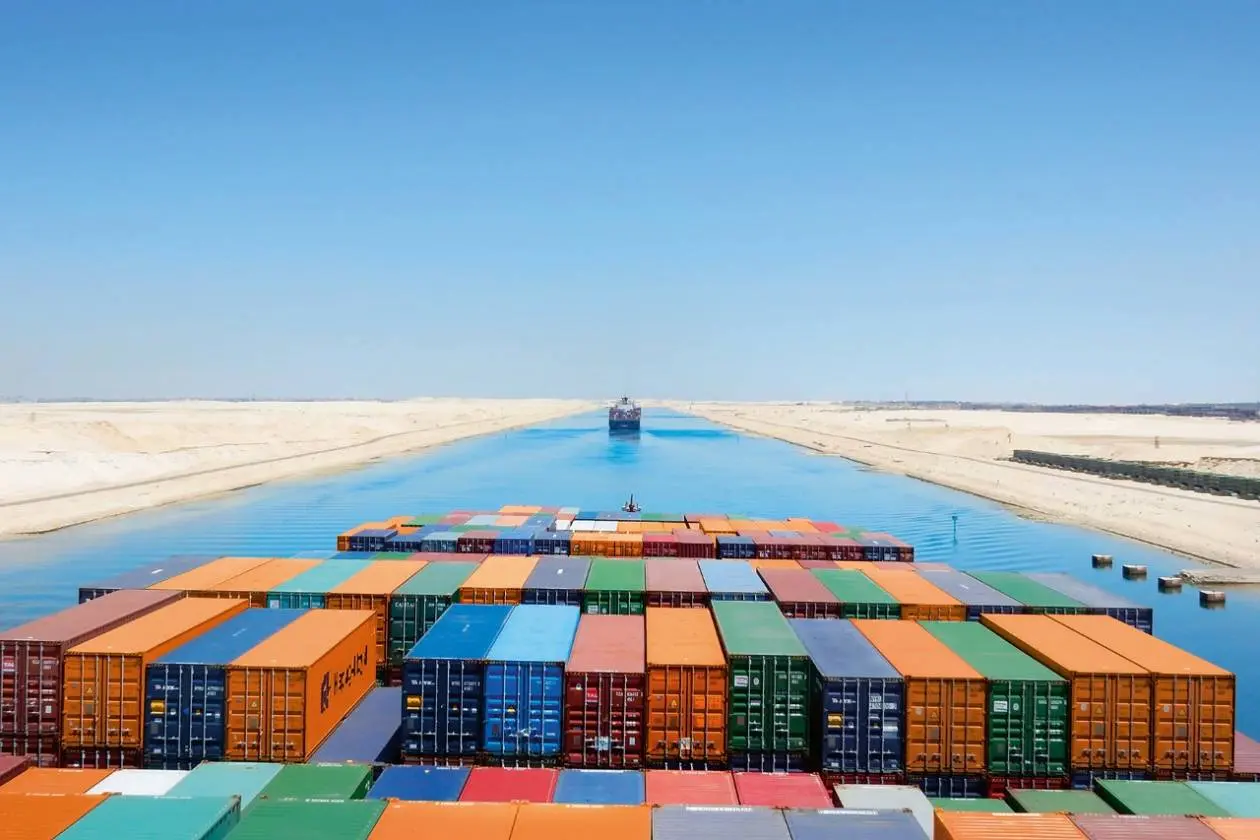
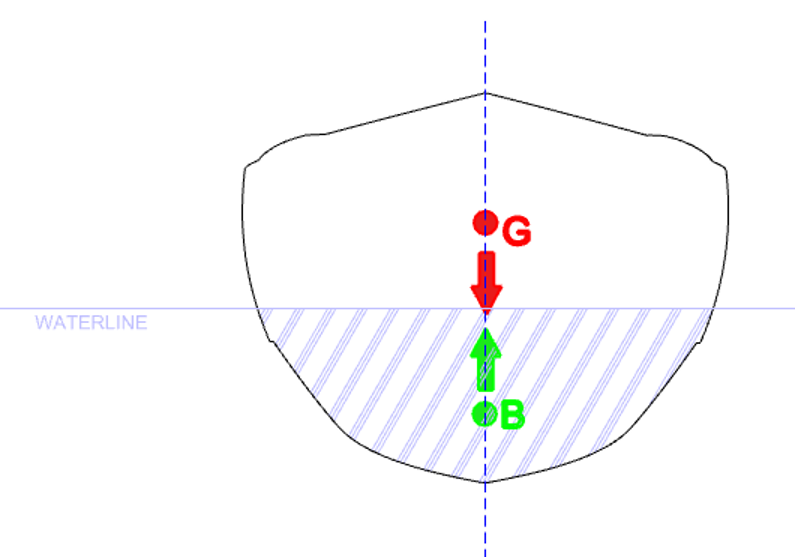
The center of gravity (G) is the point through which a ship’s whole weight acts downwards. The center of buoyancy (B) is the point through which the upward buoyant force acts, at the geometric center of the underwater hull.
This guide is written for deck cadets, officers and maritime students. It explains where G and B sit, how they move during loading, and how their positions decide whether a ship returns upright. British texts spell it “centre”; the meaning is identical.
What Is the Center of Gravity of a Ship?
A ship’s center of gravity is the single point where its total weight can be treated as acting vertically downwards. Its position depends entirely on how hull, machinery, cargo, ballast, fuel and stores are distributed.
Officers describe G with three coordinates. Each one feeds a different stability calculation in the loading computer.
- KG (vertical center of gravity, VCG): height of G above the keel. It governs transverse stability.
- LCG (longitudinal center of gravity): position of G fore and aft. It governs trim.
- TCG (transverse center of gravity): distance of G off the centerline. Any TCG produces a list.
How Is a Ship’s Center of Gravity Found?
The lightship KG is measured by an inclining experiment when the ship is completed. SOLAS Chapter II-1 Regulation 5 requires this for every passenger ship and for cargo ships of 24 m in length and over.
For any loaded condition, KG is then found by taking moments about the keel. Each weight is multiplied by its own height above the keel, the moments are added, and the total is divided by the total displacement.
- KG = Σ(weight × its Kg) ÷ Σ(weights)
- Shift of G (GG1) = weight moved × distance moved ÷ displacement
G always moves towards a weight that is loaded, away from a weight that is discharged, and parallel to a weight that is shifted. The loading computer repeats this calculation for every stage of a cargo plan.
What Is the Center of Buoyancy?
The center of buoyancy is the geometric center of the ship’s underwater volume. The buoyant force, equal to the weight of water displaced, acts vertically upwards through this point, as Archimedes’ principle describes.
Unlike G, the position of B depends only on the shape of the immersed hull. It moves whenever the draft, trim or heel changes, because the underwater shape changes with them.
- KB: height of B above the keel. It is half the draft for a box-shaped barge, and slightly more than half for most merchant hull forms.
- LCB: fore-and-aft position of B, used for trim calculations together with the longitudinal centers of buoyancy and flotation.
- TCB: transverse position of B. It sits on the centerline when the ship is upright and moves towards the low side when it heels.
The center of buoyancy should not be confused with the center of flotation (F). F is the centroid of the waterplane area, the point about which the ship trims, not a point inside the underwater volume.
What Is the Difference Between the Center of Gravity and the Center of Buoyancy?
G is set by where weights are placed on board, and its force acts downwards. B is set by the underwater hull shape, and its force acts upwards. Loading moves G; draft, trim and heel move B.
| Feature | Center of gravity (G) | Center of buoyancy (B) |
|---|---|---|
| What it represents | Center of the ship’s total weight | Center of the underwater volume |
| Direction of force | Downwards (weight) | Upwards (buoyancy) |
| Depends on | Distribution of all weights on board | Shape of the immersed hull |
| Moves when | Weights are loaded, discharged or shifted | Draft, trim or heel changes |
| Moves on heeling? | No, unless weights shift | Yes, towards the low side |
| Vertical measure | KG | KB |
How Do G and B Keep a Ship Upright?
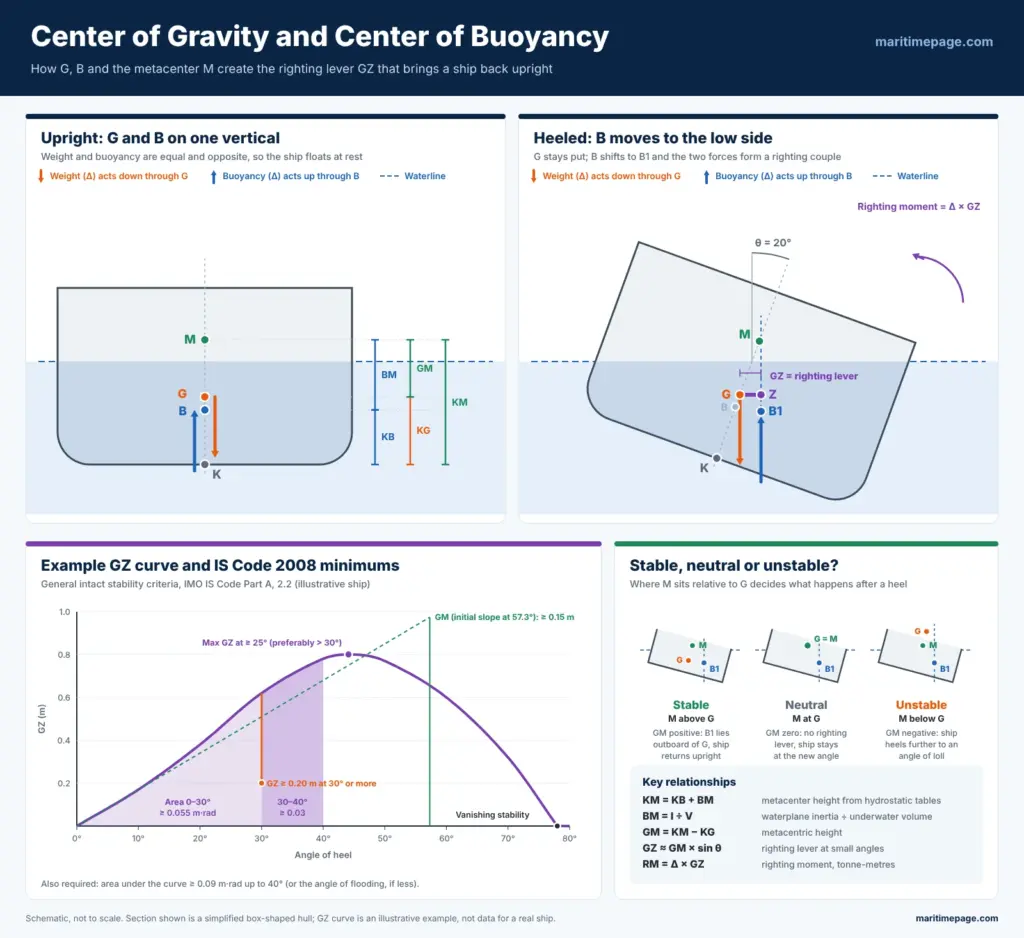
A ship floats in equilibrium when its weight equals its buoyancy and G and B lie on one vertical line. When it heels, B moves to the low side, and the two forces form a righting couple.
The horizontal distance between the weight acting down through G and the buoyancy acting up through the new B is the righting lever (GZ). The righting moment is the displacement multiplied by GZ, in tonne-metres.
The further B moves outboard compared with G, the larger GZ becomes and the stronger the ship’s tendency to return upright. If a weight shift moves G outboard of B, GZ becomes negative and the ship heels further.
Where Does the Metacenter Fit In?
The transverse metacenter (M) is where the vertical through B at a small angle of heel crosses the ship’s centerline. For small angles up to about 10°, M stays fixed, as if the ship hung from it.
- BM = I ÷ V, where I is the second moment of the waterplane area about the centerline and V is the underwater volume.
- KM = KB + BM, read from the ship’s hydrostatic tables for the current draft.
- GM = KM − KG, the metacentric height.
- GZ ≈ GM × sin θ at small angles of heel θ.
KG comes from the loading, while KB and BM come from the hull shape and draft. GM is therefore where the center of gravity and the center of buoyancy meet in one number.
Stable, Neutral and Unstable Equilibrium
- Stable (positive GM): M lies above G. The ship returns upright after a small heel.
- Neutral (zero GM): M and G coincide. The ship stays at whatever small angle it is pushed to.
- Unstable (negative GM): M lies below G. The ship heels over until B moves far enough outboard to sit under G again.
That resting angle is the angle of loll, and the ship may flop between port and starboard loll. It does not always capsize, but it has lost its reserve of stability. The cure is to lower G, starting with low-side double-bottom tanks, never by shifting weight to the high side.
What Does a Large or Small GM Mean at Sea?
A large GM makes a ship stiff, with a short, jerky roll that strains cargo lashings and crew. A small GM makes it tender, with a slow, easy roll but little margin against wind, waves or a shifting load.
Loaded bulk carriers carrying dense ore are typically stiff, because the cargo sits low in the holds. Container ships with high deck stacks tend towards a smaller GM, and the cargo plan limits stack weights to keep KG down.
What Stability Criteria Must a Ship Meet?
Most cargo and passenger ships must meet the general criteria in Part A, section 2.2, of the IMO of the IMO 2008 Intact Stability Code. The criteria are checked against the ship’s GZ curve for every loading condition.
- Initial metacentric height GM of at least 0.15 m
- Righting lever GZ of at least 0.20 m at an angle of heel of 30° or more
- Maximum GZ at an angle preferably above 30°, and not less than 25°
- Area under the GZ curve of at least 0.055 m·rad up to 30° and 0.09 m·rad up to 40°
- Area of at least 0.03 m·rad between 30° and 40°, or between 30° and the angle of flooding if that is less
Specific ship types carry extra rules on top of these. Ships with timber deck cargo, for example, have their own criteria under the same code, covered in intact stability criteria for timber deck cargo.
How Does Loading Change G and B?
Weight loaded low lowers G and increases GM, while weight loaded high raises G and reduces it. Any added weight also deepens the draft, which raises B and changes BM.
- Loading low (holds, double-bottom ballast): G moves down, GM increases.
- Loading high (deck cargo, containers in upper tiers): G moves up, GM decreases.
- Discharging from low tanks: G moves up, away from the removed weight, and GM decreases.
- Slack tanks: liquid moving across a part-filled tank creates a free surface effect, a virtual rise of G that reduces effective GM.
- Ice accretion and water on deck: added weight high up raises G, sometimes rapidly.
How Does G Change During a Voyage?
Ships usually sail with full bunkers held in double-bottom and lower tanks. As fuel, fresh water and stores are used from these low tanks, weight is removed from low down, so G rises and GM falls.
The part-empty tanks also add free surface effect, so the arrival condition is often the least stable of the voyage. Stability booklets therefore include an arrival condition, and officers check it before departure.
What Is Reserve Buoyancy?
Reserve buoyancy is the volume of the watertight hull above the waterline. It lets a ship rise over waves and stay afloat after limited flooding. The freeboard assigned under the Load Lines Convention protects it.
Reserve buoyancy also supports stability at larger angles of heel. As a ship with flared sides or high freeboard heels, extra watertight volume enters the water on the low side. B then moves further outboard, which increases GZ.
The statutory minimum freeboard is shown by the Plimsoll line and load line marks on the ship’s side. Loading below those marks removes reserve buoyancy that the stability calculations depend on.
How Do G and B Behave on Small Boats?
The same principles apply to small boats, but people and gear make up a far larger share of the weight. A crew standing up or moving to one side shifts G sharply.
- Passengers and gear: keep them low and on the centerline. Standing raises G, and gathering on one side moves it outboard.
- Waterline and chines: when the waterline sits below the chines, removing weight narrows the waterplane. That reduces BM, and with it the righting moment.
- Hull design: a wider beam and a shallower deadrise increase the waterplane inertia, which raises BM and initial stability.
- Self-righting designs: these keep G low and use enclosed buoyancy high up, so GZ stays positive even when inverted.
For an existing boat, the most reliable fix is to remove unnecessary weight high up and stow the rest low. Bilge keels and similar devices damp the rolling motion, but they do not change G, B or GM. More on hull form is in our guide to the most stable hull design of a boat.
Frequently Asked Questions
What is the center of buoyancy of a ship?
It is the geometric center of the ship’s underwater volume. The buoyant force, equal to the weight of water displaced, acts vertically upwards through it, and its height above the keel is called KB.
What is the center of gravity of a ship?
It is the point through which the ship’s total weight acts downwards. Its height above the keel, KG, depends on how hull, machinery, cargo, ballast and fuel are distributed on board.
Where is the center of buoyancy located on a ship?
Upright, it sits on the centerline at roughly half the draft above the keel, slightly more for most merchant hulls. It moves towards the low side when the ship heels.
Should the center of gravity be above or below the center of buoyancy?
On most ships G is above B, and that is normal. What matters for stability is that G stays below the metacenter M, which gives a positive metacentric height.
What is the difference between the center of buoyancy and the center of flotation?
The center of buoyancy is the center of the underwater volume. The center of flotation is the center of the waterplane area, the point about which the ship changes trim.
How does the center of gravity affect stability?
The lower G is, the larger the metacentric height GM and the righting lever GZ. Raising G reduces both, and if G rises above M the ship becomes unstable and lolls.
How is the center of gravity of a ship found?
The lightship KG is measured by an inclining experiment on completion. For each loaded condition, KG is calculated by taking moments of all weights about the keel and dividing by the displacement.

- What Is the ISM Code? SMS, DOC, SMC and Audits Explained – October 6, 2026
- What Is the IS Code? IMO Intact Stability Criteria Explained – October 5, 2026
- Ship Stopping Distance: Crash Stop and IMO Limits Explained – October 5, 2026